

 登录
登录
一、从短文中找出含有与所给例词画线部分相同发音的词。(各写一个)
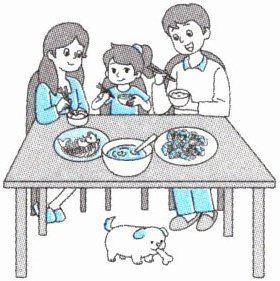
Dinner is nice. Dad and I like the soup. Mum is happy.
Ted is my dog. His legs are short. His nose is cute. He has a bone for dinner.
We like him. He can make us happy.
1. face
5. bag
Dinner is nice. Dad and I like the soup. Mum is happy.
Ted is my dog. His legs are short. His nose is cute. He has a bone for dinner.
We like him. He can make us happy.
1. face
make
2. rice nice/like
3. home nose/bone
4. use cute
5. bag
Dad/happy/has/can
6. pig Dinner(dinner)/is/His(his)/him
7. bus Mum/us
8. red Ted/legs
答案
1. make 解析:“face”中“a”发 /eɪ/,短文中“make”的“a”也发 /eɪ/,且“e”均不发音。
2. nice/like 解析:“rice”中“i”发 /aɪ/,短文中“nice”“like”的“i”均发 /aɪ/,且“e”均不发音。
3. nose/bone 解析:“home”中“o”发 /əʊ/,短文中“nose”“bone”的“o”均发 /əʊ/,且“e”均不发音。
4. cute 解析:“use”中“u”发 /ju:/,短文中“cute”的“u”也发 /ju:/,且“e”均不发音。
5. Dad/happy/has/can 解析:“bag”中“a”发 /æ/,短文中“Dad”“happy”等词的“a”均发 /æ/。
6. Dinner(dinner)/is/His(his)/him 解析:“pig”中“i”发 /ɪ/,短文中“Dinner”“his”等词的“i”均发 /ɪ/。
7. Mum/us 解析:“bus”中“u”发 /Λ/,短文中“Mum”“us”的“u”均发 /Λ/。
8. Ted/legs 解析:“red”中“e”发 /e/,短文中“Ted”“legs”的“e”均发 /e/。
2. nice/like 解析:“rice”中“i”发 /aɪ/,短文中“nice”“like”的“i”均发 /aɪ/,且“e”均不发音。
3. nose/bone 解析:“home”中“o”发 /əʊ/,短文中“nose”“bone”的“o”均发 /əʊ/,且“e”均不发音。
4. cute 解析:“use”中“u”发 /ju:/,短文中“cute”的“u”也发 /ju:/,且“e”均不发音。
5. Dad/happy/has/can 解析:“bag”中“a”发 /æ/,短文中“Dad”“happy”等词的“a”均发 /æ/。
6. Dinner(dinner)/is/His(his)/him 解析:“pig”中“i”发 /ɪ/,短文中“Dinner”“his”等词的“i”均发 /ɪ/。
7. Mum/us 解析:“bus”中“u”发 /Λ/,短文中“Mum”“us”的“u”均发 /Λ/。
8. Ted/legs 解析:“red”中“e”发 /e/,短文中“Ted”“legs”的“e”均发 /e/。
二、从括号中选择画线部分发音相同的单词补全句子,且使句意完整、合理。
1. My
2. After school, I
3. Can you
4. I like
5.
1. My
uncle
can drive a big truck
.(uncle; student; rubber; truck)2. After school, I
open
the door to welcome my friends home
.(go; home; clock; open)3. Can you
find
the five
red apples in the basket? (five; think; find; big)4. I like
summer
very much, but
my sister doesn't.(autumn; summer; but; menu)5.
Sorry
, you can't get into the library
now.(library; try; year; sorry)答案
1. uncle;truck 解析:“uncle”和“truck”中“u”均发 /Λ/,句意为“我的叔叔能开一辆大卡车”。
2. open;home 解析:“open”和“home”中“o”均发 /əʊ/,句意为“放学后,我打开门欢迎我的朋友们回家”。
3. find;five 解析:“find”和“five”中“i”均发 /aɪ/,句意为“你能在篮子里找到五个红苹果吗”。
4. summer;but 解析:“summer”和“but”中“u”均发 /Λ/,句意为“我很喜欢夏天,但我姐姐/妹妹不喜欢”。
5. Sorry;library 解析:“Sorry”和“library”中“y”均发 /i/,句意为“抱歉,你现在不能进入图书馆”。
2. open;home 解析:“open”和“home”中“o”均发 /əʊ/,句意为“放学后,我打开门欢迎我的朋友们回家”。
3. find;five 解析:“find”和“five”中“i”均发 /aɪ/,句意为“你能在篮子里找到五个红苹果吗”。
4. summer;but 解析:“summer”和“but”中“u”均发 /Λ/,句意为“我很喜欢夏天,但我姐姐/妹妹不喜欢”。
5. Sorry;library 解析:“Sorry”和“library”中“y”均发 /i/,句意为“抱歉,你现在不能进入图书馆”。
三、根据所给例词给下列单词分类。(填序号,有多余选项)
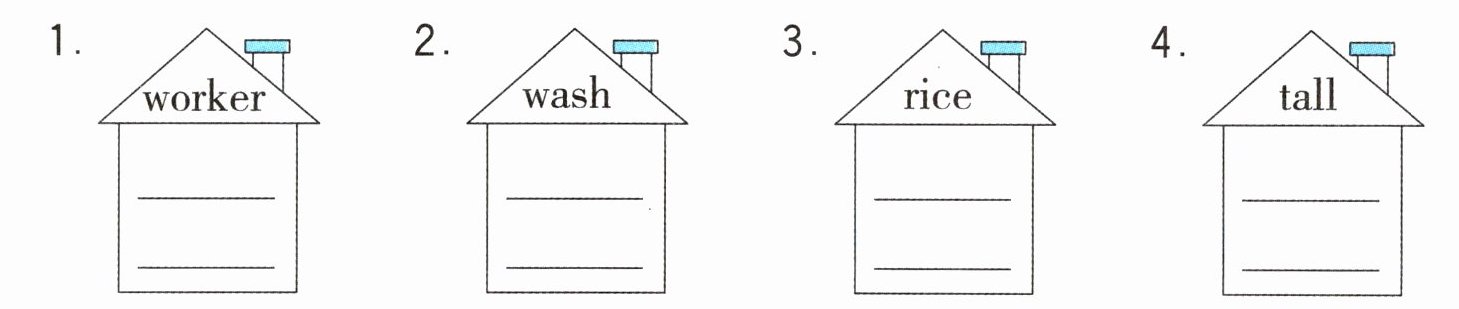
|A. go|B. farmer|C. weak|D. parent|E. meat|
|F. doctor|G. house|H. sandwich|I. short|J. take|
1.
2.
3.
4.
|A. go|B. farmer|C. weak|D. parent|E. meat|
|F. doctor|G. house|H. sandwich|I. short|J. take|
1.
2.
3.
4.
答案
1. BF 2. AJ 3. EH 4. CI
四、用所给单词的适当形式填空。
1. There
2. My brother is good at
3.
4. Sam and Bobby want
5. It's ten o'clock. The children
1. There
is
(be) a tree and some flowers by the house.2. My brother is good at
playing
(play) the piano.3.
Don’t
(not) cross the road when the lights are red.4. Sam and Bobby want
to cook
fish soup. Look! They become good cooks
. (cook)5. It's ten o'clock. The children
are doing
(do) sports.答案
1. is 解析:“there be”句型遵循“就近原则”,靠近 be 动词的“a tree”是单数,故用“is”。
2. playing 解析:“be good at”后接动词的 -ing 形式,“play”的现在分词是“playing”。
3. Don’t 解析:这是祈使句的否定形式,以“Don’t”开头,后接动词原形。
4. to cook;cooks 解析:“want to do sth.”是固定搭配,故第一空填“to cook”;“good cooks”表示“优秀的厨师”,“cook”此处为名词,根据“They”可知用复数形式“cooks”。
5. are doing 解析:“It’s ten o’clock”提示动作正在进行,用现在进行时(be + doing),主语“The children”是复数,故填“are doing”。
2. playing 解析:“be good at”后接动词的 -ing 形式,“play”的现在分词是“playing”。
3. Don’t 解析:这是祈使句的否定形式,以“Don’t”开头,后接动词原形。
4. to cook;cooks 解析:“want to do sth.”是固定搭配,故第一空填“to cook”;“good cooks”表示“优秀的厨师”,“cook”此处为名词,根据“They”可知用复数形式“cooks”。
5. are doing 解析:“It’s ten o’clock”提示动作正在进行,用现在进行时(be + doing),主语“The children”是复数,故填“are doing”。
