

 登录
登录
(F)
No patient wants surgeons to study biology by using 1.____________ (they) bodies. In the past, surgeons practised on animals and fruit. 2.____________, today, 3 - D printing is changing how surgeons learn.
Recently, 3.____________ research team from the Lanzhou Institute of Chemical Physics at the Chinese Academy of Sciences has created 3 - D printed organs (器官), including the brain, lungs and intestines (肠). They used hydrogel (水凝胶), a soft material as the “ink” for printing.
People 4.____________ (find) it hard to print the complex structures (复杂的结构) inside human organs before. It's also hard to control the organs’ hardness (硬度). But the team has made great progress. The printed organs are very close to real 5.____________ (one).
The team added special elements (元素) to the hydrogel to create different textures (质地)
for each organ. They also printed tiny holes and channels (通道) inside the organs. This will help medical students learn better. 6.____________ (compare) to living animal organs, they are cheaper and more ethically (伦理上地) acceptable.
Except for 7.____________ (do) research, scientists also hope 3 - D printed organs can be used in organ transplants (移植). Hydrogel cannot be used to do that because the human body will fight 8.____________ it. But scientists are looking for other materials that can grow inside the human body. The first and only 9.____________ (success) 3 - D printed organ used for transplant is a bladder (膀胱), as the bladder is one of human's 10.____________ (simple)
organs. Experts expect that this technology will help more patients within a decade, according to CNN.
No patient wants surgeons to study biology by using 1.____________ (they) bodies. In the past, surgeons practised on animals and fruit. 2.____________, today, 3 - D printing is changing how surgeons learn.
Recently, 3.____________ research team from the Lanzhou Institute of Chemical Physics at the Chinese Academy of Sciences has created 3 - D printed organs (器官), including the brain, lungs and intestines (肠). They used hydrogel (水凝胶), a soft material as the “ink” for printing.
People 4.____________ (find) it hard to print the complex structures (复杂的结构) inside human organs before. It's also hard to control the organs’ hardness (硬度). But the team has made great progress. The printed organs are very close to real 5.____________ (one).
The team added special elements (元素) to the hydrogel to create different textures (质地)
for each organ. They also printed tiny holes and channels (通道) inside the organs. This will help medical students learn better. 6.____________ (compare) to living animal organs, they are cheaper and more ethically (伦理上地) acceptable.
Except for 7.____________ (do) research, scientists also hope 3 - D printed organs can be used in organ transplants (移植). Hydrogel cannot be used to do that because the human body will fight 8.____________ it. But scientists are looking for other materials that can grow inside the human body. The first and only 9.____________ (success) 3 - D printed organ used for transplant is a bladder (膀胱), as the bladder is one of human's 10.____________ (simple)
organs. Experts expect that this technology will help more patients within a decade, according to CNN.
答案
(F) 1. their 2. However 3. a 4. found 5. ones 6. Compared 7. doing 8. against 9. successful 10. simplest
(G)
How much water is there on the Moon? This is a question we have
tried to answer for many years. 1.____________ group of scientists
 from China and the UK found that the Moon may have water
“reservoirs (水库)”, according to Nature Geoscience.
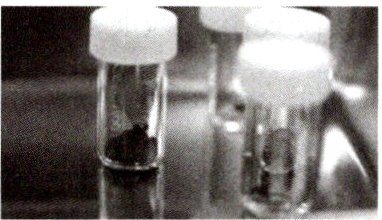
Over the past 2.____________ (billion) of years, asteroids (小行星) have hit the Moon, causing the soil to melt (熔化) and fly into space. It then cooled down and 3.____________ (fall) back to the Moon, forming beads (珠子) of glass. The Chang'e 5 probe (探测器), which returned to the Earth on Dec 17, 2020, brought back a total of 1 731 grams of rocks and soil from the Moon, 4.____________ (include) glass beads, reported Xinhua.
The international research team looked 5.____________ (careful) into 32 glass beads. They found that about one ton of glass beads may have 0.5 kilograms of water. “This ‘water”
wasn't a liquid (液体) but instead took the form of hydrogen (氢) in the glass beads, which can easily be 6.____________ (turn) into the water we can use,” Hui Hejiu, one of the study 7.____________ (write), told Science and Technology Daily.
Researchers said that the water in the glass beads could reach to as much as 270 trillion (万亿) kilograms. “It's a lot 8.____________ (many) than we thought,” Hui added.
The study said the hydrogen may come 9.____________ the Sun as part of solar winds (太阳风). The glass beads have many small holes which can absorb (吸收) hydrogen from the wind.
This finding would be a “really big deal” for space exploration, 10.____________ humans plan to live on the Moon in the future, Australian space scientist Phil Bland told ABC News.
How much water is there on the Moon? This is a question we have
tried to answer for many years. 1.____________ group of scientists
from China and the UK found that the Moon may have water “reservoirs (水库)”, according to Nature Geoscience.
Over the past 2.____________ (billion) of years, asteroids (小行星) have hit the Moon, causing the soil to melt (熔化) and fly into space. It then cooled down and 3.____________ (fall) back to the Moon, forming beads (珠子) of glass. The Chang'e 5 probe (探测器), which returned to the Earth on Dec 17, 2020, brought back a total of 1 731 grams of rocks and soil from the Moon, 4.____________ (include) glass beads, reported Xinhua.
The international research team looked 5.____________ (careful) into 32 glass beads. They found that about one ton of glass beads may have 0.5 kilograms of water. “This ‘water”
wasn't a liquid (液体) but instead took the form of hydrogen (氢) in the glass beads, which can easily be 6.____________ (turn) into the water we can use,” Hui Hejiu, one of the study 7.____________ (write), told Science and Technology Daily.
Researchers said that the water in the glass beads could reach to as much as 270 trillion (万亿) kilograms. “It's a lot 8.____________ (many) than we thought,” Hui added.
The study said the hydrogen may come 9.____________ the Sun as part of solar winds (太阳风). The glass beads have many small holes which can absorb (吸收) hydrogen from the wind.
This finding would be a “really big deal” for space exploration, 10.____________ humans plan to live on the Moon in the future, Australian space scientist Phil Bland told ABC News.
答案
(G) 1. A 2. billions 3. fell 4. including 5. carefully 6. turned 7. writers 8. more 9. from 10. as/since/because
