

 登录
登录
三、补全对话。
根据下面的对话情景,在每个空白处填上一个适当的句子,使对话的意思连贯、完整。
A: Welcome to our clothes store! May I help you?
B: 21.
A: Look at the scarves over there. They're in different colors. 22.
B: My grandmother doesn't like black.
A: 23.
B: Green or blue.
A: OK, look at this green one. It's on sale today.
B: It looks nice. 24.
A: 200 yuan. But you only have to pay 120 yuan for it. It's on sale today.
B: Great. 25.
A: Thank you. Welcome here next time!
根据下面的对话情景,在每个空白处填上一个适当的句子,使对话的意思连贯、完整。
A: Welcome to our clothes store! May I help you?
B: 21.
Yes, please
. I'd like to buy a scarf for my grandmother. It's her birthday next week.A: Look at the scarves over there. They're in different colors. 22.
How/What about this(black) one
?B: My grandmother doesn't like black.
A: 23.
What color does she like
?B: Green or blue.
A: OK, look at this green one. It's on sale today.
B: It looks nice. 24.
How much is it/What's the price of it
?A: 200 yuan. But you only have to pay 120 yuan for it. It's on sale today.
B: Great. 25.
Here is the money
.A: Thank you. Welcome here next time!
答案
21. Yes, please
22. How/What about this(black) one
23. What color does she like
24. How much is it/What's the price of it
25. Here is the money
22. How/What about this(black) one
23. What color does she like
24. How much is it/What's the price of it
25. Here is the money
解析
【分析】
这是一道购物场景的补全对话题,解题时需结合上下文语境和购物交际的常用表达来思考:
1. 第21空:A用"May I help you?"主动提供帮助,B明确表示要给奶奶买围巾,所以应使用购物场景中接受帮助的礼貌回应。
2. 第22空:A展示不同颜色的围巾后,B提到奶奶不喜欢黑色,由此可推断A之前是在推荐黑色围巾,用相关表达询问B的意见符合逻辑。
3. 第23空:B回答喜欢绿色或蓝色,说明A的问题是询问奶奶喜欢的颜色,需用对应的颜色询问句式。
4. 第24空:A给出了具体价格,可知B的问题是询问围巾的价格,使用常用的价格询问表达即可。
5. 第25空:B觉得围巾不错且价格合适,接下来的动作应该是付钱,用符合购物流程的表达即可。
【解析】
21. 根据上文店员的服务询问以及下文B明确的购物需求,此处填接受帮助的礼貌用语:Yes, please。
22. 根据下文B表明奶奶不喜欢黑色的回应,可知上文店员在推荐黑色围巾并询问意见,故填:How/What about this(black) one。
23. 根据下文B回答喜欢的颜色,可知此处是询问奶奶喜好的颜色,故填:What color does she like。
24. 根据下文店员告知价格的内容,可知此处是询问围巾的价格,故填:How much is it/What's the price of it。
25. 根据上文B对围巾的认可以及下文店员的感谢,可知此处是B付钱的表达,故填:Here is the money。
【答案】
21. Yes, please
22. How/What about this(black) one
23. What color does she like
24. How much is it/What's the price of it
25. Here is the money
【知识点】
购物场景日常交际、颜色与价格询问
【点评】
本题考查购物场景下的英语口语交际能力,需要结合上下文语境推断对话内容,掌握购物时常用的礼貌用语、询问意见、颜色及价格的固定表达,注重对话的逻辑连贯性。
【难度系数】
0.8
这是一道购物场景的补全对话题,解题时需结合上下文语境和购物交际的常用表达来思考:
1. 第21空:A用"May I help you?"主动提供帮助,B明确表示要给奶奶买围巾,所以应使用购物场景中接受帮助的礼貌回应。
2. 第22空:A展示不同颜色的围巾后,B提到奶奶不喜欢黑色,由此可推断A之前是在推荐黑色围巾,用相关表达询问B的意见符合逻辑。
3. 第23空:B回答喜欢绿色或蓝色,说明A的问题是询问奶奶喜欢的颜色,需用对应的颜色询问句式。
4. 第24空:A给出了具体价格,可知B的问题是询问围巾的价格,使用常用的价格询问表达即可。
5. 第25空:B觉得围巾不错且价格合适,接下来的动作应该是付钱,用符合购物流程的表达即可。
【解析】
21. 根据上文店员的服务询问以及下文B明确的购物需求,此处填接受帮助的礼貌用语:Yes, please。
22. 根据下文B表明奶奶不喜欢黑色的回应,可知上文店员在推荐黑色围巾并询问意见,故填:How/What about this(black) one。
23. 根据下文B回答喜欢的颜色,可知此处是询问奶奶喜好的颜色,故填:What color does she like。
24. 根据下文店员告知价格的内容,可知此处是询问围巾的价格,故填:How much is it/What's the price of it。
25. 根据上文B对围巾的认可以及下文店员的感谢,可知此处是B付钱的表达,故填:Here is the money。
【答案】
21. Yes, please
22. How/What about this(black) one
23. What color does she like
24. How much is it/What's the price of it
25. Here is the money
【知识点】
购物场景日常交际、颜色与价格询问
【点评】
本题考查购物场景下的英语口语交际能力,需要结合上下文语境推断对话内容,掌握购物时常用的礼貌用语、询问意见、颜色及价格的固定表达,注重对话的逻辑连贯性。
【难度系数】
0.8
四、书面表达。
如今,很多人喜欢在互联网上点餐。老师要求你们在下周一的英语课上就互联网点餐这一现象,谈谈它的利与弊。请你根据写作要求,谈谈你的看法。
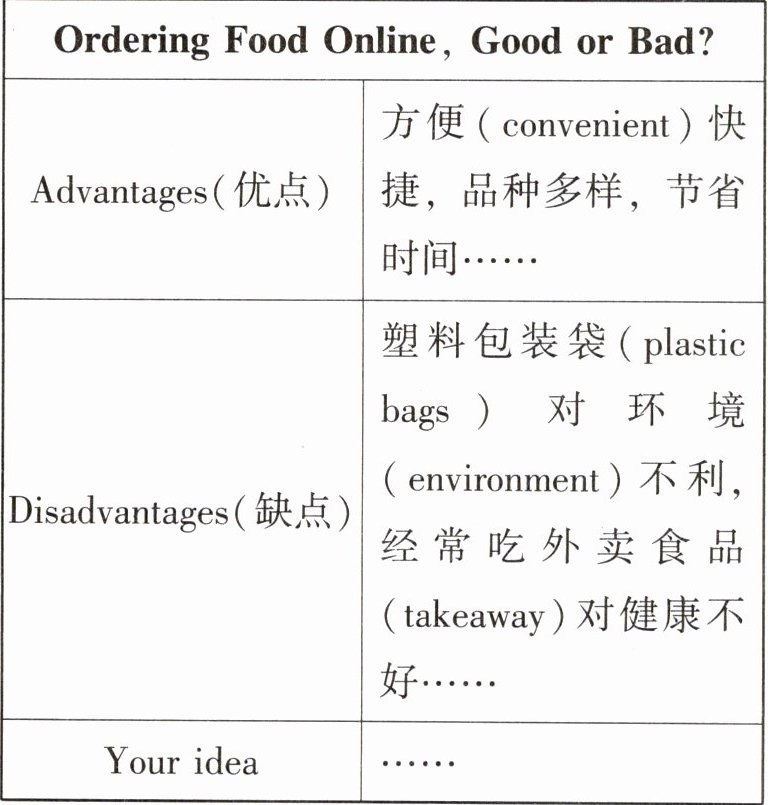
写作要求:
(1)文中需要包含表格中所提示的全部要点,可适当发挥,书写规范;
(2)文中不得出现本人姓名或校名;
(3)词数70个左右(开头已经给出,不计入总词数)。
Ordering Food Online, Good or Bad?
Nowadays, many people like ordering food online. Is it good or bad?
如今,很多人喜欢在互联网上点餐。老师要求你们在下周一的英语课上就互联网点餐这一现象,谈谈它的利与弊。请你根据写作要求,谈谈你的看法。
写作要求:
(1)文中需要包含表格中所提示的全部要点,可适当发挥,书写规范;
(2)文中不得出现本人姓名或校名;
(3)词数70个左右(开头已经给出,不计入总词数)。
Ordering Food Online, Good or Bad?
Nowadays, many people like ordering food online. Is it good or bad?
Some people think it's good to order food online because it is convenient and fast. It can help save time. Also, the food is cheap and delicious.
But other people have different ideas. They say eating takeaway too often is bad for health. And the plastic bags of the food are bad for the environment.
I think we can order food online sometimes, but not too often.
答案
Ordering Food Online, Good or Bad?
Nowadays, many people like ordering food online. Is it good or bad?
Some people think it's good to order food online because it is convenient and fast. It can help save time. Also, the food is cheap and delicious.
But other people have different ideas. They say eating takeaway too often is bad for health. And the plastic bags of the food are bad for the environment.
I think we can order food online sometimes, but not too often.
Nowadays, many people like ordering food online. Is it good or bad?
Some people think it's good to order food online because it is convenient and fast. It can help save time. Also, the food is cheap and delicious.
But other people have different ideas. They say eating takeaway too often is bad for health. And the plastic bags of the food are bad for the environment.
I think we can order food online sometimes, but not too often.
解析
【分析】
首先,这是一篇观点类英语书面表达,需围绕“网上点餐的利与弊”展开,要覆盖表格全部要点且符合词数要求。解题思路如下:
1. 承接给定开头,先阐述网上点餐的优点:要包含“方便快捷、节省时间”,还可适当补充合理内容如“食物价廉美味”;
2. 转折引出缺点:需明确“塑料包装危害环境、常吃外卖不利于健康”这两个核心要点;
3. 最后给出客观合理的个人观点,比如“偶尔点餐但不频繁”;
4. 写作时注意用词准确、句式简洁,避免出现姓名校名,严格控制词数。
【解析】
1. 承接开头,用“Some people think it's good to order food online because...”引出优点,将表格里的“convenient、fast、save time”融入句子,补充“cheap and delicious”丰富内容;
2. 用“But other people have different ideas.”转折,引出缺点,分别说明“eating takeaway too often is bad for health”和“the plastic bags of the food are bad for the environment”,覆盖所有缺点要点;
3. 用“I think...”给出客观观点,使文章结构完整、逻辑连贯;
4. 整体语言简单易懂,符合初中英语写作要求,词数符合规定,无违规内容。
【答案】
Ordering Food Online, Good or Bad?
Nowadays, many people like ordering food online. Is it good or bad?
Some people think it's good to order food online because it is convenient and fast. It can help save time. Also, the food is cheap and delicious.
But other people have different ideas. They say eating takeaway too often is bad for health. And the plastic bags of the food are bad for the environment.
I think we can order food online sometimes, but not too often.
【知识点】
利弊类话题写作、日常英语表达
【点评】
本文结构清晰、逻辑连贯,完整覆盖题目要求的所有要点,同时有合理的内容补充。语言简洁准确,符合初中学生的英语写作水平,能有效锻炼学生对话题类写作的结构把控能力和词汇运用能力。
【难度系数】
0.7
首先,这是一篇观点类英语书面表达,需围绕“网上点餐的利与弊”展开,要覆盖表格全部要点且符合词数要求。解题思路如下:
1. 承接给定开头,先阐述网上点餐的优点:要包含“方便快捷、节省时间”,还可适当补充合理内容如“食物价廉美味”;
2. 转折引出缺点:需明确“塑料包装危害环境、常吃外卖不利于健康”这两个核心要点;
3. 最后给出客观合理的个人观点,比如“偶尔点餐但不频繁”;
4. 写作时注意用词准确、句式简洁,避免出现姓名校名,严格控制词数。
【解析】
1. 承接开头,用“Some people think it's good to order food online because...”引出优点,将表格里的“convenient、fast、save time”融入句子,补充“cheap and delicious”丰富内容;
2. 用“But other people have different ideas.”转折,引出缺点,分别说明“eating takeaway too often is bad for health”和“the plastic bags of the food are bad for the environment”,覆盖所有缺点要点;
3. 用“I think...”给出客观观点,使文章结构完整、逻辑连贯;
4. 整体语言简单易懂,符合初中英语写作要求,词数符合规定,无违规内容。
【答案】
Ordering Food Online, Good or Bad?
Nowadays, many people like ordering food online. Is it good or bad?
Some people think it's good to order food online because it is convenient and fast. It can help save time. Also, the food is cheap and delicious.
But other people have different ideas. They say eating takeaway too often is bad for health. And the plastic bags of the food are bad for the environment.
I think we can order food online sometimes, but not too often.
【知识点】
利弊类话题写作、日常英语表达
【点评】
本文结构清晰、逻辑连贯,完整覆盖题目要求的所有要点,同时有合理的内容补充。语言简洁准确,符合初中学生的英语写作水平,能有效锻炼学生对话题类写作的结构把控能力和词汇运用能力。
【难度系数】
0.7
