

 登录
登录
B
Nicole Xu reached her hand into a water box and directly caught a live moon jellyfish(水母). Quickly and carefully, she put a tiny electronic device(设备) into the jellyfish.
"It takes a little bit of practice," she said. "But once you know how to do it, it's very simple and very quick." Xu is an engineer at the University of Colorado Boulder. She handed the jellyfish to a pair of divers(潜水员) waiting in the water along the coast of Woods Hole, Mass. The divers took the animal down to the bottom of the ocean, then let it go. Speedily, it swam up to the top of the ocean.
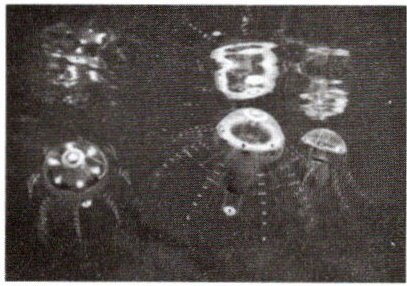
Jellyfish swim by pushing water through their bodies. The device that Xu put in the jellyfish used electricity to jolt the jellyfish's body so they moved faster. It reached the top of the ocean more than twice as fast as usual. In lab tests, the device made the animals swim three times faster.
With its device, this jellyfish is called a bio hybrid robot. That means it has electronics, such as the device in the jellyfish, that work together with a living system. Researchers are building bio hybrid robots with all kinds of living parts. Scientists are making bio hybrid robots with many different living parts, like insect antennae, human skin, and fungus.
It may seem strange or weird to mix-up technology and living parts. But living beings have developed to perform certain tasks over millions of years. In many cases, that allows their bodies to do things that remain difficult or even impossible for machines.
"By uniting biology and engineering, you can create robots with abilities beyond traditional machines," said Shoji Takeuchi. He develops bio hybrid robots at the University of Tokyo in Japan.
This bio hybrid robot is just the beginning. Here are some of the most surprising real examples of animal-machine joins—and the types of tasks they might be especially suited for.
()5. What is the purpose of taking the jellyfish to the ocean bottom?
A. To see if it can be alive.
B. To test its swimming speed.
C. To let it go back to nature.
D. To make it explore the ocean.
()6. Which of the following has the closest meaning to the underlined word "jolt" in Paragraph 3?
A. Excite.
B. Protect.
C. Stop.
D. Test.
()7. What do we learn about the bio hybrid robot?
A. It is a machine only powered by electricity.
B. It is a living animal without man-made parts.
C. The living parts will be used in it in the future.
D. The living animal plays an important role in it.
()8. What will the writer most probably talk about next?
A. The future of bio hybrid robots.
B. Advantages of bio hybrid robots.
C. Study methods of bio hybrid robots.
D. Other kinds of bio hybrid robots.
Nicole Xu reached her hand into a water box and directly caught a live moon jellyfish(水母). Quickly and carefully, she put a tiny electronic device(设备) into the jellyfish.
"It takes a little bit of practice," she said. "But once you know how to do it, it's very simple and very quick." Xu is an engineer at the University of Colorado Boulder. She handed the jellyfish to a pair of divers(潜水员) waiting in the water along the coast of Woods Hole, Mass. The divers took the animal down to the bottom of the ocean, then let it go. Speedily, it swam up to the top of the ocean.
Jellyfish swim by pushing water through their bodies. The device that Xu put in the jellyfish used electricity to jolt the jellyfish's body so they moved faster. It reached the top of the ocean more than twice as fast as usual. In lab tests, the device made the animals swim three times faster.
With its device, this jellyfish is called a bio hybrid robot. That means it has electronics, such as the device in the jellyfish, that work together with a living system. Researchers are building bio hybrid robots with all kinds of living parts. Scientists are making bio hybrid robots with many different living parts, like insect antennae, human skin, and fungus.
It may seem strange or weird to mix-up technology and living parts. But living beings have developed to perform certain tasks over millions of years. In many cases, that allows their bodies to do things that remain difficult or even impossible for machines.
"By uniting biology and engineering, you can create robots with abilities beyond traditional machines," said Shoji Takeuchi. He develops bio hybrid robots at the University of Tokyo in Japan.
This bio hybrid robot is just the beginning. Here are some of the most surprising real examples of animal-machine joins—and the types of tasks they might be especially suited for.
()5. What is the purpose of taking the jellyfish to the ocean bottom?
A. To see if it can be alive.
B. To test its swimming speed.
C. To let it go back to nature.
D. To make it explore the ocean.
()6. Which of the following has the closest meaning to the underlined word "jolt" in Paragraph 3?
A. Excite.
B. Protect.
C. Stop.
D. Test.
()7. What do we learn about the bio hybrid robot?
A. It is a machine only powered by electricity.
B. It is a living animal without man-made parts.
C. The living parts will be used in it in the future.
D. The living animal plays an important role in it.
()8. What will the writer most probably talk about next?
A. The future of bio hybrid robots.
B. Advantages of bio hybrid robots.
C. Study methods of bio hybrid robots.
D. Other kinds of bio hybrid robots.
答案
5. B
12((即第5题在文中相关段落引出的序号位置)附近相关答案指引): According to the text, the divers took the animal down to the bottom of the ocean and then let it go to test its swimming speed with the device. So the answer is B.
6. A
3((即第6题题眼“jolt”所在段落序号)附近相关答案指引): The device used electricity to jolt the jellyfish's body so they moved faster. “Excite” has a similar meaning of stimulating to make it more active, so the closest meaning is “Excite”. The answer is A.
7. D
4((即第7题题眼“bio - hybrid robot”相关描述所在段落序号)附近相关答案指引): From the text, the bio - hybrid robot has electronics working together with a living system, and the living animal plays an important role. The answer is D.
8. D
8((即第8题题眼“next”所对应文章结尾段落序号,提示下一段要讲的内容相关逻辑指引)附近相关答案指引): The last sentence says “Here are some of the most surprising real examples of animal - machine joins—and the types of tasks they might be especially suited for.” So the writer will most probably talk about other kinds of bio - hybrid robots next. The answer is D.
12((即第5题在文中相关段落引出的序号位置)附近相关答案指引): According to the text, the divers took the animal down to the bottom of the ocean and then let it go to test its swimming speed with the device. So the answer is B.
6. A
3((即第6题题眼“jolt”所在段落序号)附近相关答案指引): The device used electricity to jolt the jellyfish's body so they moved faster. “Excite” has a similar meaning of stimulating to make it more active, so the closest meaning is “Excite”. The answer is A.
7. D
4((即第7题题眼“bio - hybrid robot”相关描述所在段落序号)附近相关答案指引): From the text, the bio - hybrid robot has electronics working together with a living system, and the living animal plays an important role. The answer is D.
8. D
8((即第8题题眼“next”所对应文章结尾段落序号,提示下一段要讲的内容相关逻辑指引)附近相关答案指引): The last sentence says “Here are some of the most surprising real examples of animal - machine joins—and the types of tasks they might be especially suited for.” So the writer will most probably talk about other kinds of bio - hybrid robots next. The answer is D.
