

 登录
登录
中华传统
A loss, no bad thing or a blessing(祝福)in disguise(伪装)
导读:上个单元我们读了东郭先生和中山狼的故事,这个单元我们来读一个与马有关的寓言故事,看看你们能不能读懂这个故事并理解由这个故事引申而来的八字成语。
Long long ago, there was an old man. He lived near China’s northern(北方的)border(边界). So people called him Sai Weng.
One day, his horse ran into the territory(领域)of the northern tribes(部落). Everyone showed pity on him.
“Perhaps this will soon turn out to be a blessing,” said Sai Weng.
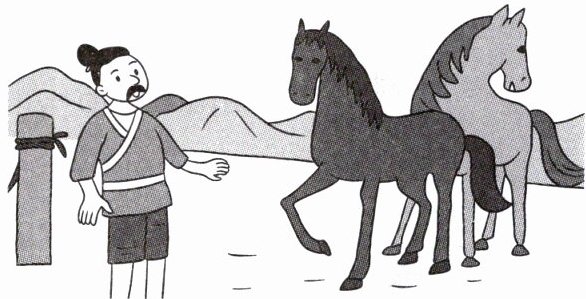
After a few months, his horse came back, leading a wild horse from the north. Everyone congratulated(祝贺)him.
“Perhaps this will soon turn out to be a bad luck,” said Sai Weng.
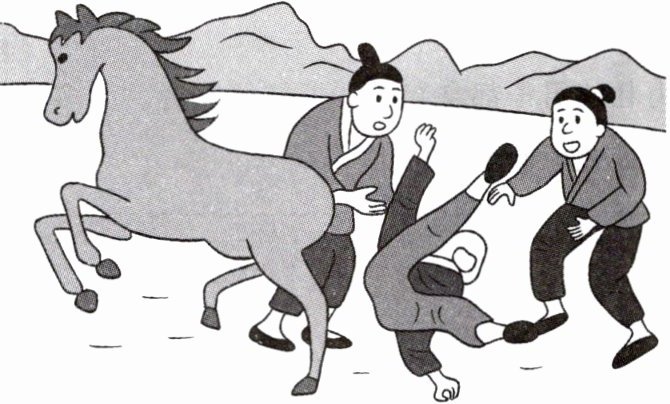
Before long, his son became fond of riding. One day he fell from the wild horse and broke his leg. Again, his neighbours all felt sorry for him.
“Perhaps this will soon turn out to be a blessing,” said Sai Weng.

One year later, the northern tribes started a war(战争)along the border. All strong young men took up arms and fought against the invaders(入侵者). Most of them died. Sai Weng’s son did not join in the fighting because he was lame(跛的), so both of them survived(幸存).
我来试试
根据故事内容回答问题。
同学们,你们知道由这个寓言故事引申而来的八字成语是什么吗?
阅读小帮手
“中华传统”译文:
很久很久以前,有一位老人家住在中国北部边界附近,因此人们称他“塞翁”。
有一天,他的马闯进了北方外族部落的领域。人们都很同情他。
“这可能是个好事呢。”塞翁说。
几个月后,他的马回来了,还从北方带回一匹野马。人们都祝贺他。
“也许这会变成坏事呢。”塞翁说。
不久,他的儿子喜欢上了骑马。一天,他的儿子从那匹野马上摔下来,摔断了腿。又一次,邻居们为他感到难过。
“也许这很快会变成好事呢。”塞翁说。
一年之后,北方外族入侵边塞。所有年轻力壮的男子都拿起武器抵抗侵略者。大多数人都战死了。塞翁的儿子因为跛脚没有参军,因此他俩都活了下来。
A loss, no bad thing or a blessing(祝福)in disguise(伪装)
导读:上个单元我们读了东郭先生和中山狼的故事,这个单元我们来读一个与马有关的寓言故事,看看你们能不能读懂这个故事并理解由这个故事引申而来的八字成语。
Long long ago, there was an old man. He lived near China’s northern(北方的)border(边界). So people called him Sai Weng.
One day, his horse ran into the territory(领域)of the northern tribes(部落). Everyone showed pity on him.
“Perhaps this will soon turn out to be a blessing,” said Sai Weng.
After a few months, his horse came back, leading a wild horse from the north. Everyone congratulated(祝贺)him.
“Perhaps this will soon turn out to be a bad luck,” said Sai Weng.
Before long, his son became fond of riding. One day he fell from the wild horse and broke his leg. Again, his neighbours all felt sorry for him.
“Perhaps this will soon turn out to be a blessing,” said Sai Weng.
One year later, the northern tribes started a war(战争)along the border. All strong young men took up arms and fought against the invaders(入侵者). Most of them died. Sai Weng’s son did not join in the fighting because he was lame(跛的), so both of them survived(幸存).
我来试试
根据故事内容回答问题。
同学们,你们知道由这个寓言故事引申而来的八字成语是什么吗?
阅读小帮手
“中华传统”译文:
很久很久以前,有一位老人家住在中国北部边界附近,因此人们称他“塞翁”。
有一天,他的马闯进了北方外族部落的领域。人们都很同情他。
“这可能是个好事呢。”塞翁说。
几个月后,他的马回来了,还从北方带回一匹野马。人们都祝贺他。
“也许这会变成坏事呢。”塞翁说。
不久,他的儿子喜欢上了骑马。一天,他的儿子从那匹野马上摔下来,摔断了腿。又一次,邻居们为他感到难过。
“也许这很快会变成好事呢。”塞翁说。
一年之后,北方外族入侵边塞。所有年轻力壮的男子都拿起武器抵抗侵略者。大多数人都战死了。塞翁的儿子因为跛脚没有参军,因此他俩都活了下来。
答案
塞翁失马,焉知非福
解析
这是“塞翁失马”的寓言故事,故事里坏事与好事相互转化,由此引申出的八字成语是“塞翁失马,焉知非福”,它表示一时遭受损失,或许反而能从中获益,也指坏事在特定条件下可以转变为好事。
