

 登录
登录
第二节
阅读短文,根据语篇要求填空,使短文通顺、意思完整。每空限填一词。
Why do so many people like shopping online now? Sometimes we don't have much time 46.
There 48.
阅读短文,根据语篇要求填空,使短文通顺、意思完整。每空限填一词。
Why do so many people like shopping online now? Sometimes we don't have much time 46.
to
go to shops. If we want to shop online, we only need a computer and the internet. If we shop online, we can visit many shops in a short time, and we can buy things 47. from
around the world.There 48.
are
lots of shops on the internet. How can we find the right one? First, go to 49. an
online shop with a good reputation(名誉). Second, look at other shoppers' reviews(评论). From these, we can make a good choice 50. before/when
we do online shopping. Third, we can ask our friends about some good online shops. They can help us.答案
46. to 47. from 48. are 49. an 50. before/when
解析
【分析】
这是一篇关于网购的语篇填空题,解题时需结合语境和基础语法知识逐一分析每个空:
1. 第46空:句子表达“有时我们没有太多时间去商店”,需要用到“有时间做某事”的固定结构,因此考虑不定式符号to。
2. 第47空:“买来自世界各地的东西”是常用表达,这里需要一个表示“来自”的介词,所以确定用from。
3. 第48空:这是there be句型,be动词的形式由后面的主语决定,主语“lots of shops”是复数,所以be动词用are。
4. 第49空:这里泛指“一个有好名声的网店”,“online”是以元音音素开头的单词,所以要用不定冠词an。
5. 第50空:根据语境,“在网购之前做出好选择”或者“在网购时做出好选择”都符合逻辑,因此可以填before或when。
【解析】
46. 此处考查固定搭配“have time to do sth.”,意为“有时间做某事”,不定式作后置定语修饰time,故填to。
47. 此处考查介词的用法,“from around the world”是固定表达,意为“来自世界各地”,符合“购买来自世界各地的物品”的语境,故填from。
48. 此处考查there be句型,be动词的单复数遵循“就近原则”,本句中主语为“lots of shops”(复数名词),因此be动词用are,故填are。
49. 此处考查不定冠词的用法,“online shop”是可数名词单数,且“online”是以元音音素开头的单词,泛指“一个网店”,所以用an,故填an。
50. 此处考查连词的用法,结合语境,“在网购之前”或者“当网购时”做出合理选择都符合逻辑,故可填before或when。
【答案】
46. to 47. from 48. are 49. an 50. before/when
【知识点】
1. 固定搭配
2. There be句型
3. 冠词与连词用法
【点评】
本题围绕“网购”这一贴近生活的话题展开语篇填空,主要考查基础英语语法点和常用固定搭配,需要学生结合语境理解句意,同时掌握核心句型、介词、冠词等基础知识点,对巩固英语基础语法知识有较好的作用。
【难度系数】
0.7
这是一篇关于网购的语篇填空题,解题时需结合语境和基础语法知识逐一分析每个空:
1. 第46空:句子表达“有时我们没有太多时间去商店”,需要用到“有时间做某事”的固定结构,因此考虑不定式符号to。
2. 第47空:“买来自世界各地的东西”是常用表达,这里需要一个表示“来自”的介词,所以确定用from。
3. 第48空:这是there be句型,be动词的形式由后面的主语决定,主语“lots of shops”是复数,所以be动词用are。
4. 第49空:这里泛指“一个有好名声的网店”,“online”是以元音音素开头的单词,所以要用不定冠词an。
5. 第50空:根据语境,“在网购之前做出好选择”或者“在网购时做出好选择”都符合逻辑,因此可以填before或when。
【解析】
46. 此处考查固定搭配“have time to do sth.”,意为“有时间做某事”,不定式作后置定语修饰time,故填to。
47. 此处考查介词的用法,“from around the world”是固定表达,意为“来自世界各地”,符合“购买来自世界各地的物品”的语境,故填from。
48. 此处考查there be句型,be动词的单复数遵循“就近原则”,本句中主语为“lots of shops”(复数名词),因此be动词用are,故填are。
49. 此处考查不定冠词的用法,“online shop”是可数名词单数,且“online”是以元音音素开头的单词,泛指“一个网店”,所以用an,故填an。
50. 此处考查连词的用法,结合语境,“在网购之前”或者“当网购时”做出合理选择都符合逻辑,故可填before或when。
【答案】
46. to 47. from 48. are 49. an 50. before/when
【知识点】
1. 固定搭配
2. There be句型
3. 冠词与连词用法
【点评】
本题围绕“网购”这一贴近生活的话题展开语篇填空,主要考查基础英语语法点和常用固定搭配,需要学生结合语境理解句意,同时掌握核心句型、介词、冠词等基础知识点,对巩固英语基础语法知识有较好的作用。
【难度系数】
0.7
四、补全对话。
根据下面的对话情景,在每个空白处填上一个适当的句子,使对话的意思连贯、完整。
A:Hi, Xiao Hua! The weekend is coming! Would you like to go shopping with me?
B:Sure, I'd love to. 51.
A:No. I don't have any shopping plan. I just want to go to the shops to buy something.
B:52.
A:53.
B:Because making shopping plans can help you save time and money.
A:Sounds good. I'd like to be a smart shopper, too. 54.
B:Yes. I'm glad to help you. There are many things you can do. For example, making a shopping list, looking for the best price and thinking again before you buy something.
A:Sounds great. 55.
B:You're welcome. Let's shop wisely together.
根据下面的对话情景,在每个空白处填上一个适当的句子,使对话的意思连贯、完整。
A:Hi, Xiao Hua! The weekend is coming! Would you like to go shopping with me?
B:Sure, I'd love to. 51.
Do you have a shopping plan
?A:No. I don't have any shopping plan. I just want to go to the shops to buy something.
B:52.
You’re not a smart shopper
. A smart shopper always makes plans before shopping.A:53.
Why(do I need to make a plan)
?B:Because making shopping plans can help you save time and money.
A:Sounds good. I'd like to be a smart shopper, too. 54.
Can you help me/Can you tell me something about it
?B:Yes. I'm glad to help you. There are many things you can do. For example, making a shopping list, looking for the best price and thinking again before you buy something.
A:Sounds great. 55.
Thanks/Thank you(for telling me so much)
.B:You're welcome. Let's shop wisely together.
答案
51. Do you have a shopping plan
52. You’re not a smart shopper
53. Why(do I need to make a plan)
54. Can you help me/Can you tell me something about it
55. Thanks/Thank you(for telling me so much)
52. You’re not a smart shopper
53. Why(do I need to make a plan)
54. Can you help me/Can you tell me something about it
55. Thanks/Thank you(for telling me so much)
解析
【分析】
这是一段关于购物计划的日常对话,解题时需结合上下文语境和问答逻辑来补全句子:
1. 第51空:根据A的回答“No. I don't have any shopping plan.”,可知B需要询问A是否有购物计划,应使用一般疑问句来引导。
2. 第52空:B后面提到“聪明的购物者总会在购物前制定计划”,结合A没有计划的情况,B需要指出A不是聪明的购物者,衔接后续观点。
3. 第53空:B的回答用“Because...”开头,说明此处A是在询问制定购物计划的原因,要用疑问词“Why”引导问句。
4. 第54空:B回复“Yes. I'm glad to help you.”,可知A是在向B请求帮助或询问成为聪明购物者的方法,需用表示请求的疑问句。
5. 第55空:B说“You're welcome.”,说明此处A需要表达感谢,使用日常感谢用语即可。
【解析】
1. 51空:由A的否定回答及后续内容可知,B询问A是否有购物计划,故填Do you have a shopping plan。
2. 52空:结合B后面对“聪明购物者”的描述,指出A不符合该特征,故填You’re not a smart shopper。
3. 53空:根据B的原因回答,A需询问原因,故填Why(do I need to make a plan)。
4. 54空:B表示乐意帮忙,说明A在请求帮助或咨询方法,故填Can you help me/Can you tell me something about it。
5. 55空:B回应不客气,所以A表达感谢,故填Thanks/Thank you(for telling me so much)。
【答案】
51. Do you have a shopping plan
52. You’re not a smart shopper
53. Why(do I need to make a plan)
54. Can you help me/Can you tell me something about it
55. Thanks/Thank you(for telling me so much)
【知识点】
情景对话补全、日常交际用语、语境推理
【点评】
本题围绕购物场景展开日常交际,考查学生结合上下文语境推理对话内容的能力,注重问答逻辑和日常用语的运用,有助于提升学生的口语交际能力和语境分析能力。
【难度系数】
0.7
这是一段关于购物计划的日常对话,解题时需结合上下文语境和问答逻辑来补全句子:
1. 第51空:根据A的回答“No. I don't have any shopping plan.”,可知B需要询问A是否有购物计划,应使用一般疑问句来引导。
2. 第52空:B后面提到“聪明的购物者总会在购物前制定计划”,结合A没有计划的情况,B需要指出A不是聪明的购物者,衔接后续观点。
3. 第53空:B的回答用“Because...”开头,说明此处A是在询问制定购物计划的原因,要用疑问词“Why”引导问句。
4. 第54空:B回复“Yes. I'm glad to help you.”,可知A是在向B请求帮助或询问成为聪明购物者的方法,需用表示请求的疑问句。
5. 第55空:B说“You're welcome.”,说明此处A需要表达感谢,使用日常感谢用语即可。
【解析】
1. 51空:由A的否定回答及后续内容可知,B询问A是否有购物计划,故填Do you have a shopping plan。
2. 52空:结合B后面对“聪明购物者”的描述,指出A不符合该特征,故填You’re not a smart shopper。
3. 53空:根据B的原因回答,A需询问原因,故填Why(do I need to make a plan)。
4. 54空:B表示乐意帮忙,说明A在请求帮助或咨询方法,故填Can you help me/Can you tell me something about it。
5. 55空:B回应不客气,所以A表达感谢,故填Thanks/Thank you(for telling me so much)。
【答案】
51. Do you have a shopping plan
52. You’re not a smart shopper
53. Why(do I need to make a plan)
54. Can you help me/Can you tell me something about it
55. Thanks/Thank you(for telling me so much)
【知识点】
情景对话补全、日常交际用语、语境推理
【点评】
本题围绕购物场景展开日常交际,考查学生结合上下文语境推理对话内容的能力,注重问答逻辑和日常用语的运用,有助于提升学生的口语交际能力和语境分析能力。
【难度系数】
0.7
五、书面表达。
同学们,你们都有零花钱吧?你们的零花钱是怎么来的,又花到哪去了?假如你们学校的校刊英语专栏正在以 “My Pocket Money” 为题开展征文活动,请你根据写作要求,结合自身实际谈谈你的做法。
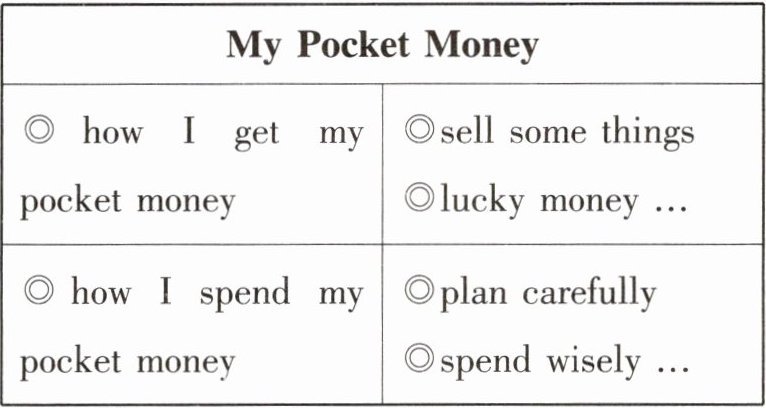
写作要求:
(1) 文中需要包含表格中所提示的全部要点,可适当发挥,书写规范;
(2) 文中不得出现本人姓名或校名;
(3) 词数 70 个左右(开头已给出,不计入总词数)。
My Pocket Money
Every student may have some pocket money. I have some, too.
同学们,你们都有零花钱吧?你们的零花钱是怎么来的,又花到哪去了?假如你们学校的校刊英语专栏正在以 “My Pocket Money” 为题开展征文活动,请你根据写作要求,结合自身实际谈谈你的做法。
写作要求:
(1) 文中需要包含表格中所提示的全部要点,可适当发挥,书写规范;
(2) 文中不得出现本人姓名或校名;
(3) 词数 70 个左右(开头已给出,不计入总词数)。
My Pocket Money
Every student may have some pocket money. I have some, too.
I usually get my pocket money by selling some things, such as some old books and clothes. On weekends, I often pick up some bottles and sell them. I also get my pocket money from my grandparents. During the Spring Festival, I can get lucky money from them.
I never buy what I don’t really need. If I need to go shopping, I always plan carefully to spend my pocket money. I spend my pocket money wisely and I’m a smart shopper.
I never buy what I don’t really need. If I need to go shopping, I always plan carefully to spend my pocket money. I spend my pocket money wisely and I’m a smart shopper.
答案
My Pocket Money
Every student may have some pocket money. I have some, too.
I usually get my pocket money by selling some things, such as some old books and clothes. On weekends, I often pick up some bottles and sell them. I also get my pocket money from my grandparents. During the Spring Festival, I can get lucky money from them.
I never buy what I don’t really need. If I need to go shopping, I always plan carefully to spend my pocket money. I spend my pocket money wisely and I’m a smart shopper.
Every student may have some pocket money. I have some, too.
I usually get my pocket money by selling some things, such as some old books and clothes. On weekends, I often pick up some bottles and sell them. I also get my pocket money from my grandparents. During the Spring Festival, I can get lucky money from them.
I never buy what I don’t really need. If I need to go shopping, I always plan carefully to spend my pocket money. I spend my pocket money wisely and I’m a smart shopper.
解析
【分析】
首先,这是一篇贴近学生生活的话题类书面表达,需围绕“My Pocket Money”展开,必须涵盖“零花钱获取方式”和“零花钱花费方式”两个核心要点,同时要结合自身实际,控制词数在70左右,且不能出现姓名或校名。
思考步骤:1. 承接给定开头,先阐述零花钱的来源,结合提示的“sell some things”和“lucky money”,拓展具体的售卖行为,比如卖旧书、旧衣物、周末捡瓶子售卖,再补充春节从长辈处得压岁钱的内容;2. 接着写零花钱的花费,紧扣“plan carefully”和“spend wisely”,具体说明不买非必需物品、购物前做好规划的做法;3. 最后收尾点明自己是明智的消费者,让内容完整流畅。
【解析】
1. 承接开头,介绍零花钱获取途径:结合提示点拓展具体行为,比如售卖旧书、旧衣物,周末捡瓶子售卖,再补充春节从祖父母处获得压岁钱的内容,让来源更具体真实;
2. 阐述零花钱的花费方式:紧扣“plan carefully”和“spend wisely”,具体说明“不购买非必需物品,购物前提前规划”的消费习惯,体现合理支配的意识;
3. 收尾总结,点明自己是精明的消费者,使文章结构完整,符合词数要求。
【答案】
My Pocket Money
Every student may have some pocket money. I have some, too.
I usually get my pocket money by selling some things, such as some old books and clothes. On weekends, I often pick up some bottles and sell them. I also get my pocket money from my grandparents. During the Spring Festival, I can get lucky money from them.
I never buy what I don’t really need. If I need to go shopping, I always plan carefully to spend my pocket money. I spend my pocket money wisely and I’m a smart shopper.
【知识点】
英语应用文写作、日常话题书面表达
【点评】
本文紧扣题目要求,完整覆盖了表格中的所有要点,内容贴合学生日常实际,语言表达通顺自然,词数符合要求,清晰展现了合理获取和支配零花钱的做法,是一篇符合征文要求的优秀短文。
【难度系数】
0.7
首先,这是一篇贴近学生生活的话题类书面表达,需围绕“My Pocket Money”展开,必须涵盖“零花钱获取方式”和“零花钱花费方式”两个核心要点,同时要结合自身实际,控制词数在70左右,且不能出现姓名或校名。
思考步骤:1. 承接给定开头,先阐述零花钱的来源,结合提示的“sell some things”和“lucky money”,拓展具体的售卖行为,比如卖旧书、旧衣物、周末捡瓶子售卖,再补充春节从长辈处得压岁钱的内容;2. 接着写零花钱的花费,紧扣“plan carefully”和“spend wisely”,具体说明不买非必需物品、购物前做好规划的做法;3. 最后收尾点明自己是明智的消费者,让内容完整流畅。
【解析】
1. 承接开头,介绍零花钱获取途径:结合提示点拓展具体行为,比如售卖旧书、旧衣物,周末捡瓶子售卖,再补充春节从祖父母处获得压岁钱的内容,让来源更具体真实;
2. 阐述零花钱的花费方式:紧扣“plan carefully”和“spend wisely”,具体说明“不购买非必需物品,购物前提前规划”的消费习惯,体现合理支配的意识;
3. 收尾总结,点明自己是精明的消费者,使文章结构完整,符合词数要求。
【答案】
My Pocket Money
Every student may have some pocket money. I have some, too.
I usually get my pocket money by selling some things, such as some old books and clothes. On weekends, I often pick up some bottles and sell them. I also get my pocket money from my grandparents. During the Spring Festival, I can get lucky money from them.
I never buy what I don’t really need. If I need to go shopping, I always plan carefully to spend my pocket money. I spend my pocket money wisely and I’m a smart shopper.
【知识点】
英语应用文写作、日常话题书面表达
【点评】
本文紧扣题目要求,完整覆盖了表格中的所有要点,内容贴合学生日常实际,语言表达通顺自然,词数符合要求,清晰展现了合理获取和支配零花钱的做法,是一篇符合征文要求的优秀短文。
【难度系数】
0.7
