

 登录
登录
3. 你能用英语向小组同伴介绍自己的网友吗?在小组内一起比比看吧!你可以模仿课本第67页关于Linda的介绍。
答案
This is my e-friend. His/Her name is... He/She is... years old. He/She lives in... He/She can speak... He/She likes... We often chat online and share interesting things. I'm happy to have such a good e-friend.
1. Magic eyes:你能一眼看出它们都是什么单词吗?拼一拼并写出中文意思。
(1) meail ______ ( ) (2) tusyd ______ ( )
(3) dtorow ______ ( ) (4) erifend ______ ( )
(1) meail ______ ( ) (2) tusyd ______ ( )
(3) dtorow ______ ( ) (4) erifend ______ ( )
答案
email
邮件
study
学习
tomorrow
明天
e-friend
网友
邮件
study
学习
tomorrow
明天
e-friend
网友
2. 游戏:唱反调。根据同伴给出的句子,说出对应的否定句。
例:I like skating. I don't like skating.
例:I like skating. I don't like skating.
答案
1.
(1)若同伴句子为:I like reading.
否定句:I don't like reading.
(2)若同伴句子为:I often play football.
否定句:I don't often play football.
(3)若同伴句子为:I have a pet dog.
否定句:I don't have a pet dog.
(4)若同伴句子为:I can swim.
否定句:I can't swim.
(5)若同伴句子为:I want to be a teacher.
否定句:I don't want to be a teacher.
(1)若同伴句子为:I like reading.
否定句:I don't like reading.
(2)若同伴句子为:I often play football.
否定句:I don't often play football.
(3)若同伴句子为:I have a pet dog.
否定句:I don't have a pet dog.
(4)若同伴句子为:I can swim.
否定句:I can't swim.
(5)若同伴句子为:I want to be a teacher.
否定句:I don't want to be a teacher.
3. 在小组内介绍自己的网友,根据自己列的提纲完成短文写作,并在小组内传阅。
答案
My e-friend is Peter. He is twelve years old. He lives in the UK. He can speak English and a little Chinese. He likes Chinese very much. He studies Chinese after school. He has many hobbies. He likes reading stories, playing football and doing kung fu. He often reads stories to me in English. We often play football together on the Internet. I like my e-friend very much.
1. 根据首字母提示,完成短文填空。
My e______ is Mary. She l______ in Greece now. She's 12 y______ old.
She can't speak C______. She s______ PE, M______, Art, E______, Science and Music at s______. She isn't g______ at Chinese, so she h______ Chinese lessons after school. She likes w______ TV, but she d______ like reading s______.
My e______ is Mary. She l______ in Greece now. She's 12 y______ old.
She can't speak C______. She s______ PE, M______, Art, E______, Science and Music at s______. She isn't g______ at Chinese, so she h______ Chinese lessons after school. She likes w______ TV, but she d______ like reading s______.
答案
-friend
ives
ears
hinese
tudies
aths
nglish
chool
ood
as
atching
oesn't
tories
ives
ears
hinese
tudies
aths
nglish
chool
ood
as
atching
oesn't
tories
解析
1. 第一个空,根据“My e-friend”及首字母e,可知此处指“我的网友”,填e-friend。
2. 第二个空,根据“in Greece now”及首字母l,可知她住在希腊,主语She是第三人称单数,一般现在时中动词用第三人称单数形式,填lives。
3. 第三个空,根据“12...old”及首字母y,可知是12岁,填years。
4. 第四个空,根据“She can't speak...”及首字母C,结合语境可知她不会说中文,填Chinese。
5. 第五个空,根据“...PE, M..., Art, E..., Science and Music at s...”及首字母s,可知是在学校学习这些科目,主语She是第三人称单数,一般现在时中动词用第三人称单数形式,填studies。
6. 第六个空,根据“PE, M..., Art”及首字母M,可知是数学,填Maths。
7. 第七个空,根据“Art, E..., Science”及首字母E,可知是英语,填English。
8. 第八个空,根据“at s...”及首字母s,可知是在学校,填school。
9. 第九个空,根据“She isn't g... at Chinese”及首字母g,可知是不擅长中文,be good at表示“擅长”,填good。
10. 第十个空,根据“so she h... Chinese lessons after school”及首字母h,可知是上中文课,主语She是第三人称单数,一般现在时中动词用第三人称单数形式,填has。
11. 第十一个空,根据“She likes w... TV”及首字母w,可知是喜欢看电视,like doing sth表示“喜欢做某事”,填watching。
12. 第十二个空,根据“but she d... like reading s...”及首字母d,可知是她不喜欢,主语She是第三人称单数,一般现在时中否定句借助助动词doesn't,填doesn't。
13. 第十三个空,根据“reading s...”及首字母s,结合语境可知是不喜欢读故事,填stories。
2. 第二个空,根据“in Greece now”及首字母l,可知她住在希腊,主语She是第三人称单数,一般现在时中动词用第三人称单数形式,填lives。
3. 第三个空,根据“12...old”及首字母y,可知是12岁,填years。
4. 第四个空,根据“She can't speak...”及首字母C,结合语境可知她不会说中文,填Chinese。
5. 第五个空,根据“...PE, M..., Art, E..., Science and Music at s...”及首字母s,可知是在学校学习这些科目,主语She是第三人称单数,一般现在时中动词用第三人称单数形式,填studies。
6. 第六个空,根据“PE, M..., Art”及首字母M,可知是数学,填Maths。
7. 第七个空,根据“Art, E..., Science”及首字母E,可知是英语,填English。
8. 第八个空,根据“at s...”及首字母s,可知是在学校,填school。
9. 第九个空,根据“She isn't g... at Chinese”及首字母g,可知是不擅长中文,be good at表示“擅长”,填good。
10. 第十个空,根据“so she h... Chinese lessons after school”及首字母h,可知是上中文课,主语She是第三人称单数,一般现在时中动词用第三人称单数形式,填has。
11. 第十一个空,根据“She likes w... TV”及首字母w,可知是喜欢看电视,like doing sth表示“喜欢做某事”,填watching。
12. 第十二个空,根据“but she d... like reading s...”及首字母d,可知是她不喜欢,主语She是第三人称单数,一般现在时中否定句借助助动词doesn't,填doesn't。
13. 第十三个空,根据“reading s...”及首字母s,结合语境可知是不喜欢读故事,填stories。
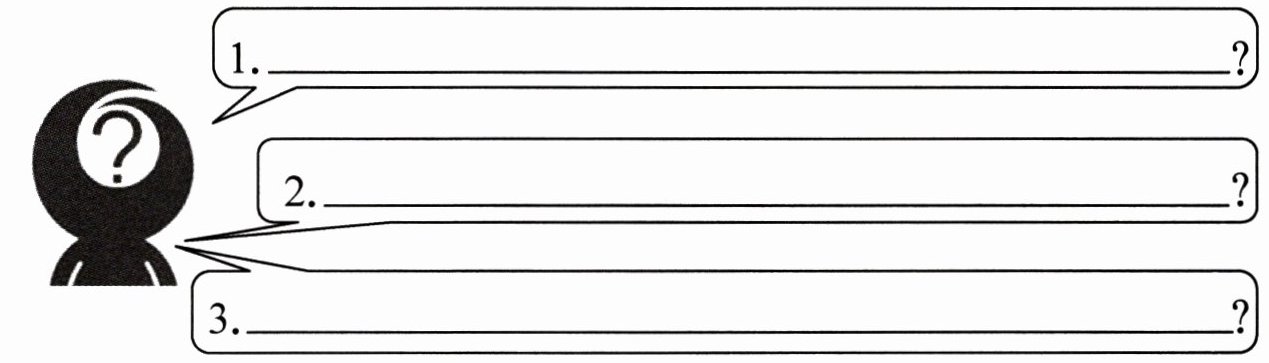
2. 我有一个网友Tom,你想了解他吗?快向我提问吧!
1. ______?
2. ______?
3. ______?
1. ______?
2. ______?
3. ______?
答案
1. Does he study Chinese?
2. What does he like doing?
3. Does he have any hobbies?
2. What does he like doing?
3. Does he have any hobbies?
根据小组内同伴的描述,以“Our e-friends”为主题制作思维导图,并向家人做介绍。如果你完成了,请为自己画个笑脸吧。
答案
答案略
二、根据实际情况,回答问题。
1. How old are you?
2. Where do you live?
3. What does your father do?
4. Does your uncle like reading?
5. Do your friends have any hobbies?
6. I don't like running. How about you?
7. Can you play table tennis well?
8. What subjects do you like?
9. Does your brother study Science?
10. What do you do on Sundays?
1. How old are you?
2. Where do you live?
3. What does your father do?
4. Does your uncle like reading?
5. Do your friends have any hobbies?
6. I don't like running. How about you?
7. Can you play table tennis well?
8. What subjects do you like?
9. Does your brother study Science?
10. What do you do on Sundays?
答案
1. I am XX years old.
2. I live in XX.
3. My father is a XX.
4. Yes, he does. / No, he doesn't.
5. Yes, they do. / No, they don't.
6. I don't like running either. / I like running.
7. Yes, I can. / No, I can't.
8. I like XX.
9. Yes, he does. / No, he doesn't.
10. I usually do XX on Sundays.
2. I live in XX.
3. My father is a XX.
4. Yes, he does. / No, he doesn't.
5. Yes, they do. / No, they don't.
6. I don't like running either. / I like running.
7. Yes, I can. / No, I can't.
8. I like XX.
9. Yes, he does. / No, he doesn't.
10. I usually do XX on Sundays.
