

 登录
登录
(
A.some
B.any
C.a
B
)2. Are there ____ flowers on the hill?A.some
B.any
C.a
答案
B
解析
此题考查的是some和any的用法区别。some一般用于肯定句,any一般用于否定句和疑问句。此句为一般疑问句,所以应用any,且flowers为可数名词复数,不能用a。因此选B。
翻译:
山上有一些花吗?
翻译:
山上有一些花吗?
(
A.animals
B.tiger
C.panda
A
)3. How many ____ are there in the park?A.animals
B.tiger
C.panda
答案
A
解析
题干中“how many”后应接可数名词复数形式,用于询问数量。选项A “animals”是“animal”的复数形式;选项B “tiger”是单数形式;选项C “panda”也是单数形式。所以应选择复数形式的“animals”。
翻译:
公园里有多少____?
A.动物(复数)
B.老虎(单数)
C.熊猫(单数)
翻译:
公园里有多少____?
A.动物(复数)
B.老虎(单数)
C.熊猫(单数)
(
A.go fishing
B.fishing
C.to go fishing
A
)4. Let's ____.A.go fishing
B.fishing
C.to go fishing
答案
A
解析
Let's后接动词原形,go fishing是固定短语,意为“去钓鱼”,A选项符合语法;B选项是动名词,C选项是动词不定式,均不符合Let's的用法。
翻译:
4. 让我们____。
A. 去钓鱼
B. 钓鱼
C. 去钓鱼
翻译:
4. 让我们____。
A. 去钓鱼
B. 钓鱼
C. 去钓鱼
五、读对话,选择合适的图片。
(
—Yes, there are.

(
—No, there aren't.
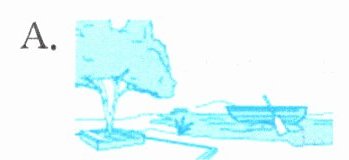
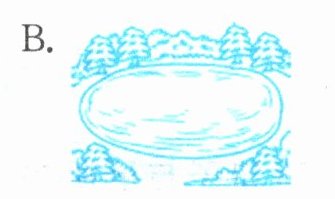
(
—Yes, there is.
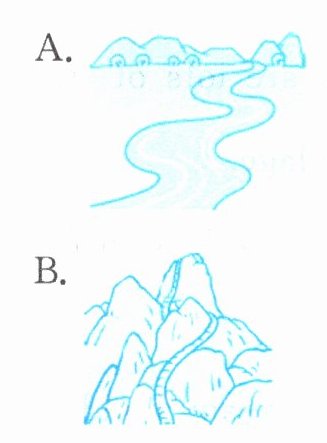
(
B
)1. —Are there any flowers in the park?—Yes, there are.
(
B
)2. —Are there any boats on the lake?—No, there aren't.
(
A
)3. —Is there a river in front of the mountains?—Yes, there is.
答案
1. (B)
2. (B)
3. (A)
2. (B)
3. (A)
解析
翻译:
五、读对话,选择合适的图片。
( )1. ——公园里有花吗?
——是的,有。
( )2. ——湖上有船吗?
——不,没有。
( )3. ——山的前面有一条河吗?
——是的,有。
五、读对话,选择合适的图片。
( )1. ——公园里有花吗?
——是的,有。
( )2. ——湖上有船吗?
——不,没有。
( )3. ——山的前面有一条河吗?
——是的,有。
六、用 be 动词的适当形式填空。
1. There
2. There
3. —
—Yes, there is.
4. —
—Yes, there are.
5. —Are there any plants in the classroom?
—No, there
6. —Is there a koala over there?
—No, there
1. There
is
a lake near the village.2. There
are
many pretty fish in the river.3. —
Is
there an elephant in the zoo?—Yes, there is.
4. —
Are
there any flowers in the garden?—Yes, there are.
5. —Are there any plants in the classroom?
—No, there
aren't
.6. —Is there a koala over there?
—No, there
isn't
. There is a bear.答案
1. is
2. are
3. Is
4. Are
5. aren't
6. isn't
2. are
3. Is
4. Are
5. aren't
6. isn't
解析
1. “a lake”是单数,所以用is。
2. “many pretty fish”是复数,所以用are。
3. 根据答语“Yes, there is.”可知问句是“Is there...”,所以用Is。
4. 根据答语“Yes, there are.”可知问句是“Are there...”,所以用Are。
5. 根据“No”可知是否定回答,且问句是“Are there...”,所以用aren't。
6. 根据“No”可知是否定回答,且问句是“Is there...”,所以用isn't。
翻译:
六、用 be 动词的适当形式填空。
1. 村庄附近有一个湖。
2. 河里有许多漂亮的鱼。
3. ——动物园里有一头大象吗?
——是的,有。
4. ——花园里有一些花吗?
——是的,有。
5. ——教室里有一些植物吗?
——不,没有。
6. ——那边有一只考拉吗?
——不,没有。有一只熊。
2. “many pretty fish”是复数,所以用are。
3. 根据答语“Yes, there is.”可知问句是“Is there...”,所以用Is。
4. 根据答语“Yes, there are.”可知问句是“Are there...”,所以用Are。
5. 根据“No”可知是否定回答,且问句是“Are there...”,所以用aren't。
6. 根据“No”可知是否定回答,且问句是“Is there...”,所以用isn't。
翻译:
六、用 be 动词的适当形式填空。
1. 村庄附近有一个湖。
2. 河里有许多漂亮的鱼。
3. ——动物园里有一头大象吗?
——是的,有。
4. ——花园里有一些花吗?
——是的,有。
5. ——教室里有一些植物吗?
——不,没有。
6. ——那边有一只考拉吗?
——不,没有。有一只熊。
