

 登录
Labour classes at school can help students be active and happy in life. At the same time, students can learn the meaning of labour. Students in middle school will have at least one labour class a week.
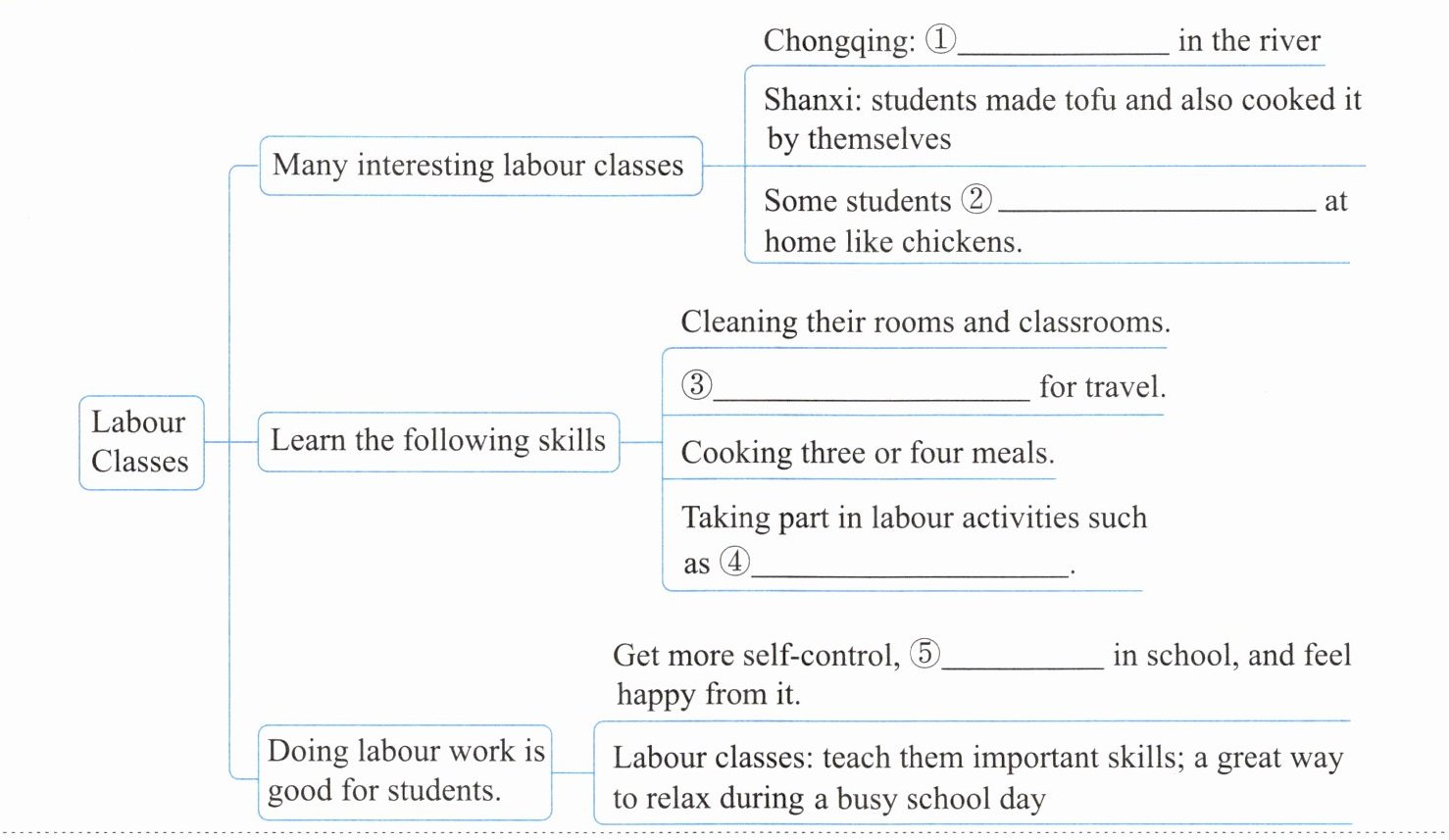
There are many interesting labour classes now. Students from a school in Chongqing had a class about catching fish in the river and learning about their habits. In Shanxi Province, students made tofu and also cooked it by themselves. The labour classes made them feel happy when they cooked delicious meals. Some students also kept small animals at home like chickens. This helped students learn how to care for living things and also made them more interested in biology.
According to the new policy(政策), middle school students need to learn the following skills in labour classes: cleaning their rooms and classrooms, picking proper(合适的)clothes for travel, cooking three or four meals and taking part in labour activities such as planting or fishing.
A study shows that doing labour work is good for students. The students can get more self-control(自控), do better in school, and feel happy from it. Labour classes not only teach them important skills but also are a great way to relax during a busy school day. So which kind of labour skill do you want to learn most?
6. What subject might students be more interested in after keeping small animals at home?
A. Physics.
B. Chemistry.
C. Biology.
D. Maths.
7. Which paragraphs tell what students learn in the labour classes in detail? (①=paragraph 1, ②=paragraph 2 ...)
A. ①②
B. ②③
C. ③④
D. ①④
8. What can we learn from the passage?
A. Students may improve themselves by doing labour work.
B. Students will lose control if they don't take labour classes.
C. Labour classes can only teach students some cooking skills.
D. Labour classes make the students' school days much busier.
9. Who is the passage written for?
A. Doctors.
B. Parents.
C. Students.
D. Scientists.
There are many interesting labour classes now. Students from a school in Chongqing had a class about catching fish in the river and learning about their habits. In Shanxi Province, students made tofu and also cooked it by themselves. The labour classes made them feel happy when they cooked delicious meals. Some students also kept small animals at home like chickens. This helped students learn how to care for living things and also made them more interested in biology.
According to the new policy(政策), middle school students need to learn the following skills in labour classes: cleaning their rooms and classrooms, picking proper(合适的)clothes for travel, cooking three or four meals and taking part in labour activities such as planting or fishing.
A study shows that doing labour work is good for students. The students can get more self-control(自控), do better in school, and feel happy from it. Labour classes not only teach them important skills but also are a great way to relax during a busy school day. So which kind of labour skill do you want to learn most?
6. What subject might students be more interested in after keeping small animals at home?
A. Physics.
B. Chemistry.
C. Biology.
D. Maths.
7. Which paragraphs tell what students learn in the labour classes in detail? (①=paragraph 1, ②=paragraph 2 ...)
A. ①②
B. ②③
C. ③④
D. ①④
8. What can we learn from the passage?
A. Students may improve themselves by doing labour work.
B. Students will lose control if they don't take labour classes.
C. Labour classes can only teach students some cooking skills.
D. Labour classes make the students' school days much busier.
9. Who is the passage written for?
A. Doctors.
B. Parents.
C. Students.
D. Scientists.
答案
B 本文主要介绍了学校劳动课程的相关情况以及劳动课程对学生的好处。
[语篇结构]①catching fish
②kept small animals
③Picking proper clothes
④planting or fishing ⑤do better
6. C 细节理解题。根据第二段中的“This helped students learn how to care for living things and also made them more interested in biology.”可知,一些学生在家饲养小动物,这帮助他们学习如何照顾生物,也让他们对生物学更感兴趣。故选 C。
7. B 细节理解题。根据第二段中的“Students from a school in Chongqing had a class about catching fish in the river and learning about their habits ... Some students also kept small animals at home like chickens.”以及第三段“According to the new policy, middle school students need to learn the following skills in labour classes ...”可知,第二段和第三段详细讲述了学生在劳动课上学到的内容。故选 B。
8. A 推理判断题。根据最后一段中的“A study shows that doing labour work is good for students. The students can get more self-control, do better in school, and feel happy from it.”可知,劳动对学生有益,学生可以通过劳动获得更多的自控力,在学校表现更好,并从中感到快乐,即学生可以通过劳动提升自己。故选 A。
9. C 推理判断题。通读全文可知,文章主要围绕中学生的劳动课程展开,介绍了劳动课程的相关情况以及劳动课程对学生的好处,结合最后一句“So which kind of labour skill do you want to learn most?”可知此处是针对学生进行提问,因此文章是为学生写的。故选 C。
