

 登录
登录
B
The Smith family — Mr and Mrs Smith, their sons Ethan and Jason, and daughters Amy and Emily — are eating in the dining room.
“What’s my dad doing now?” Ethan asks.
“Your dad is making a pumpkin pie,” Mrs Smith says.
“Yummy!” says Emily.
“Well, I want 15 minutes of the pie, please,” Ethan says happily.
“15 minutes of the pie? What’s that?” asks his brother Jason.
“Mr Brown is teaching us about time in school,” Ethan says. “He tells us that the clock can be cut into four 15-minute parts, like the pieces of a pie. Fifteen times four is sixty and there are sixty minutes in an hour.”
“Very good, son!” Mr Smith says.
“So then may I have 15 minutes of the pie, please?” Ethan asks again when his mother is putting the dessert on the table.
Mrs Smith looks at her son. “How about having 10 minutes of the pie and leaving more for us?” she says.
59. Which picture is “15 minutes” of a pumpkin pie?
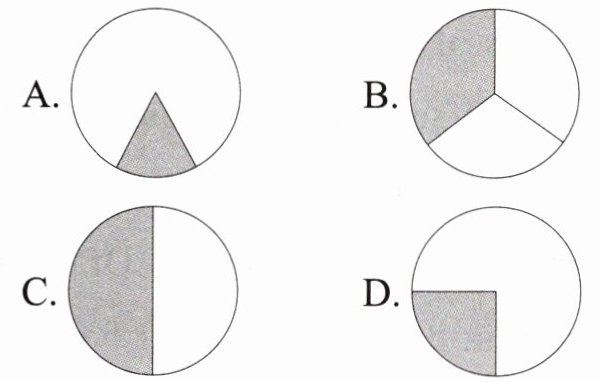
A. B. C. D.
60. What does the underlined word “leaving” mean in Chinese?
A. 离开 B. 留下 C. 加上 D. 占据
61. What can we infer (推断) from the talk?
A. Mrs Smith is making a pumpkin pie. B. Ethan wants to make a pie for 15 minutes. C. Mr Smith is teaching Ethan about time in school. D. Mrs Smith wants Ethan to share the pie.
The Smith family — Mr and Mrs Smith, their sons Ethan and Jason, and daughters Amy and Emily — are eating in the dining room.
“What’s my dad doing now?” Ethan asks.
“Your dad is making a pumpkin pie,” Mrs Smith says.
“Yummy!” says Emily.
“Well, I want 15 minutes of the pie, please,” Ethan says happily.
“15 minutes of the pie? What’s that?” asks his brother Jason.
“Mr Brown is teaching us about time in school,” Ethan says. “He tells us that the clock can be cut into four 15-minute parts, like the pieces of a pie. Fifteen times four is sixty and there are sixty minutes in an hour.”
“Very good, son!” Mr Smith says.
“So then may I have 15 minutes of the pie, please?” Ethan asks again when his mother is putting the dessert on the table.
Mrs Smith looks at her son. “How about having 10 minutes of the pie and leaving more for us?” she says.
59. Which picture is “15 minutes” of a pumpkin pie?
A. B. C. D.
60. What does the underlined word “leaving” mean in Chinese?
A. 离开 B. 留下 C. 加上 D. 占据
61. What can we infer (推断) from the talk?
A. Mrs Smith is making a pumpkin pie. B. Ethan wants to make a pie for 15 minutes. C. Mr Smith is teaching Ethan about time in school. D. Mrs Smith wants Ethan to share the pie.
答案
59. D 60. B 61. D
解析
【分析】
本题为英语阅读理解题,需结合原文内容解答三道小题:
1. 第59题:根据原文中Ethan提到“时钟可分成四个15分钟的部分,像派的块”,可知15分钟的派是整个派的1/4,需对应图片中1/4阴影的选项。
2. 第60题:需结合语境猜测“leaving”的含义,前文是“吃10分钟的派”,后文是“给我们留更多”,由此推断词义。
3. 第61题:需逐一分析选项,结合原文细节排除错误选项,得出正确推断。
【解析】
59. 根据原文“the clock can be cut into four 15-minute parts, like the pieces of a pie”,可知15分钟的派是整个圆的1/4,观察图片,D选项为圆的1/4阴影部分,故选D。
60. 语境为“having 10 minutes of the pie and leaving more for us”,前半部分表示“吃10分钟的派”,后半部分表示“给我们留下更多”,因此“leaving”意为“留下”,故选B。
61. 选项A:原文提到“Your dad is making a pumpkin pie”,是爸爸做派,A错误;选项B:Ethan想要15分钟的派,并非做派,B错误;选项C:是学校的Mr Brown教时间,不是爸爸,C错误;选项D:妈妈让Ethan留更多派给家人,希望他分享,D正确,故选D。
【答案】59.D 60.B 61.D
【知识点】阅读理解(细节理解、词义猜测、推理判断)
【点评】本题考查英语阅读理解的核心能力,需结合原文细节分析,难度适中,适合学生通过原文内容逐一推导答案。
【难度系数】0.6
本题为英语阅读理解题,需结合原文内容解答三道小题:
1. 第59题:根据原文中Ethan提到“时钟可分成四个15分钟的部分,像派的块”,可知15分钟的派是整个派的1/4,需对应图片中1/4阴影的选项。
2. 第60题:需结合语境猜测“leaving”的含义,前文是“吃10分钟的派”,后文是“给我们留更多”,由此推断词义。
3. 第61题:需逐一分析选项,结合原文细节排除错误选项,得出正确推断。
【解析】
59. 根据原文“the clock can be cut into four 15-minute parts, like the pieces of a pie”,可知15分钟的派是整个圆的1/4,观察图片,D选项为圆的1/4阴影部分,故选D。
60. 语境为“having 10 minutes of the pie and leaving more for us”,前半部分表示“吃10分钟的派”,后半部分表示“给我们留下更多”,因此“leaving”意为“留下”,故选B。
61. 选项A:原文提到“Your dad is making a pumpkin pie”,是爸爸做派,A错误;选项B:Ethan想要15分钟的派,并非做派,B错误;选项C:是学校的Mr Brown教时间,不是爸爸,C错误;选项D:妈妈让Ethan留更多派给家人,希望他分享,D正确,故选D。
【答案】59.D 60.B 61.D
【知识点】阅读理解(细节理解、词义猜测、推理判断)
【点评】本题考查英语阅读理解的核心能力,需结合原文细节分析,难度适中,适合学生通过原文内容逐一推导答案。
【难度系数】0.6
C
①Tomatoes taste great. With a lot of vitamins, they are good for you, too! People all over the world enjoy this amazing fruit.
②Not all tomatoes are red. They can be yellow, orange, pink, or white. All tomatoes are green before they are ready to be picked. Then the tomatoes turn their true colour. That’s when they are ready to eat!
③Tomatoes first grew in South America. They were introduced (被引入) to Europe by the Spanish in the early 16th century. The Spanish and Italians seem to have been the first Europeans to accept them as food. In France, people grew tomatoes in the garden just to enjoy their beauty. Many people there thought tomatoes would make them sick. It was years before some of them would eat tomatoes.
④Tomatoes are fruit. They grow from seeds. They won’t grow in cold weather. But with water, sunlight and warmth, tomatoes grow fast. They can grow in pots or in the ground. As the plant grows taller, people may tie it to a stick. Next is the blooming stage. Flowers appear. The flowers turn into fruits. Some kinds of tomatoes can be picked in about six weeks. Some tomatoes are large. One kind of tomato can weigh as much as 450g.
⑤You can eat raw tomatoes. First, wash them. Then, cut them up for salads or sandwiches. Tomatoes can be cooked, too. They can be grilled, boiled, or even fried. Do you use ketchup (番茄酱)? It is made from tomatoes. Tomatoes don’t have a smell. But they taste great in foods around the world. Many dishes from India use tomatoes. Spaghetti (意大利面) sauce and pizza from Italy use them, too. Raw tomatoes are in Mexican salsa (墨西哥莎莎酱).
62. From the passage, what can we know about tomatoes?
A. Tomatoes come in different colours. B. Tomatoes grew in Europe first. C. Tomatoes can grow in all weathers. D. Tomatoes have a special smell.
63. Which is the right step of growing tomatoes?
a. Flowers bloom. b. Tomatoes are ready to be picked. c. Seeds grow in the ground. d. Fruits appear. e. The plants are tied to a stick.
A. a-d-e-c-b B. c-d-a-e-b C. c-a-d-b-e D. c-e-a-d-b
64. Which of the following best shows the structure of the passage?
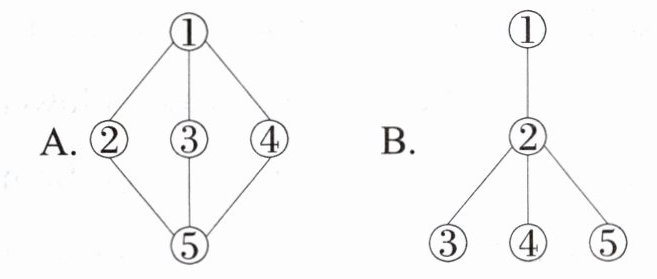
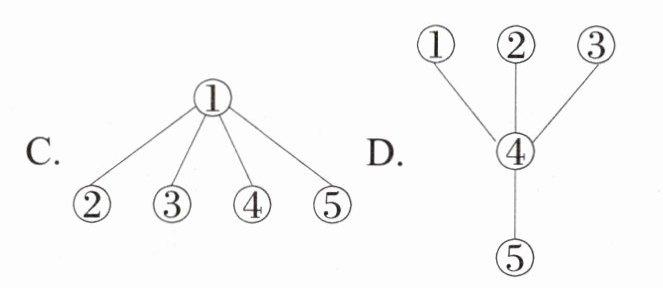
A. B. C. D.
65. Which of the following is the best title for the passage?
A. History of tomatoes B. All about tomatoes C. Europeans and tomatoes D. Growing great tomatoes
①Tomatoes taste great. With a lot of vitamins, they are good for you, too! People all over the world enjoy this amazing fruit.
②Not all tomatoes are red. They can be yellow, orange, pink, or white. All tomatoes are green before they are ready to be picked. Then the tomatoes turn their true colour. That’s when they are ready to eat!
③Tomatoes first grew in South America. They were introduced (被引入) to Europe by the Spanish in the early 16th century. The Spanish and Italians seem to have been the first Europeans to accept them as food. In France, people grew tomatoes in the garden just to enjoy their beauty. Many people there thought tomatoes would make them sick. It was years before some of them would eat tomatoes.
④Tomatoes are fruit. They grow from seeds. They won’t grow in cold weather. But with water, sunlight and warmth, tomatoes grow fast. They can grow in pots or in the ground. As the plant grows taller, people may tie it to a stick. Next is the blooming stage. Flowers appear. The flowers turn into fruits. Some kinds of tomatoes can be picked in about six weeks. Some tomatoes are large. One kind of tomato can weigh as much as 450g.
⑤You can eat raw tomatoes. First, wash them. Then, cut them up for salads or sandwiches. Tomatoes can be cooked, too. They can be grilled, boiled, or even fried. Do you use ketchup (番茄酱)? It is made from tomatoes. Tomatoes don’t have a smell. But they taste great in foods around the world. Many dishes from India use tomatoes. Spaghetti (意大利面) sauce and pizza from Italy use them, too. Raw tomatoes are in Mexican salsa (墨西哥莎莎酱).
62. From the passage, what can we know about tomatoes?
A. Tomatoes come in different colours. B. Tomatoes grew in Europe first. C. Tomatoes can grow in all weathers. D. Tomatoes have a special smell.
63. Which is the right step of growing tomatoes?
a. Flowers bloom. b. Tomatoes are ready to be picked. c. Seeds grow in the ground. d. Fruits appear. e. The plants are tied to a stick.
A. a-d-e-c-b B. c-d-a-e-b C. c-a-d-b-e D. c-e-a-d-b
64. Which of the following best shows the structure of the passage?
A. B. C. D.
65. Which of the following is the best title for the passage?
A. History of tomatoes B. All about tomatoes C. Europeans and tomatoes D. Growing great tomatoes
答案
62. A 63. D 64. C 65. B
解析
【分析】
本题为关于西红柿的科普类阅读理解,需结合原文细节逐一分析各题目:
1. 第62题:为细节理解题,需定位原文对应段落判断选项正误。
2. 第63题:为细节排序题,需从原文第四段提取西红柿种植的先后步骤。
3. 第64题:为文章结构题,需梳理各段落核心内容,判断整体结构。
4. 第65题:为主旨大意题,需概括全文核心内容,选择最贴合的标题。
【解析】
62题:定位原文第二段“Not all tomatoes are red. They can be yellow, orange, pink, or white.”可知西红柿有不同颜色,A正确;B项对应原文第三段“Tomatoes first grew in South America”,错误;C项对应原文第四段“They won’t grow in cold weather”,错误;D项对应原文第五段“Tomatoes don’t have a smell”,错误,故选A。
63题:定位原文第四段种植步骤:种子生长(c)→植株长高后绑棍子(e)→开花(a)→花结果实(d)→可采摘(b),顺序为c-e-a-d-b,故选D。
64题:梳理段落结构:①段总述西红柿的价值;②段介绍颜色;③段介绍起源历史;④段介绍生长过程;⑤段介绍食用方法,整体为分述不同方面的结构,对应选项C。
65题:全文围绕西红柿的颜色、起源、生长、食用等多方面展开,A仅涉及历史,C仅涉及欧洲相关,D仅涉及种植,B“All about tomatoes”最贴合主旨,故选B。
【答案】62.A 63.D 64.C 65.B
【知识点】阅读理解题、细节理解题、主旨大意题
【点评】本题考查学生对科普类文章的阅读能力,涵盖细节查找、信息排序、结构分析及主旨概括,需学生精准定位原文信息,整体难度适中,适合中等水平学生作答。
【难度系数】0.6
本题为关于西红柿的科普类阅读理解,需结合原文细节逐一分析各题目:
1. 第62题:为细节理解题,需定位原文对应段落判断选项正误。
2. 第63题:为细节排序题,需从原文第四段提取西红柿种植的先后步骤。
3. 第64题:为文章结构题,需梳理各段落核心内容,判断整体结构。
4. 第65题:为主旨大意题,需概括全文核心内容,选择最贴合的标题。
【解析】
62题:定位原文第二段“Not all tomatoes are red. They can be yellow, orange, pink, or white.”可知西红柿有不同颜色,A正确;B项对应原文第三段“Tomatoes first grew in South America”,错误;C项对应原文第四段“They won’t grow in cold weather”,错误;D项对应原文第五段“Tomatoes don’t have a smell”,错误,故选A。
63题:定位原文第四段种植步骤:种子生长(c)→植株长高后绑棍子(e)→开花(a)→花结果实(d)→可采摘(b),顺序为c-e-a-d-b,故选D。
64题:梳理段落结构:①段总述西红柿的价值;②段介绍颜色;③段介绍起源历史;④段介绍生长过程;⑤段介绍食用方法,整体为分述不同方面的结构,对应选项C。
65题:全文围绕西红柿的颜色、起源、生长、食用等多方面展开,A仅涉及历史,C仅涉及欧洲相关,D仅涉及种植,B“All about tomatoes”最贴合主旨,故选B。
【答案】62.A 63.D 64.C 65.B
【知识点】阅读理解题、细节理解题、主旨大意题
【点评】本题考查学生对科普类文章的阅读能力,涵盖细节查找、信息排序、结构分析及主旨概括,需学生精准定位原文信息,整体难度适中,适合中等水平学生作答。
【难度系数】0.6
