

 登录
登录
3. 读一读,根据图片和首字母提示补全单词。
(1) I am
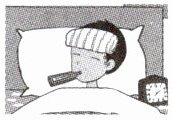
(2) I have a
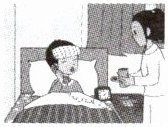
(3) I have a
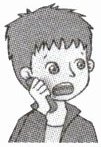
(4) The boy has a
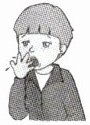
(5) The girl has a

(1) I am
ill
today. I can't go to school.(2) I have a
fever
.(3) I have a
toothache
.(4) The boy has a
cough
.(5) The girl has a
headache
.答案
(1) ill
(2) fever
(3) toothache
(4) cough
(5) headache
(2) fever
(3) toothache
(4) cough
(5) headache
解析
(1) 根据图片和首字母i,可以看出这个人在生病,所以单词是ill。
(2) 根据图片和首字母f,可以看出这个人发烧,所以单词是fever。
(3) 根据图片和首字母t,可以看出这个人牙痛,所以单词是toothache。
(4) 根据图片和首字母c,可以看出这个男孩咳嗽,所以单词是cough。
(5) 根据图片和首字母h,可以看出这个女孩头痛,所以单词是headache。
(2) 根据图片和首字母f,可以看出这个人发烧,所以单词是fever。
(3) 根据图片和首字母t,可以看出这个人牙痛,所以单词是toothache。
(4) 根据图片和首字母c,可以看出这个男孩咳嗽,所以单词是cough。
(5) 根据图片和首字母h,可以看出这个女孩头痛,所以单词是headache。
(1) —Hello, may I speak to Ms Li, please?
—Hello, Ms Li
A.speak
B.speaks
C.speaking
—Hello, Ms Li
C
.A.speak
B.speaks
C.speaking
答案
C
解析
本题考查电话用语。在电话用语中,表示“我就是……”常用“This is... speaking.”或直接用“... speaking.”。这里“Ms Li speaking.”表示“我就是李女士”,符合语境。A选项“speak”是动词原形,B选项“speaks”是第三人称单数形式,均不符合电话用语表达习惯。
(2) I have
A.a
B.the
C./
A
headache.A.a
B.the
C./
答案
A
解析
本题考查固定搭配“have a headache”,表示“头痛”,需用不定冠词 a。
(3) He is ill. He has to
A.eat
B.take
C.have
B
some medicine.A.eat
B.take
C.have
答案
B
解析
在英语中,“吃药”常用固定搭配“take some medicine”来表达,这是本单元学习的关于生病就医的重点短语。“eat”通常指吃具体的食物,“have”虽然有“吃、喝”等含义,但“take medicine”是更规范、常用的表达。所以此处应选B。
(4) He must get some rest and stay
A.in
B.on
C.at
A
bed.A.in
B.on
C.at
答案
A
解析
本题考查固定搭配。“stay in bed”为固定短语,意为“卧床休息”,其中介词用“in”。题目中句子表达他必须休息并卧床,所以应选A选项。
(5) —What's my body temperature?
—Let me see. Oh, 39.2℃. You have a
A.headache
B.cough
C.fever
—Let me see. Oh, 39.2℃. You have a
C
.A.headache
B.cough
C.fever
答案
C
解析
根据对话内容,提问者询问体温,回答为39.2℃,属于高烧范围。选项中,have a fever为固定搭配,表示“发烧”,与体温异常升高直接相关。headache(头痛)和cough(咳嗽)与体温数值无直接逻辑联系。因此选择C。
