

 登录
登录
探究点1 congratulation的用法
congratulation名词,意为“祝贺;恭喜”。Congratulations( on…)!意为“(对……表示)祝贺!”
It is a matter for congratulation.
这是一件值得祝贺的事情。
Congratulations on passing your exam!
祝贺你通过了考试!
[知识拓展]
congratulate动词,意为“祝贺”。
I congratulate you with all my heart.
我衷心祝贺你。
情境应用
1. Please send him my
2.
congratulation名词,意为“祝贺;恭喜”。Congratulations( on…)!意为“(对……表示)祝贺!”
It is a matter for congratulation.
这是一件值得祝贺的事情。
Congratulations on passing your exam!
祝贺你通过了考试!
[知识拓展]
congratulate动词,意为“祝贺”。
I congratulate you with all my heart.
我衷心祝贺你。
情境应用
1. Please send him my
congratulations
. (congratulate)2.
Congratulations on
your birthday!(祝贺)答案
1. congratulations 2. Congratulations on
解析
1. "my"后接名词,congratulate的名词形式是congratulation,常用复数形式congratulations。2. “祝贺你的生日!”用固定表达"Congratulations on your birthday!",句首首字母大写。
探究点2 besides的用法
besides
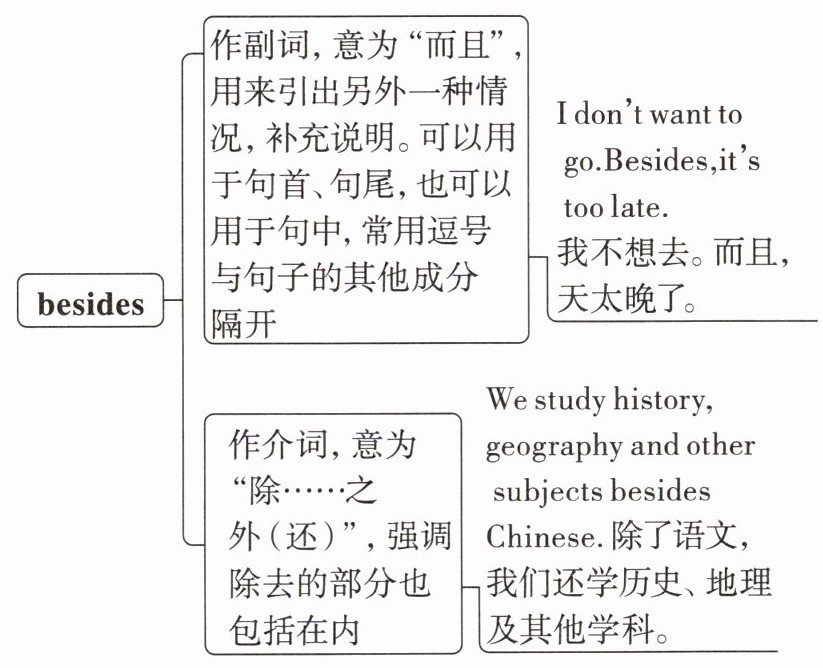
- 作副词,意为“而且”,用来引出另外一种情况,补充说明。可以用于句首、句尾,也可以用于句中,常用逗号与句子的其他成分隔开
I don't want to go.Besides,it's too late.
我不想去。而且,天太晚了。
- 作介词,意为“除……之外(还)”,强调除去的部分也包括在内
We study history, geography and other subjects besides Chinese. 除了语文,我们还学历史、地理及其他学科。
情境应用
1. I don't like that new dictionary.
2. What other sports do you like
besides
- 作副词,意为“而且”,用来引出另外一种情况,补充说明。可以用于句首、句尾,也可以用于句中,常用逗号与句子的其他成分隔开
I don't want to go.Besides,it's too late.
我不想去。而且,天太晚了。
- 作介词,意为“除……之外(还)”,强调除去的部分也包括在内
We study history, geography and other subjects besides Chinese. 除了语文,我们还学历史、地理及其他学科。
情境应用
1. I don't like that new dictionary.
Besides
, it's too expensive.(而且)2. What other sports do you like
besides football
?(除了足球)答案
1. Besides;2. besides football
解析
1. 句意为“我不喜欢那本新字典。而且,它太贵了。”此处“而且”表示补充说明,作副词,位于句首,首字母大写,故填Besides。
2. 句意为“除了足球,你还喜欢其他什么运动?”“除……之外(还)”作介词,后接名词“足球”,故填besides football。
2. 句意为“除了足球,你还喜欢其他什么运动?”“除……之外(还)”作介词,后接名词“足球”,故填besides football。
探究点3 spare的用法
spare
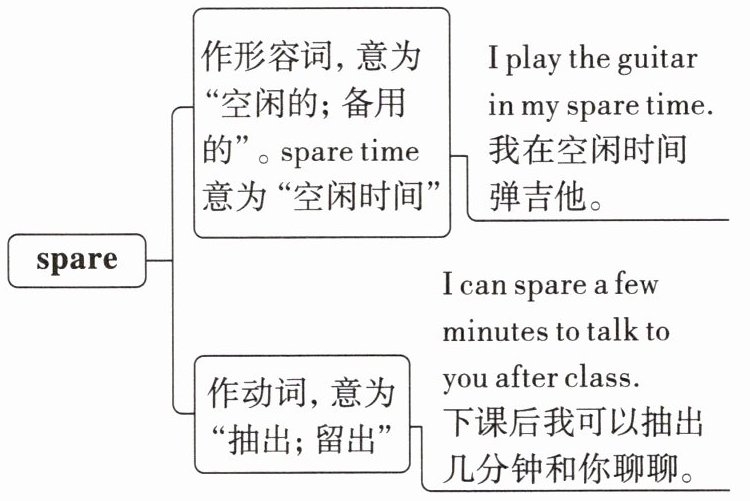
- 作形容词,意为“空闲的;备用的”。spare time意为“空闲时间”
I play the guitar in my spare time.
我在空闲时间弹吉他。
- 作动词,意为“抽出;留出”
I can spare a few minutes to talk to you after class.
下课后我可以抽出几分钟和你聊聊。
情境应用
1. Don't forget
2. —What do you do in your
—I often go for a walk.(空闲时间)
spare
- 作形容词,意为“空闲的;备用的”。spare time意为“空闲时间”
I play the guitar in my spare time.
我在空闲时间弹吉他。
- 作动词,意为“抽出;留出”
I can spare a few minutes to talk to you after class.
下课后我可以抽出几分钟和你聊聊。
情境应用
1. Don't forget
to spare
some time to get together with grandparents. (spare)2. —What do you do in your
spare time
?—I often go for a walk.(空闲时间)
答案
1. to spare
2. spare time
2. spare time
解析
1. 句意:不要忘记抽出些时间和你的祖父母聚一聚。forget to do sth. 意为“忘记去做某事”,事情还未做。根据句意可知,这里需要填入“抽出”的动词形式,即to spare。
2. 句意:——在你的空闲时间你做什么?——我经常散步。in one's spare time 意为“在某人的空闲时间”,根据句意可知,这里需要填入“空闲的”的形容词形式,即spare。
2. 句意:——在你的空闲时间你做什么?——我经常散步。in one's spare time 意为“在某人的空闲时间”,根据句意可知,这里需要填入“空闲的”的形容词形式,即spare。
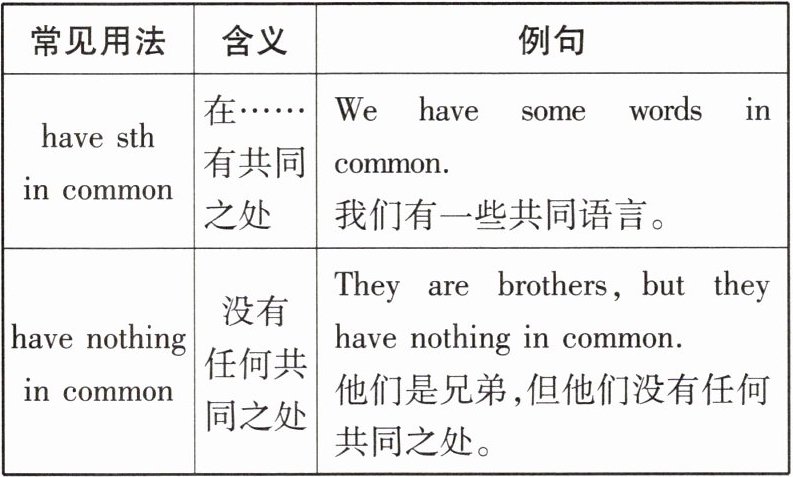
探究点4 have...in common的用法
情境应用
1. We
2. I
情境应用
1. We
have
lots of things in common
besides liking music.(在……有共同点)2. I
have nothing in common
with my sister.(没有任何共同之处)答案
1. have; in common
2. have nothing in common
2. have nothing in common
解析
1. 根据提示“在……有共同点”及句子“besides liking music”,可知应用“have...in common”结构,主语是we,一般现在时,所以填have; in common。
2. 根据提示“没有任何共同之处”,可知应用“have nothing in common”,主语是I,一般现在时,所以填have nothing in common。
2. 根据提示“没有任何共同之处”,可知应用“have nothing in common”,主语是I,一般现在时,所以填have nothing in common。
