

 登录
(
A.puts away
B.runs away
C.takes away
B
)1.The dog tries to catch the chicken. Luckily, the chicken ______.A.puts away
B.runs away
C.takes away
答案
B
解析
翻译:
( )1. 狗试图抓住鸡。幸运的是,鸡______。
A. 把……收起来
B. 逃跑
C. 拿走
( )1. 狗试图抓住鸡。幸运的是,鸡______。
A. 把……收起来
B. 逃跑
C. 拿走
(
A.takes
B.costs
C.spends
A
)2.It ______ taikonauts less than 9 days to get to the moon by spaceship.A.takes
B.costs
C.spends
答案
A
解析
翻译:
( )2. 乘坐宇宙飞船,航天员花费不到9天的时间就能到达月球。
A. 花费(时间)
B. 花费(金钱)
C. 花费(时间,主语通常是人)
( )2. 乘坐宇宙飞船,航天员花费不到9天的时间就能到达月球。
A. 花费(时间)
B. 花费(金钱)
C. 花费(时间,主语通常是人)
(
A.so
B.very
C.much
A
)3.It is ______ cold on Pluto that human beings can't live there.A.so
B.very
C.much
答案
A
解析
翻译:
( )3.冥王星上______冷,以至于人类无法在那里生存。
A.如此
B.非常
C.很
( )3.冥王星上______冷,以至于人类无法在那里生存。
A.如此
B.非常
C.很
(
A.large
B.larger
C.the largest
B
)4.The size of Venus is ______ than that of Mercury.A.large
B.larger
C.the largest
答案
B
解析
翻译:
( )4.金星的体积比水星的体积______。
A.大
B.更大
C.最大
( )4.金星的体积比水星的体积______。
A.大
B.更大
C.最大
(
A.far
B.farther
C.the farthest
C
)5.Among Earth, Mercury and Venus, Earth is ______ away from the Sun.A.far
B.farther
C.the farthest
答案
C
解析
翻译:
在地球、水星和金星中,地球离太阳______。
A.远
B.更远
C.最远
在地球、水星和金星中,地球离太阳______。
A.远
B.更远
C.最远
三、项目式作业——认识宇宙,探秘太空
1. What do you learn about the solar system from this unit? (At least 3 points)
2. Make a fact file about the solar system.
Fact File:
Center: Sun (a star)
Planets: Mercury, Venus, Earth, Mars, Jupiter, Saturn, Uranus, Neptune (in order from the sun)
Orbit: Planets move around the sun in elliptical paths
Largest planet: Jupiter
Smallest planet: Mercury
Earth's position: Third planet from the sun
3. Share your fact file in class.
1. What do you learn about the solar system from this unit? (At least 3 points)
The solar system has eight planets. The sun is at the center of the solar system. Planets orbit the sun.
2. Make a fact file about the solar system.
Fact File:
Center: Sun (a star)
Planets: Mercury, Venus, Earth, Mars, Jupiter, Saturn, Uranus, Neptune (in order from the sun)
Orbit: Planets move around the sun in elliptical paths
Largest planet: Jupiter
Smallest planet: Mercury
Earth's position: Third planet from the sun
3. Share your fact file in class.
(To be shared in class)
答案
1. The solar system has eight planets. The sun is at the center of the solar system. Planets orbit the sun.
2. Fact File:
Center: Sun (a star)
Planets: Mercury, Venus, Earth, Mars, Jupiter, Saturn, Uranus, Neptune (in order from the sun)
Orbit: Planets move around the sun in elliptical paths
Largest planet: Jupiter
Smallest planet: Mercury
Earth's position: Third planet from the sun
3. (To be shared in class)
解析
翻译:
三、项目式作业——认识宇宙,探秘太空
1. 从本单元中,你了解到了关于太阳系的哪些知识?(至少3点)______
2. 制作一份关于太阳系的资料档案。
3. 在课堂上分享你的资料档案。
三、项目式作业——认识宇宙,探秘太空
1. 从本单元中,你了解到了关于太阳系的哪些知识?(至少3点)______
2. 制作一份关于太阳系的资料档案。
3. 在课堂上分享你的资料档案。
一、阅读理解
阅读短文,根据短文内容回答问题。
With the development of science, human beings can do more exploration about the universe. Scientists will send more spaceships and taikonauts into outer space. However, staying long in space may cause health problems. That's why taikonauts shouldn't spend more than six months in the space station at a time.
Weak Muscle(无力的肌肉)
The space station is far, far away from Earth. The gravity(引力)on the space station isn't so strong as that on Earth. In this weightless environment, taikonauts don't need to use their muscles to support themselves. As a result, their muscles become weaker and weaker. Then taikonauts need to do more exercise to keep their muscles strong.
Bad Sleep
Although taikonauts now have special sleeping bags that help keep out the light, most taikonauts can only sleep six hours each night. There are some reasons for this. In space, the sun rises every 90 minutes. It is difficult for taikonauts to get used to this light - dark circle when they sleep. Also, the sleeping bags are not so comfortable as those at their homes.
Out of Balance
According to scientists, the brain position(大脑状态)changes during spaceflight(太空飞行)to help taikonauts stay balanced and move around. Then taikonauts will have difficulty in controlling their movement and balance after returning to the earth.
1. What health problems may staying long in space cause?
2. What is the direct reason for taikonauts' muscles become weaker?
3. How many reasons are there why most taikonauts can only sleep six hours each night?
4. Why does the brain position change during spaceflight?
5. Do you want to be a taikonaut when you grow up? Why or why not?
阅读短文,根据短文内容回答问题。
With the development of science, human beings can do more exploration about the universe. Scientists will send more spaceships and taikonauts into outer space. However, staying long in space may cause health problems. That's why taikonauts shouldn't spend more than six months in the space station at a time.
Weak Muscle(无力的肌肉)
The space station is far, far away from Earth. The gravity(引力)on the space station isn't so strong as that on Earth. In this weightless environment, taikonauts don't need to use their muscles to support themselves. As a result, their muscles become weaker and weaker. Then taikonauts need to do more exercise to keep their muscles strong.
Bad Sleep
Although taikonauts now have special sleeping bags that help keep out the light, most taikonauts can only sleep six hours each night. There are some reasons for this. In space, the sun rises every 90 minutes. It is difficult for taikonauts to get used to this light - dark circle when they sleep. Also, the sleeping bags are not so comfortable as those at their homes.
Out of Balance
According to scientists, the brain position(大脑状态)changes during spaceflight(太空飞行)to help taikonauts stay balanced and move around. Then taikonauts will have difficulty in controlling their movement and balance after returning to the earth.
1. What health problems may staying long in space cause?
Weak muscle, bad sleep and out of balance.
2. What is the direct reason for taikonauts' muscles become weaker?
Taikonauts don't need to use their muscles to support themselves.
3. How many reasons are there why most taikonauts can only sleep six hours each night?
Two.
4. Why does the brain position change during spaceflight?
To help taikonauts stay balanced and move around.
5. Do you want to be a taikonaut when you grow up? Why or why not?
No, I don't. Because I'm worried I can't fall asleep in space.
答案
1. Weak muscle, bad sleep and out of balance.
2. Taikonauts don't need to use their muscles to support themselves.
3. Two.
4. To help taikonauts stay balanced and move around.
5. No, I don't. Because I'm worried I can't fall asleep in space.(答案不唯一)
2. Taikonauts don't need to use their muscles to support themselves.
3. Two.
4. To help taikonauts stay balanced and move around.
5. No, I don't. Because I'm worried I can't fall asleep in space.(答案不唯一)
解析
翻译:
### 一、阅读理解
阅读短文,根据短文内容回答问题。
随着科学的发展,人类能够对宇宙进行更多的探索。科学家们将会把更多的宇宙飞船和宇航员送入外太空。然而,在太空中长时间停留可能会引发健康问题。这就是为什么宇航员一次在空间站停留的时间不应超过六个月。
#### 无力的肌肉
空间站离地球非常非常远。空间站上的引力不像地球上的引力那么强。在这种失重环境中,宇航员不需要用肌肉来支撑自己。结果,他们的肌肉变得越来越弱。于是宇航员需要做更多的运动来保持肌肉强壮。
#### 睡眠不佳
尽管现在宇航员有特殊的睡袋来帮助遮挡光线,但大多数宇航员每晚只能睡六个小时。这有一些原因。在太空中,太阳每90分钟升起一次。宇航员在睡觉时很难适应这种明暗循环。而且,睡袋也不像他们家里的睡袋那么舒服。
#### 失衡
据科学家称,在太空飞行期间,大脑状态会发生变化,以帮助宇航员保持平衡并四处活动。那么宇航员回到地球后,在控制自己的行动和平衡方面会有困难。
1. 在太空中长时间停留可能会引发哪些健康问题?______
2. 宇航员肌肉变弱的直接原因是什么?______
3. 大多数宇航员每晚只能睡六个小时的原因有几个?______
4. 为什么在太空飞行期间大脑状态会发生变化?______
5. 你长大后想成为一名宇航员吗?为什么或为什么不?______
二、看图写话
根据每小题所提供的图画和提示词,写出一个与图画情景相符的句子。
1.
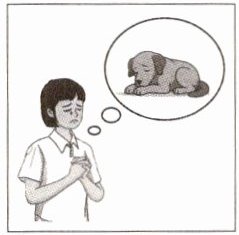
sad, death
2.
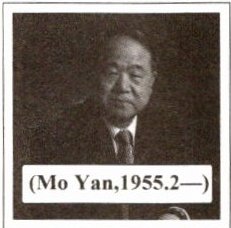
born
3.
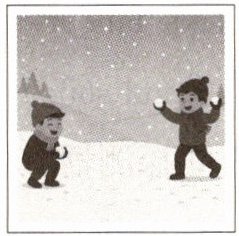
snowball, yesterday
4.
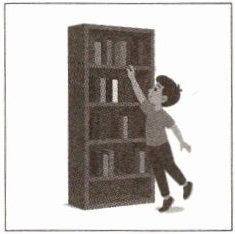
so, that
1. ______
2. ______
3. ______
4. ______
根据每小题所提供的图画和提示词,写出一个与图画情景相符的句子。
1.
sad, death
2.
born
3.
snowball, yesterday
4.
so, that
1. ______
2. ______
3. ______
4. ______
答案
1. The girl/She is sad because of her dog's death.
2. Mo Yan was born in February, 1955.
3. They played snowballs yesterday.
4. The books are so high that the boy can't reach them.
2. Mo Yan was born in February, 1955.
3. They played snowballs yesterday.
4. The books are so high that the boy can't reach them.
