

 登录
任务情境
世界上有很多发明,它们极大地改变了人们的生活。请以“The Invention That I Like Most”为题,并根据以下要点,用英语写一篇短文。
要点:
1. 你最喜欢的发明是什么;
2. 它对你的生活的影响;
3. ……
要求:
1. 短文须包含上述要点,可适当增加细节,以使行文连贯;
2. 词数80~100。
思路点拨
1. 人称:第一、三人称
2. 时态:一般现在时
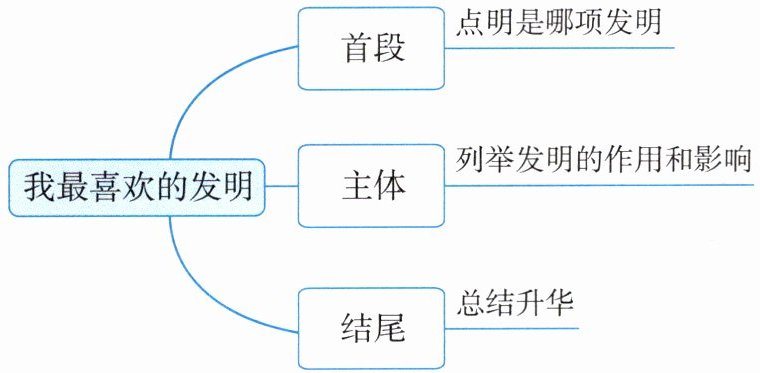
3. 结构:
素材积累
1. 主题词块
①许多;大量
②有史以来
③全世界
④应当做(某事)或是(某物)
⑤依靠;取决于
⑥引起某事
⑦(使)加速
⑧造成;导致
2. 句型仿写
① The radio made it much easier for people to enjoy music from artists around the world.(教材 p.44 3a)
句型:make it + 形容词 + for sb to do sth
仿写:互联网让人们与家人和朋友保持联系变得容易多了。
② Later on, the papermaking technique not only speeded up the development of Chinese culture, but also changed civilizations around the world.(教材 p.46 1b)
句型:not only ... but also ...引导并列结构
仿写:它不仅能帮助我学习,还能帮我放松身心。
连句成篇
The Invention That I Like Most
世界上有很多发明,它们极大地改变了人们的生活。请以“The Invention That I Like Most”为题,并根据以下要点,用英语写一篇短文。
要点:
1. 你最喜欢的发明是什么;
2. 它对你的生活的影响;
3. ……
要求:
1. 短文须包含上述要点,可适当增加细节,以使行文连贯;
2. 词数80~100。
思路点拨
1. 人称:第一、三人称
2. 时态:一般现在时
3. 结构:
素材积累
1. 主题词块
①许多;大量
hundreds (of ...)
②有史以来
of all time
③全世界
all over the world
④应当做(某事)或是(某物)
be supposed to do / be sth
⑤依靠;取决于
depend on
⑥引起某事
responsible for sth
⑦(使)加速
speed up
⑧造成;导致
result in / lead to
2. 句型仿写
① The radio made it much easier for people to enjoy music from artists around the world.(教材 p.44 3a)
句型:make it + 形容词 + for sb to do sth
仿写:互联网让人们与家人和朋友保持联系变得容易多了。
The internet makes it much easier for people to keep in touch with family and friends.
② Later on, the papermaking technique not only speeded up the development of Chinese culture, but also changed civilizations around the world.(教材 p.46 1b)
句型:not only ... but also ...引导并列结构
仿写:它不仅能帮助我学习,还能帮我放松身心。
It can not only help me with my study, but also help me relax.
连句成篇
The Invention That I Like Most
Many inventions change our life. As far as I'm concerned, the internet is a useful invention and I like it most.
Every day I use the internet and get information from it. The internet makes it much easier for people to keep in touch with family and friends. Besides, the internet has a great effect on my daily shopping. I can buy goods from all over the world without leaving home. More importantly, I can know more through the internet, and it opens up my eyes. It can not only help me with my study, but also help me relax.
All in all, thanks to the internet, my life becomes more convenient than ever.
答案
【素材积累】
1. 主题词块
① hundreds (of ...)
② of all time
③ all over the world
④ be supposed to do / be sth
⑤ depend on
⑥ responsible for sth
⑦ speed up
⑧ result in / lead to
2. 句型仿写
① The internet makes it much easier for people to keep in touch with family and friends.
② It can not only help me with my study, but also help me relax.
【连句成篇】
The Invention That I Like Most
Many inventions change our life. As far as I'm concerned, the internet is a useful invention and I like it most.
Every day I use the internet and get information from it. The internet makes it much easier for people to keep in touch with family and friends. Besides, the internet has a great effect on my daily shopping. I can buy goods from all over the world without leaving home. More importantly, I can know more through the internet, and it opens up my eyes. It can not only help me with my study, but also help me relax.
All in all, thanks to the internet, my life becomes more convenient than ever.
Ⅰ. 完形填空
A long time ago, the clever craftsman(工匠) Lu Ban and his sister went to the West Lake to play. 1, it started raining heavily. The beautiful view disappeared.
His sister had an idea. She said, “Brother, let's have a 2! Let's see who can find a way to keep playing in the rain before sunrise!” Lu Ban smiled confidently. “That's 3!” he said. He quickly gathered wood and built ten small pavilions(亭子). When the sun rose, Lu Ban proudly 4 his pavilions. He thought he would surely win. But his sister simply took out 5. She gently pushed it open. Whoosh! An umbrella 6.
Lu Ban was amazed. This umbrella could keep out the rain and fold up! It was light and beautiful. He 7 took it and examined it. The frame was made of bamboo. The top was made of silk. It could keep out the rain and was easy to 8. Lu Ban looked at his sister and said, “Sister, you are so smart! I 9!”
From then on, umbrellas became people's best friends in the rain. As time passed, people discovered that 10 could also be used to make umbrellas. Later, paper became cheaper. People replaced silk with cotton paper and coated it with tung oil. This 11 the oil-paper umbrella we see today.
Oil-paper umbrellas are not just treasures of China. They travelled along the Silk Road to many 12, such as Japan, South Korea, and Vietnam. Different countries changed the umbrella to 13 their own customs and traditions.
Today, factories make most umbrellas, 14 oil-paper umbrellas are not as common. But they are still precious cultural treasures. Now, more and more craftsmen are making oil-paper umbrellas 15 care and connecting them with modern life. Now, you can see oil-paper umbrellas at festivals and weddings.
Oil-paper umbrellas are not just for keeping out the rain. They are a part of Chinese culture. Each umbrella holds the hard work and wisdom of its maker.
1. A. Finally B. Luckily C. Suddenly D. Excitedly
2. A. fight B. dream C. project D. competition
3. A. different B. easy C. special D. busy
4. A. looked at B. shouted at C. laughed at D. knocked at
5. A. something B. anything C. everything D. nothing
6. A. mattered B. appeared C. remained D. worked
7. A. loudly B. really C. quickly D. exactly
8. A. report B. sell C. push D. carry
9. A. lost B. agreed C. succeeded D. thought
10. A. silk B. paper C. wood D. cloth
11. A. presented B. improved C. created D. recorded
12. A. villages B. towns C. cities D. countries
13. A. match B. imagine C. send D. practise
14. A. but B. so C. or D. if
15. A. beyond B. towards C. with D. from
答案
本文介绍了中国油纸伞的起源、发展、传播及其文化意义。
1. C finally 最终;luckily 幸运地;suddenly 突然;excitedly 兴奋地。根据“it started raining heavily”并结合语境可知,鲁班和妹妹去西湖游玩,突然下起了大雨。故选 C。
2. D fight 打架;dream 梦想;project 项目;competition 比赛。根据“Let's see who can find a way to keep playing in the rain before sunrise!”可知,鲁班的妹妹提议进行一场比赛。故选 D。
3. B different 不同的;easy 简单的;special 特别的;busy 忙碌的。根据“Lu Ban smiled confidently.”可知,鲁班是自信的,因此他认为这很简单。故选 B。
4. A look at 看着;shout at 对……大喊;laugh at 嘲笑;knock at 敲打。根据“his pavilions”可知,此处指鲁班自豪地看着他的亭子。故选 A。
5. A something 某物;anything 任何事物;everything 一切;nothing 没有什么。根据“But his sister simply took out ...”并结合下文可知,此处是陈述句,指他的妹妹拿出了雨伞,应用代词something。故选 A。
6. B matter 事关紧要;appear 出现;remain 保持;work 工作。根据“An umbrella ...”可知,此处指一把伞出现了。故选 B。
7. C loudly 大声地;really 真正地;quickly 迅速地;exactly 精确地。根据“Lu Ban was amazed.”可知,鲁班很吃惊,因此他迅速拿过雨伞来检查。故选 C。
8. D report 报告;sell 出售;push 推动;carry 携带。根据“This umbrella could keep out the rain and fold up!”可知,雨伞可以折叠,因此是便于携带的。故选 D。
9. A lose 失败,丢失;agree 同意;succeed 成功;think 认为。根据“Sister, you are so smart!”可知,此处表示鲁班承认在比赛中输了。故选 A。
10. B silk 丝绸;paper 纸;wood 木材;cloth 布料。根据“Later, paper became cheaper. People replaced silk with cotton paper and coated it with tung oil.”可知,纸便宜时,人们用棉纸代替丝绸,因此此处指人们发现纸也可以用来制作雨伞。故选 B。
11. C present 提交;improve 提高;create 创造;record 记录。根据“This ... the oil-paper umbrella we see today.”可知,此处指用棉纸和桐油创造了油纸伞。故选 C。
12. D village 村庄;town 城镇;city 城市;country 国家。根据“such as Japan, South Korea, and Vietnam”可知,此处指国家。故选 D。
13. A match 适应;imagine 想象;send 发送;practise 练习。根据“Different countries changed the umbrella to ... their own customs and traditions.”可知,改变雨伞是为了适应自己国家的习俗和传统。故选 A。
14. A but 但是;so 所以;or 或者;if 如果。根据“factories make most umbrellas ... oil-paper umbrellas are not as common”可知,此处前后句之间是转折关系。故选 A。
15. C beyond 超过;towards 向;with 具有;from 来自。根据“more and more craftsmen are making oil-paper umbrellas ... care”可知,此处指精心制作油纸伞,应用介词with。故选 C。
