

 登录
登录
Word House
答案
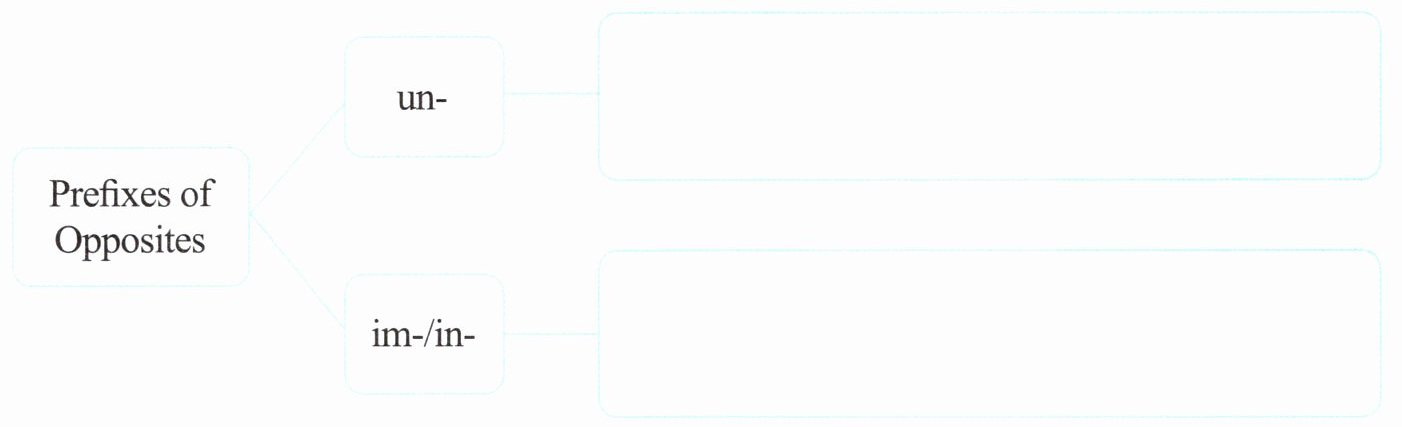
un-: unhappy, untidy, uncommon, unfortunately, unlock, unlucky, unsafe, unusual
im-/in-: impolite, impossible, improper, informal
im-/in-: impolite, impossible, improper, informal
记忆挑战:你能写出多少相关词汇?越多越好!
答案
un-: unhappy, untidy, uncommon, unfortunately, unlock, unlucky, unsafe, unusual
im-/in-: impolite, impossible, improper, informal
im-/in-: impolite, impossible, improper, informal
1. Will there be less pollution?
(1)翻译:
(2)应答:①肯定:
②否定:
(3)联想:“there will be”是将来背景下的“有”,那么现在呢?过去呢?
①现在:
仿写:
②过去:
仿写:
(1)翻译:
将会有更少的污染吗?
(2)应答:①肯定:
Yes, there will.
②否定:
No, there won’t.
(3)联想:“there will be”是将来背景下的“有”,那么现在呢?过去呢?
①现在:
there is
(单数)或there are
(复数)仿写:
There is a park near our neighborhood.
(单数)There are a lot of trees in our city.
(复数)②过去:
there was
(单数)或there were
(复数)仿写:
At noon there was still no news.
(单数)There were many people at the party.
(复数)答案
1. (1)将会有更少的污染吗?
(2)①Yes, there will.
②No, there won’t.
(3)①there is, there are; There is a park near our neighborhood. There are a lot of trees in our city.
②there was, there were; At noon there was still no news. There were many people at the party.
(2)①Yes, there will.
②No, there won’t.
(3)①there is, there are; There is a park near our neighborhood. There are a lot of trees in our city.
②there was, there were; At noon there was still no news. There were many people at the party.
2. There will be more trees.
(1)翻译:
(2)联想:①more是比较级,其原形是
仿写:
②more表示“更多的”,“更少的”是
仿写:
(1)翻译:
将会有更多的树木。
(2)联想:①more是比较级,其原形是
many
或much
仿写:
I have many stamps, but Tom has even more.
②more表示“更多的”,“更少的”是
less
或fewer
仿写:
There will be fewer people and less pollution in the future.
答案
2. (1)将会有更多的树木。
(2)①many, much; I have many stamps, but Tom has even more.
②less, fewer; There will be fewer people and less pollution in the future.
(2)①many, much; I have many stamps, but Tom has even more.
②less, fewer; There will be fewer people and less pollution in the future.
