

 登录
四、翻译句子
1. 那只鸽子正在看水中自己的倒影!
2. 在人类到达之后,我们很快就灭绝了。
3. 请尽全力去帮助动物们。
1. 那只鸽子正在看水中自己的倒影!
The/That pigeon is looking at itself in the water!
2. 在人类到达之后,我们很快就灭绝了。
After humans arrived, we soon died out.
3. 请尽全力去帮助动物们。
Please try your best to help animals.
答案
1. The/That pigeon is looking at itself in the water!
2. After humans arrived, we soon died out.
3. Please try your best to help animals.
2. After humans arrived, we soon died out.
3. Please try your best to help animals.
解析
【分析】翻译句子需先明确核心成分、时态及固定表达:1. 第一句是现在进行时,需对应“正在看”的结构,“自己的倒影”用反身代词+地点表达;2. 第二句“到达”是过去动作,用一般过去时,“灭绝”是固定短语;3. 第三句是祈使句,“尽全力”为固定搭配,需按祈使句结构组合。
【解析】1. 现在进行时结构为“am/is/are + 现在分词”,“那只鸽子”对应The/That pigeon,“看”用look at,“自己的”是itself,“在水中”是in the water,组合为The/That pigeon is looking at itself in the water!;2. “在人类到达之后”译为After humans arrived(过去式),“很快灭绝”用固定短语died out,组合为After humans arrived, we soon died out.;3. 祈使句以Please开头,“尽全力”是try your best,“帮助动物们”是help animals,组合为Please try your best to help animals.
【答案】The/That pigeon is looking at itself in the water!
After humans arrived, we soon died out.
Please try your best to help animals.
【知识点】现在进行时、固定短语搭配、祈使句
【点评】本题为基础汉译英题,考察常用时态与固定表达,难度较低,适合基础阶段学生巩固练习。
【难度系数】0.8
五、阅读理解
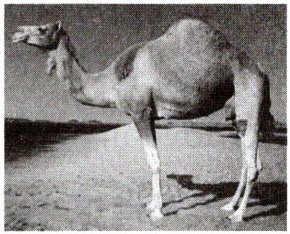
The camel walks for days. He is very tired and wants to drink water. He has no water in his body now. Where can he get water? If he doesn’t find water soon, he knows he will die. He usually doesn’t need to drink water for weeks, but now it is hard for him to go on. The sun is very hot and there is no shade(阴凉处) at all. Oh, how will that feel, to be in the shade, cooling his mouth with a sip of(一小口) water?
When he walks slowly in the sun, he thinks he sees something green in a faraway place. Is there really anything green? Plants need water, and water makes plants survive. There can be some grass to eat, with juice inside it. Is there even more to eat and drink?
He starts to pick up his pace. He wants to run, but he can’t.
The camel arrives at the place he sees. There is a small spring! He drinks so much water from it. Then, he stands in the shade and enjoys the grass around him. The place saves him!
1. What does the camel need most after walking for days?
A. Food.
B. Water.
C. Sunshine.
2. What does the underlined word “spring” mean?
A. A season between winter and summer.
B. A place with water coming up naturally.
C. The ability to return to normal shape.
3. How does the camel feel when he stands in the shade at last?
A. Scared.
B. Sad.
C. Happy.
4. Where may the text come from?
A. A storybook for kids.
B. A guide to a museum.
C. A travel magazine.
The camel walks for days. He is very tired and wants to drink water. He has no water in his body now. Where can he get water? If he doesn’t find water soon, he knows he will die. He usually doesn’t need to drink water for weeks, but now it is hard for him to go on. The sun is very hot and there is no shade(阴凉处) at all. Oh, how will that feel, to be in the shade, cooling his mouth with a sip of(一小口) water?
When he walks slowly in the sun, he thinks he sees something green in a faraway place. Is there really anything green? Plants need water, and water makes plants survive. There can be some grass to eat, with juice inside it. Is there even more to eat and drink?
He starts to pick up his pace. He wants to run, but he can’t.
The camel arrives at the place he sees. There is a small spring! He drinks so much water from it. Then, he stands in the shade and enjoys the grass around him. The place saves him!
1. What does the camel need most after walking for days?
A. Food.
B. Water.
C. Sunshine.
2. What does the underlined word “spring” mean?
A. A season between winter and summer.
B. A place with water coming up naturally.
C. The ability to return to normal shape.
3. How does the camel feel when he stands in the shade at last?
A. Scared.
B. Sad.
C. Happy.
4. Where may the text come from?
A. A storybook for kids.
B. A guide to a museum.
C. A travel magazine.
答案
1. B
2. B
3. C
4. A
2. B
3. C
4. A
解析
【分析】
本题为英语阅读理解选择题,共4道小题,需先通读全文理解骆驼找水的故事内容,再结合题干定位原文信息,逐一分析选项得出答案。第1题需定位骆驼的需求;第2题需结合语境猜测生词含义;第3题需根据原文描述推断骆驼的感受;第4题需判断文章的来源。
【解析】
1. 定位原文第一段“He is very tired and wants to drink water.”,可知骆驼走了几天后最需要水,对应选项B。
2. 原文提到骆驼从“spring”里喝了很多水,结合语境可知“spring”指自然出水的地方,对应选项B。
3. 原文最后一段“he stands in the shade and enjoys the grass around him”,说明骆驼很开心,对应选项C。
4. 文章是关于骆驼的简单小故事,风格适合儿童阅读,推测来自儿童故事书,对应选项A。
【答案】1.B 2.B 3.C 4.A
【知识点】阅读理解细节理解、词义猜测、推理判断、文章来源判断
【点评】本题围绕骆驼找水的简单故事展开,考查基础的阅读理解能力,题目难度较低,适合英语基础学习者练习。
【难度系数】0.8
