

 登录
登录
二、阅读理解。
Last summer, I visited a beautiful old village in Dali, Yunnan. I tried tie-dyeing(扎染)for the first time there.
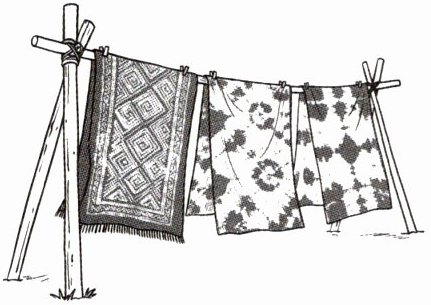
A kind lady named Zhang Hanmin taught me how to do it. Tie-dyeing needs handmade white cloth and colours made from plants. First, I took a piece of white cloth. With a needle and thread(针和线), I made different folds(褶皱). Then, I dipped(浸泡)it into a blue-dye bath again and again to make the colour darker and brighter. It was so interesting!
While we waited for the cloth to dry, Ms Zhang shared her stories with me. Years ago, when she came back to her hometown for the Spring Festival, she found that few young Bai people were interested in their traditions. They liked modern and machine-made clothes instead. To keep this tradition alive, she quit her job in Beijing and came back to run her tie-dyeing business.
In the end, I saw some beautiful flower patterns on the cloth! I was so happy. This experience taught me that traditions aren’t just old things. They are living stories of people and their land.
根据语篇内容,选择最佳答案。
(
A. Rocks.
B. Plants.
C. Cloth.
(
①a piece of white cloth ②blue dyes
③a paintbrush ④a needle and thread
A. ①②③
B. ①②④
C. ②③④
(
A. Why Ms Zhang kept tie-dyeing alive.
B. Why young Bai people liked modern clothes.
C. How Ms Zhang spent her Spring Festival in her hometown.
(
A. They are old things and no longer useful.
B. They can be changed by modern things.
C. They are living stories of people and their land.
(
A. The experience of tie-dyeing
B. The beautiful sights in Yunnan
C. The history of the Bai people’s clothes
Last summer, I visited a beautiful old village in Dali, Yunnan. I tried tie-dyeing(扎染)for the first time there.
A kind lady named Zhang Hanmin taught me how to do it. Tie-dyeing needs handmade white cloth and colours made from plants. First, I took a piece of white cloth. With a needle and thread(针和线), I made different folds(褶皱). Then, I dipped(浸泡)it into a blue-dye bath again and again to make the colour darker and brighter. It was so interesting!
While we waited for the cloth to dry, Ms Zhang shared her stories with me. Years ago, when she came back to her hometown for the Spring Festival, she found that few young Bai people were interested in their traditions. They liked modern and machine-made clothes instead. To keep this tradition alive, she quit her job in Beijing and came back to run her tie-dyeing business.
In the end, I saw some beautiful flower patterns on the cloth! I was so happy. This experience taught me that traditions aren’t just old things. They are living stories of people and their land.
根据语篇内容,选择最佳答案。
(
B
)1. What are the colours for tie-dyeing made from?A. Rocks.
B. Plants.
C. Cloth.
(
B
)2. What do you need for tie-dyeing?①a piece of white cloth ②blue dyes
③a paintbrush ④a needle and thread
A. ①②③
B. ①②④
C. ②③④
(
A
)3. What is Paragraph 3 mainly about?A. Why Ms Zhang kept tie-dyeing alive.
B. Why young Bai people liked modern clothes.
C. How Ms Zhang spent her Spring Festival in her hometown.
(
C
)4. What does the writer think of traditions after the trip?A. They are old things and no longer useful.
B. They can be changed by modern things.
C. They are living stories of people and their land.
(
A
)5. What’s the best title for the passage?A. The experience of tie-dyeing
B. The beautiful sights in Yunnan
C. The history of the Bai people’s clothes
答案
1.B 2.B 3.A 4.C 5.A
