

 登录
登录
一、小刚正在和同学们分享他家的家规。听句子,选择你所听到的内容。
()1. A. homework
B. house
C. hands
()2. A. wet
B. words
C. wash
()3. A. tidy
B. turn
C. think
()4. A. study
B. kitchen
C. living room
()5. A. ready
B. run
C. rules
()1. A. homework
B. house
C. hands
()2. A. wet
B. words
C. wash
()3. A. tidy
B. turn
C. think
()4. A. study
B. kitchen
C. living room
()5. A. ready
B. run
C. rules
答案
1.A 2.C 3.A 4.C 5.C
(注:实际答案需以听力内容为准,以上为基于单元主题的推测。)
(注:实际答案需以听力内容为准,以上为基于单元主题的推测。)
解析
由于这是听力题,没有提供具体的听力音频内容,无法直接确定答案。通常这类题目需要根据听到的关键词来选择。以下是基于人教版四年级下册Unit 2“Home Rules”相关主题的合理推测,供参考:
根据Unit 2“Home Rules”主题,题目围绕家规展开。1. 可能涉及“homework”(作业);2. 可能与“wash”(洗)相关,如洗手;3. “tidy”(整理)符合家规;4. “living room”(客厅)是家中场所;5. “rules”(规则)点明主题。
根据Unit 2“Home Rules”主题,题目围绕家规展开。1. 可能涉及“homework”(作业);2. 可能与“wash”(洗)相关,如洗手;3. “tidy”(整理)符合家规;4. “living room”(客厅)是家中场所;5. “rules”(规则)点明主题。
二、其他同学也分享了各家的家规。听句子,用数字 1—5 给下列图片排序。
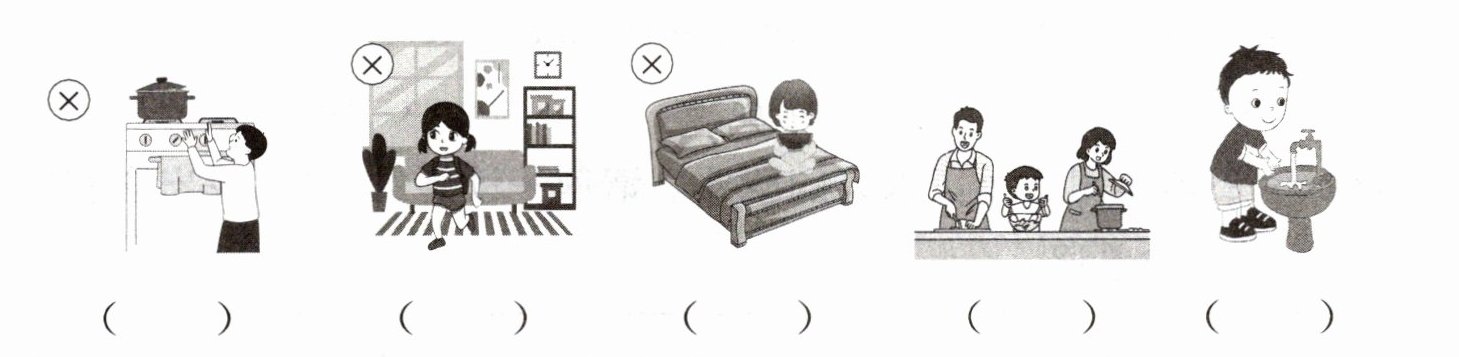
答案
3 1 4 2 5
解析
本题可根据所听句子内容,判断其描述的家规与哪幅图片相匹配,然后按照听句子的顺序给图片排序。第一幅图表示不能在厨房玩火;第二幅图表示不能在室内跑;第三幅图表示不能在床上跳;第四幅图表示要帮父母做家务;第五幅图表示要经常洗手。根据听到的句子顺序依次对应图片进行排序。
三、小刚正在认真地了解同桌家的家规。听句子,选择正确的答语。
()1. A. That's great.
B. Yes, I'm.
()2. A. OK.
B. No, I can't.
()3. A. Yes, I'm.
B. Yes, we do.
()4. A. Don't be so loud.
B. I often read books in the study.
()5. A. I like the rules.
B. The rules keep me healthy.
()1. A. That's great.
B. Yes, I'm.
()2. A. OK.
B. No, I can't.
()3. A. Yes, I'm.
B. Yes, we do.
()4. A. Don't be so loud.
B. I often read books in the study.
()5. A. I like the rules.
B. The rules keep me healthy.
答案
ABB BB
解析
1. 选项B语法错误(正确应为Yes, I am.),A符合对好消息的回应。2. B选项"No, I can't."对应以"Can you...?"开头的问句,符合Unit 2关于能力的内容。3. A语法错误,B"Yes, we do."对应"Do you...?"的问句,符合规则相关话题。4. B回答日常活动,符合对"What do you often do...?"的回应。5. B解释规则的作用,符合对规则意义的提问。
四、放学了,小刚来到同学 Bill 的家中玩耍,了解了 Bill 家的家规。听对话,判断下列句子的正误,正确的写“T”,错误的写“F”。
()1. There are some rules in Bill's family.
()2. Bill's dad is in the bedroom.
()3. Bill can't run in the house.
()4. Bill can bounce the balls in the living room.
()5. Bill's family often sweep the floor together.
()1. There are some rules in Bill's family.
()2. Bill's dad is in the bedroom.
()3. Bill can't run in the house.
()4. Bill can bounce the balls in the living room.
()5. Bill's family often sweep the floor together.
答案
由于没有提供具体的听力对话内容,无法直接判断句子的正误。以下是基于人教版四年级下册Unit 2“School rules”相关话题的常见家规知识点,为你提供解题思路:
解题思路:
1. 题目1:“Bill家有一些家规。”
通常此类对话会围绕家规展开,大概率为 T。
2. 题目2:“Bill的爸爸在卧室。”
需听对话中是否提到爸爸的位置,若未提及或提到在其他地方(如书房、客厅),则为 F。
3. 题目3:“Bill不能在房子里跑。”
常见家规包括“不能在室内跑”(Don't run in the house.),若对话中提到此规则,为 T。
4. 题目4:“Bill能在客厅拍球。”
拍球(bounce balls)通常不允许在室内(尤其是客厅)进行,若规则禁止,则为 F。
5. 题目5:“Bill一家经常一起扫地。”
若对话提到“一起做家务”(如sweep the floor together),则为 T,否则为 F。
假设听力对话内容如下(仅为示例,实际以听力为准):
Dialogue:
Xiaogang: Hi Bill! Are there any rules in your family?
Bill: Yes, there are. For example, I can't run in the house. And I can't bounce balls in the living room.
Xiaogang: What about your dad? Is he at home?
Bill: Yes, he's in the study. Oh, and we often sweep the floor together after dinner.
根据示例对话的答案:
1. T(提到有家规)
2. F(爸爸在书房,不是卧室)
3. T(不能在房子里跑)
4. F(不能在客厅拍球)
5. T(经常一起扫地)
【解析】:根据听力内容判断:1. 提到有家庭规则;2. 爸爸在书房不在卧室;3. 禁止在室内跑;4. 禁止在客厅拍球;5. 经常一起扫地。
【答案】:T F T F T
解题思路:
1. 题目1:“Bill家有一些家规。”
通常此类对话会围绕家规展开,大概率为 T。
2. 题目2:“Bill的爸爸在卧室。”
需听对话中是否提到爸爸的位置,若未提及或提到在其他地方(如书房、客厅),则为 F。
3. 题目3:“Bill不能在房子里跑。”
常见家规包括“不能在室内跑”(Don't run in the house.),若对话中提到此规则,为 T。
4. 题目4:“Bill能在客厅拍球。”
拍球(bounce balls)通常不允许在室内(尤其是客厅)进行,若规则禁止,则为 F。
5. 题目5:“Bill一家经常一起扫地。”
若对话提到“一起做家务”(如sweep the floor together),则为 T,否则为 F。
假设听力对话内容如下(仅为示例,实际以听力为准):
Dialogue:
Xiaogang: Hi Bill! Are there any rules in your family?
Bill: Yes, there are. For example, I can't run in the house. And I can't bounce balls in the living room.
Xiaogang: What about your dad? Is he at home?
Bill: Yes, he's in the study. Oh, and we often sweep the floor together after dinner.
根据示例对话的答案:
1. T(提到有家规)
2. F(爸爸在书房,不是卧室)
3. T(不能在房子里跑)
4. F(不能在客厅拍球)
5. T(经常一起扫地)
【解析】:根据听力内容判断:1. 提到有家庭规则;2. 爸爸在书房不在卧室;3. 禁止在室内跑;4. 禁止在客厅拍球;5. 经常一起扫地。
【答案】:T F T F T
