

 登录
登录
Ⅰ.Write down the words according to their phonetic symbols.根据音标写单词。
1. This trip was
2. The tourists walked
3. She will
4. We saw an old
5. This is my favourite artist. He
6. On the
1. This trip was
terrible
/'terəbl/ because it was raining all the time.2. The tourists walked
along
/ə'lɒŋ/ the street and then found the museum.3. She will
try
/traɪ/ on different hats and take photos every time she travels.4. We saw an old
gun
/gʌn/ in the museum.5. This is my favourite artist. He
created
/kri'eɪtɪd/ many beautiful paintings.6. On the
road
/rəʊd/ to the library,we saw many people jogging.答案
Ⅰ.1. terrible 2. along 3. try 4. gun 5. created
6. road
6. road
解析
【分析】本题要求根据给出的音标和句子语境写出正确的英语单词,解题时需先准确识别每个音标对应的常见英语词汇,再结合句子的语法和语义验证单词的正确性,注意单词的形式(如动词时态)。
【解析】1. 音标/'terəbl/对应形容词terrible,意为“糟糕的”,符合句子描述旅行状态的语境;2. 音标/ə'lɒŋ/对应介词along,walk along是固定搭配,意为“沿着……走”;3. 音标/traɪ/对应动词try,try on是固定短语“试穿”,will后接动词原形;4. 音标/gʌn/对应名词gun,意为“枪”,符合博物馆场景的语境;5. 音标/kri'eɪtɪd/对应动词create的过去式created,主语为he,描述过去的创作动作;6. 音标/rəʊd/对应名词road,on the road to是固定搭配,意为“在去……的路上”。
【答案】Ⅰ.1. terrible 2. along 3. try 4. gun 5. created 6. road
【知识点】根据音标写单词、英语基础词汇、固定搭配
【点评】本题考查基础音标与单词的对应关系,以及常用词汇和固定搭配的运用,属于英语基础题型,难度较低,只要掌握常见音标的对应单词即可正确解答。
【难度系数】0.3
【解析】1. 音标/'terəbl/对应形容词terrible,意为“糟糕的”,符合句子描述旅行状态的语境;2. 音标/ə'lɒŋ/对应介词along,walk along是固定搭配,意为“沿着……走”;3. 音标/traɪ/对应动词try,try on是固定短语“试穿”,will后接动词原形;4. 音标/gʌn/对应名词gun,意为“枪”,符合博物馆场景的语境;5. 音标/kri'eɪtɪd/对应动词create的过去式created,主语为he,描述过去的创作动作;6. 音标/rəʊd/对应名词road,on the road to是固定搭配,意为“在去……的路上”。
【答案】Ⅰ.1. terrible 2. along 3. try 4. gun 5. created 6. road
【知识点】根据音标写单词、英语基础词汇、固定搭配
【点评】本题考查基础音标与单词的对应关系,以及常用词汇和固定搭配的运用,属于英语基础题型,难度较低,只要掌握常见音标的对应单词即可正确解答。
【难度系数】0.3
Ⅱ.Classify the verbs in the following picture according to their change rules.将下图中的动词按照其变化规律进行分类。
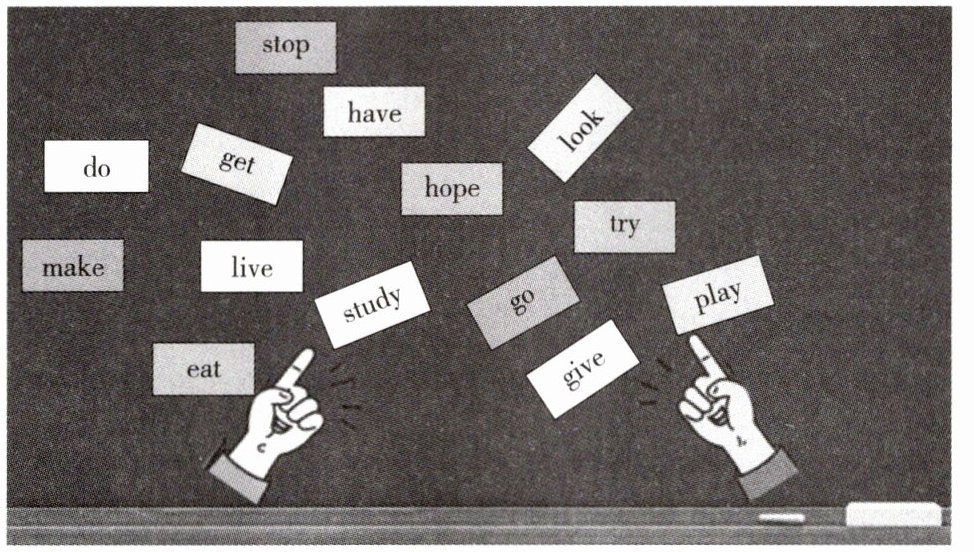
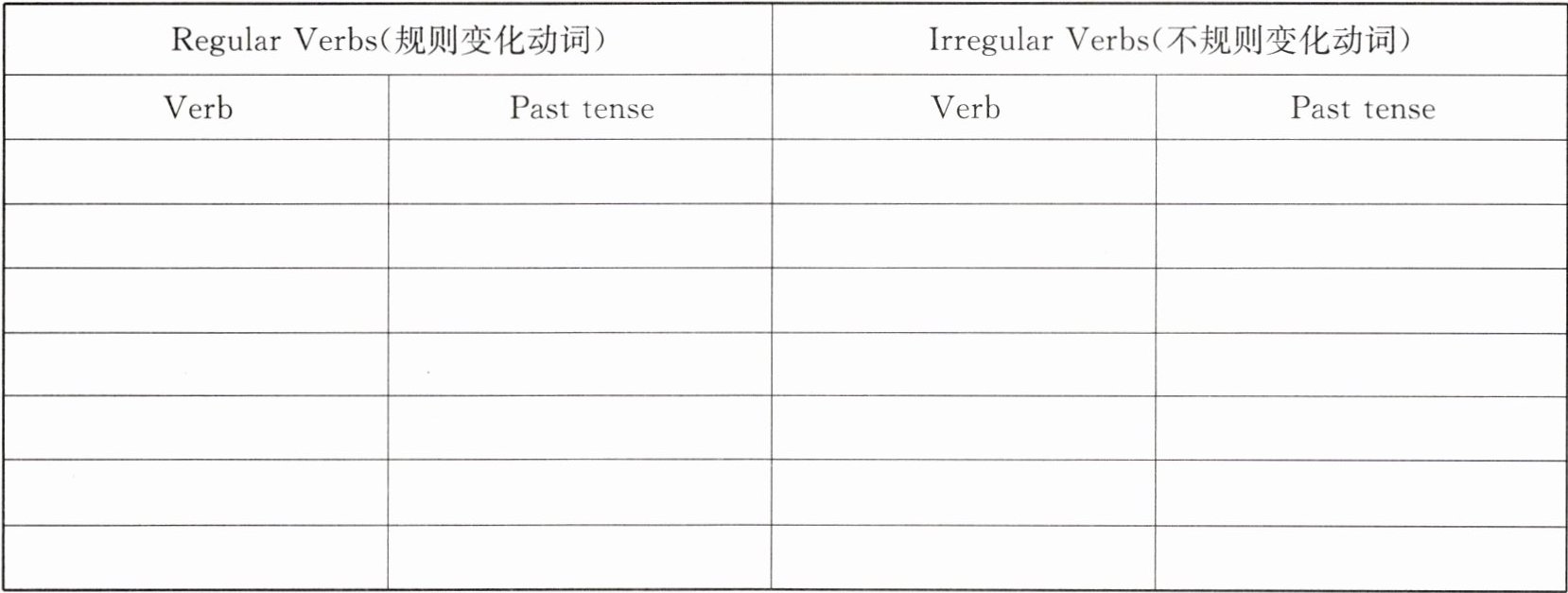
答案
Ⅱ.
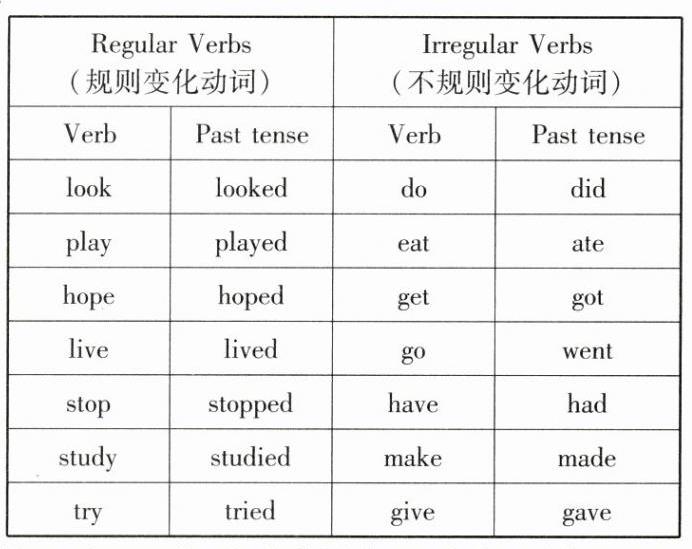
解析
【分析】本题要求将动词按过去式的变化规律分类,首先需明确动词过去式分为规则变化(有固定变化规则,如加-ed、变y为i加-ed等)和不规则变化(无固定规则,需特殊记忆)两类,再根据给定动词的过去式形式,将其对应归入两类中。
【解析】首先判断动词过去式的变化类型:规则变化动词的过去式遵循一定规则,如look→looked(直接加-ed)、play→played(直接加-ed)、hope→hoped(直接加-ed)、live→lived(直接加-ed)、stop→stopped(双写末尾辅音字母加-ed)、study→studied(变y为i加-ed)、try→tried(变y为i加-ed);不规则变化动词的过去式无固定规则,如do→did、eat→ate、get→got、go→went、have→had、make→made、give→gave,据此完成分类。
【答案】Regular Verbs(规则变化动词):look→looked, play→played, hope→hoped, live→lived, stop→stopped, study→studied, try→tried;Irregular Verbs(不规则变化动词):do→did, eat→ate, get→got, go→went, have→had, make→made, give→gave
【知识点】动词过去式变化规则、规则动词与不规则动词分类
【点评】本题为英语基础语法题,核心考查动词过去式的分类,需掌握规则变化和不规则变化的区别,属于易得分的基础题型。
【难度系数】0.3
【解析】首先判断动词过去式的变化类型:规则变化动词的过去式遵循一定规则,如look→looked(直接加-ed)、play→played(直接加-ed)、hope→hoped(直接加-ed)、live→lived(直接加-ed)、stop→stopped(双写末尾辅音字母加-ed)、study→studied(变y为i加-ed)、try→tried(变y为i加-ed);不规则变化动词的过去式无固定规则,如do→did、eat→ate、get→got、go→went、have→had、make→made、give→gave,据此完成分类。
【答案】Regular Verbs(规则变化动词):look→looked, play→played, hope→hoped, live→lived, stop→stopped, study→studied, try→tried;Irregular Verbs(不规则变化动词):do→did, eat→ate, get→got, go→went, have→had, make→made, give→gave
【知识点】动词过去式变化规则、规则动词与不规则动词分类
【点评】本题为英语基础语法题,核心考查动词过去式的分类,需掌握规则变化和不规则变化的区别,属于易得分的基础题型。
【难度系数】0.3
Ⅲ.Complete the sentences according to the requirements.按要求完成句子。
7. I see many fruits on the farm.
I
8. The children had a good time in the park.
The children
9.—Did you learn a lot from this trip to the museum?
—Yes,
10. Along the way they saw some mountains.
11. Jerry read a new book yesterday.
Jerry
7. I see many fruits on the farm.
I
saw
many fruits on the farm last
weekend
.8. The children had a good time in the park.
The children
didn't
have
a good time in the park.9.—Did you learn a lot from this trip to the museum?
—Yes,
I/we
did
.10. Along the way they saw some mountains.
What
did
they see
along the way?11. Jerry read a new book yesterday.
Jerry
didn't
read
a new book yesterday.答案
Ⅲ.7. saw;last weekend 8. didn't have 9. I/we did
10. What did;see 11. didn't read
10. What did;see 11. didn't read
解析
【分析】
本题为英语句型转换题,核心考查一般过去时的各类句型变化规则,需根据题目要求逐一转换句子:
1. 第7题:将一般现在时句子转换为同义的一般过去时句子,需将动词变为过去式并添加过去时间状语;
2. 第8、11题:将一般过去时肯定句转换为否定句,需借助助动词didn't后接动词原形;
3. 第9题:完成一般过去时一般疑问句的肯定回答,遵循“主语+did”的结构;
4. 第10题:对划线事物提问,用特殊疑问词What,结合一般过去时疑问句结构转换。
【解析】
7. 原句为一般现在时,要求转换为同义句,see的过去式为saw,添加过去时间状语last weekend,故填saw; last weekend;
8. 原句是一般过去时肯定句,变否定句需用助动词didn't,后接动词原形have,故填didn't have;
9. 以Did开头的一般过去时一般疑问句,肯定回答结构为“Yes, 主语+did”,问句主语为you,回答用I或we,故填I/we did;
10. 划线部分为事物,用What提问,原句是一般过去时,变疑问句需加助动词did,后接动词原形see,故填What did; see;
11. 原句是一般过去时肯定句,变否定句需用助动词didn't,后接动词原形read,故填didn't read。
【答案】
7. saw; last weekend 8. didn't have 9. I/we did 10. What did; see 11. didn't read
【知识点】
一般过去时、句型转换
【点评】
本题围绕一般过去时设置基础句型转换题,涵盖同义句、否定句、特殊疑问句、一般疑问句回答的转换,需熟练掌握一般过去时的结构及句型变化规则,属于初中英语核心基础题型。
【难度系数】
0.5
本题为英语句型转换题,核心考查一般过去时的各类句型变化规则,需根据题目要求逐一转换句子:
1. 第7题:将一般现在时句子转换为同义的一般过去时句子,需将动词变为过去式并添加过去时间状语;
2. 第8、11题:将一般过去时肯定句转换为否定句,需借助助动词didn't后接动词原形;
3. 第9题:完成一般过去时一般疑问句的肯定回答,遵循“主语+did”的结构;
4. 第10题:对划线事物提问,用特殊疑问词What,结合一般过去时疑问句结构转换。
【解析】
7. 原句为一般现在时,要求转换为同义句,see的过去式为saw,添加过去时间状语last weekend,故填saw; last weekend;
8. 原句是一般过去时肯定句,变否定句需用助动词didn't,后接动词原形have,故填didn't have;
9. 以Did开头的一般过去时一般疑问句,肯定回答结构为“Yes, 主语+did”,问句主语为you,回答用I或we,故填I/we did;
10. 划线部分为事物,用What提问,原句是一般过去时,变疑问句需加助动词did,后接动词原形see,故填What did; see;
11. 原句是一般过去时肯定句,变否定句需用助动词didn't,后接动词原形read,故填didn't read。
【答案】
7. saw; last weekend 8. didn't have 9. I/we did 10. What did; see 11. didn't read
【知识点】
一般过去时、句型转换
【点评】
本题围绕一般过去时设置基础句型转换题,涵盖同义句、否定句、特殊疑问句、一般疑问句回答的转换,需熟练掌握一般过去时的结构及句型变化规则,属于初中英语核心基础题型。
【难度系数】
0.5
