

 登录
登录
六、信息还原。
阅读下面短文,从短文后的选项中选出可以填入空白处的最佳选项。选项中有两项为多余选项。
Imagine pioneers travelling west in the 1800s. In those days, it was hard to find running water and shops where people could buy things. As time went by, most pioneers had to make their homes near a river so that they could get water easily.
How did rivers help people in the past?
Back in the pioneer days, people grew their own food, caught their own fish, and collected their own water.
When building factories next to rivers to use water power, some people choose to live nearby for work. They use the river to ship large goods, and some of them work at these factories where power factories provide electricity to homes and businesses.
Who wouldn’t want to live near a river?
Some people are nervous about living near rivers because rivers can cause floods(洪水). Every once in a while, floodwaters rise higher than a house, ruining(泡坏)many things in the house.
How do people decide where to live?
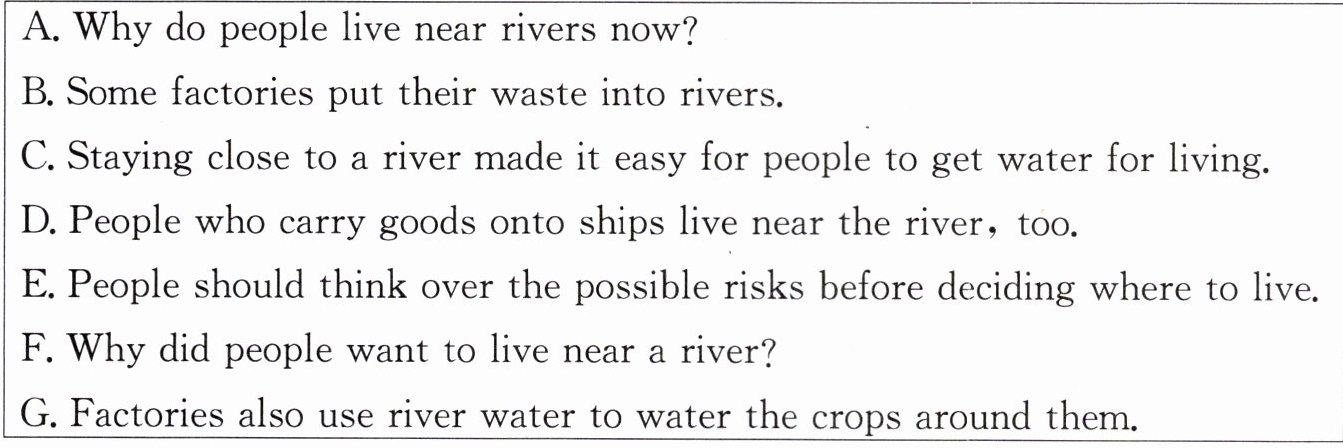
A. Why do people live near rivers now?
B. Some factories put their waste into rivers.
C. Staying close to a river made it easy for people to get water for living.
D. People who carry goods onto ships live near the river, too.
E. People should think over the possible risks before deciding where to live.
F. Why did people want to live near a river?
G. Factories also use river water to water the crops around them.
1.
2.
3.
4.
5.
阅读下面短文,从短文后的选项中选出可以填入空白处的最佳选项。选项中有两项为多余选项。
Imagine pioneers travelling west in the 1800s. In those days, it was hard to find running water and shops where people could buy things. As time went by, most pioneers had to make their homes near a river so that they could get water easily.
How did rivers help people in the past?
Back in the pioneer days, people grew their own food, caught their own fish, and collected their own water.
C
People also used rivers as roads, travelling on boats. Traders shipped goods(货物)to people from other areas.A
When building factories next to rivers to use water power, some people choose to live nearby for work. They use the river to ship large goods, and some of them work at these factories where power factories provide electricity to homes and businesses.
D
Who wouldn’t want to live near a river?
Some people are nervous about living near rivers because rivers can cause floods(洪水). Every once in a while, floodwaters rise higher than a house, ruining(泡坏)many things in the house.
B
Such waste causes water to smell bad and pollutes the crops(庄稼)we eat. Water and crops in polluted areas can make people very sick.How do people decide where to live?
E
Rivers can provide jobs and fun activities in a beautiful place. However, those living by rivers should be willing to accept possible problems as well.A. Why do people live near rivers now?
B. Some factories put their waste into rivers.
C. Staying close to a river made it easy for people to get water for living.
D. People who carry goods onto ships live near the river, too.
E. People should think over the possible risks before deciding where to live.
F. Why did people want to live near a river?
G. Factories also use river water to water the crops around them.
1.
C
2.
A
3.
D
4.
B
5.
E
答案
六、1. C 2. A 3. D 4. B 5. E
解析
【分析】
这是一篇英语七选五信息还原题,解题时首先要梳理全文的行文逻辑:文章按照「过去河流的作用→现在人们住河边的原因→住河边的隐患→居住选址的方法」的脉络展开,结合每个空前后的语境、指代关系、段落主题逐一匹配选项:
1. 第一空对应“过去河流如何帮助人类”的主题,前文提到过去人们需要自行收集生活用水,要选符合过去语境、承接取水相关内容的选项;
2. 第二空是段落主题句,前文刚讲完过去的情况,后文开始介绍当代人住河边的原因,要选能引出现代相关内容的问句;
3. 第三空前文提到了河流运货的内容,要选和航运、货物运输人群相关的选项,形成逻辑承接;
4. 第四空后文出现了指代性表述“Such waste”,要选能引出废弃物的选项,保证前后指代对应;
5. 第五空对应“如何决定居住地点”的主题,后文提到要接受住在河边的潜在问题,要选呼应利弊权衡、选址考量的总起句。最后排除和语境不匹配的多余选项F、G即可得到答案。
【解析】
1. 第一空:所在段落小标题为“河流在过去如何帮助人们”,前文提到过去人们需要自行收集生活用水,C选项“住在河边让人们很容易获取生活用水”承接前文内容,和后文“人们还将河流用作道路乘船出行”并列,都是河流在过去给人们提供的便利,符合语境。
2. 第二空:前文段落已经介绍完过去河流对人类的作用,后文段落开始介绍当代人们住在河边的原因:就近在工厂工作、利用河水航运、获取电力等,A选项“为什么现在人们住在河边?”作为承上启下的主题句,自然从过去的内容过渡到现代的相关介绍。
3. 第三空:前文提到“人们利用河流运输大宗货物,部分人在河边的工厂工作”,D选项“那些往船上装卸货物的人也住在河边”,承接航运运货的相关内容,进一步补充住在河边的相关人群,逻辑连贯通顺。
4. 第四空:后文出现指代表述“Such waste causes water to smell bad and pollutes the crops we eat”,B选项“一些工厂把废弃物排入河流”正好引出后文的“这类废弃物”,前后指代完全对应。
5. 第五空:所在段落小标题为“人们如何决定居住地点”,后文提到河流能提供工作和娱乐,但住在河边也要接受可能出现的问题,E选项“人们在决定住在哪里之前应该仔细考虑可能存在的风险”,作为段首总起句,呼应后文的利弊权衡内容,符合语境。
【答案】
1. C 2. A 3. D 4. B 5. E
【知识点】
七选五信息还原,上下文逻辑推理,语篇衔接
【点评】
本题是典型的初中英语阅读信息还原题型,行文按照清晰的时间线和主题模块排布,解题时重点关注段落小标题的提示作用、后文指代关系的对应、前后内容的并列承接逻辑,两个多余干扰项很容易通过内容匹配度排除,整体考察学生对语篇整体结构的把握能力。
【难度系数】
0.7
这是一篇英语七选五信息还原题,解题时首先要梳理全文的行文逻辑:文章按照「过去河流的作用→现在人们住河边的原因→住河边的隐患→居住选址的方法」的脉络展开,结合每个空前后的语境、指代关系、段落主题逐一匹配选项:
1. 第一空对应“过去河流如何帮助人类”的主题,前文提到过去人们需要自行收集生活用水,要选符合过去语境、承接取水相关内容的选项;
2. 第二空是段落主题句,前文刚讲完过去的情况,后文开始介绍当代人住河边的原因,要选能引出现代相关内容的问句;
3. 第三空前文提到了河流运货的内容,要选和航运、货物运输人群相关的选项,形成逻辑承接;
4. 第四空后文出现了指代性表述“Such waste”,要选能引出废弃物的选项,保证前后指代对应;
5. 第五空对应“如何决定居住地点”的主题,后文提到要接受住在河边的潜在问题,要选呼应利弊权衡、选址考量的总起句。最后排除和语境不匹配的多余选项F、G即可得到答案。
【解析】
1. 第一空:所在段落小标题为“河流在过去如何帮助人们”,前文提到过去人们需要自行收集生活用水,C选项“住在河边让人们很容易获取生活用水”承接前文内容,和后文“人们还将河流用作道路乘船出行”并列,都是河流在过去给人们提供的便利,符合语境。
2. 第二空:前文段落已经介绍完过去河流对人类的作用,后文段落开始介绍当代人们住在河边的原因:就近在工厂工作、利用河水航运、获取电力等,A选项“为什么现在人们住在河边?”作为承上启下的主题句,自然从过去的内容过渡到现代的相关介绍。
3. 第三空:前文提到“人们利用河流运输大宗货物,部分人在河边的工厂工作”,D选项“那些往船上装卸货物的人也住在河边”,承接航运运货的相关内容,进一步补充住在河边的相关人群,逻辑连贯通顺。
4. 第四空:后文出现指代表述“Such waste causes water to smell bad and pollutes the crops we eat”,B选项“一些工厂把废弃物排入河流”正好引出后文的“这类废弃物”,前后指代完全对应。
5. 第五空:所在段落小标题为“人们如何决定居住地点”,后文提到河流能提供工作和娱乐,但住在河边也要接受可能出现的问题,E选项“人们在决定住在哪里之前应该仔细考虑可能存在的风险”,作为段首总起句,呼应后文的利弊权衡内容,符合语境。
【答案】
1. C 2. A 3. D 4. B 5. E
【知识点】
七选五信息还原,上下文逻辑推理,语篇衔接
【点评】
本题是典型的初中英语阅读信息还原题型,行文按照清晰的时间线和主题模块排布,解题时重点关注段落小标题的提示作用、后文指代关系的对应、前后内容的并列承接逻辑,两个多余干扰项很容易通过内容匹配度排除,整体考察学生对语篇整体结构的把握能力。
【难度系数】
0.7
