

 登录
登录
2 Read the passage. 阅读短文。
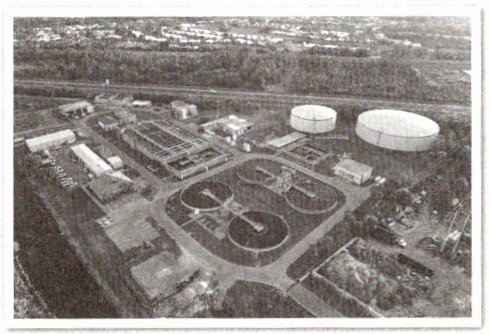
How do sewage (污水) treatment plants work?
Have you ever wondered where the water goes after you flush the toilet or wash your hands? It doesn’t just disappear! Instead, it travels through a network of underground pipes to a sewage treatment plant. There, the water is cleaned and made safe for reuse. Let’s take a look at how it happens in five simple steps!
Step 1: Wastewater collection
First, wastewater from homes, schools and factories flows through underground pipes to the treatment plant. Since most plants are built on low ground, gravity (重力) does most of the work. However, pumping stations are sometimes needed to help lift water to higher ground.
Step 2: Large waste removal
At the plant, the water first passes through screens (格栅). These screens catch big things like plastic bags and sticks. Then, the water slows down in special tanks, where heavy materials like sand sink to the bottom and are removed.
Step 3: Solid settlement
Next, the water flows into large tanks. Here, the water moves very slowly. Small solid particles (颗粒) sink down and form a thick, muddy layer called sludge (淤泥).
Step 4: Biological treatment
Then, the water enters aeration tanks (曝气池), where friendly bacteria are added to break down the remaining dirt. This is called the activated sludge method. After the bacteria finish their work, they sink to the bottom, leaving cleaner water above.
Step 5: Final treatment
Finally, the water goes through special filters (过滤器) to remove any remaining tiny particles. Disinfectants (消毒剂) or UV light are then used to kill the germs (病菌) in the water. Now the water is clean and safe enough to go back to rivers or be reused for watering plants.
Sewage treatment plants are essential for protecting public health and the environment. Without them, dirty water would pollute our lakes and rivers, harming wildlife and people.
2-1 Complete the problem-solution diagram according to the passage. 根据短文内容,填写“问题—解决方案”图表。
Problem
Wastewater would (1)
if we didn’t treat it well.

Solution
Wastewater travels through (2)
and is (3)
2-2 Complete the diagram about the sewage treatment process. 补全关于污水处理过程的图表。
Step 1: Wastewater collection
Purpose: To (1)
How it works: Wastewater flows through (2)
Step 2: Large waste removal
Purpose: To remove large solids and heavy materials from the wastewater
How it works: (3)
Step 3: Solid settlement
Purpose: To separate (4)
How it works: Water flows slowly in large tanks, allowing particles to (5)
Step 4: Biological treatment
Purpose: To break down the remaining dirt in the water
What to do: (6)
Step 5: Final treatment
Purpose: (7)
What to do: Water goes through (8)
2-3 Answer the question. 回答问题。
If we combine two of the five steps into one, which two will you pick? Give the reasons.
How do sewage (污水) treatment plants work?
Have you ever wondered where the water goes after you flush the toilet or wash your hands? It doesn’t just disappear! Instead, it travels through a network of underground pipes to a sewage treatment plant. There, the water is cleaned and made safe for reuse. Let’s take a look at how it happens in five simple steps!
Step 1: Wastewater collection
First, wastewater from homes, schools and factories flows through underground pipes to the treatment plant. Since most plants are built on low ground, gravity (重力) does most of the work. However, pumping stations are sometimes needed to help lift water to higher ground.
Step 2: Large waste removal
At the plant, the water first passes through screens (格栅). These screens catch big things like plastic bags and sticks. Then, the water slows down in special tanks, where heavy materials like sand sink to the bottom and are removed.
Step 3: Solid settlement
Next, the water flows into large tanks. Here, the water moves very slowly. Small solid particles (颗粒) sink down and form a thick, muddy layer called sludge (淤泥).
Step 4: Biological treatment
Then, the water enters aeration tanks (曝气池), where friendly bacteria are added to break down the remaining dirt. This is called the activated sludge method. After the bacteria finish their work, they sink to the bottom, leaving cleaner water above.
Step 5: Final treatment
Finally, the water goes through special filters (过滤器) to remove any remaining tiny particles. Disinfectants (消毒剂) or UV light are then used to kill the germs (病菌) in the water. Now the water is clean and safe enough to go back to rivers or be reused for watering plants.
Sewage treatment plants are essential for protecting public health and the environment. Without them, dirty water would pollute our lakes and rivers, harming wildlife and people.
2-1 Complete the problem-solution diagram according to the passage. 根据短文内容,填写“问题—解决方案”图表。
Problem
Wastewater would (1)
pollute our lakes and rivers, harming wildlife and people
if we didn’t treat it well.
Solution
Wastewater travels through (2)
a network of underground pipes to a sewage treatment plant
and is (3)
cleaned and made safe for reuse
in five steps.2-2 Complete the diagram about the sewage treatment process. 补全关于污水处理过程的图表。
Step 1: Wastewater collection
Purpose: To (1)
collect/take/transport wastewater
to the treatment plantHow it works: Wastewater flows through (2)
underground pipes
.Step 2: Large waste removal
Purpose: To remove large solids and heavy materials from the wastewater
How it works: (3)
The screens catch big things
, and then heavy particles like sand sink to the bottom.Step 3: Solid settlement
Purpose: To separate (4)
small solid particles/sludge
from the wastewaterHow it works: Water flows slowly in large tanks, allowing particles to (5)
sink down
.Step 4: Biological treatment
Purpose: To break down the remaining dirt in the water
What to do: (6)
Add (friendly) bacteria
into aeration tanks.Step 5: Final treatment
Purpose: (7)
To remove any remaining tiny particles and to kill the germs (in the water)
What to do: Water goes through (8)
special filters
and then (9) disinfectants or UV light
are used.2-3 Answer the question. 回答问题。
If we combine two of the five steps into one, which two will you pick? Give the reasons.
I will combine Step 2 and Step 3 into one "First cleaning" step. We can possibly use special screens to catch both big things and small solid particles at the same time.
答案
2-1(1) pollute our lakes and rivers, harming wildlife and people(2) a network of underground pipes to a sewage treatment plant(3) cleaned and made safe for reuse
2-2
(1) collect/take/transport wastewater (2) underground pipes (3) The screens catch big things
(4) small solid particles/sludge (5) sink down (6) Add (friendly) bacteria
(7) To remove any remaining tiny particles and to kill the germs (in the water)
(8) special filters (9) disinfectants or UV light
2-3
(Answers may vary.)
I will combine Step 2 and Step 3 into one "First cleaning" step. We can possibly use special screens to catch both big things and small solid particles at the same time.
2-2
(1) collect/take/transport wastewater (2) underground pipes (3) The screens catch big things
(4) small solid particles/sludge (5) sink down (6) Add (friendly) bacteria
(7) To remove any remaining tiny particles and to kill the germs (in the water)
(8) special filters (9) disinfectants or UV light
2-3
(Answers may vary.)
I will combine Step 2 and Step 3 into one "First cleaning" step. We can possibly use special screens to catch both big things and small solid particles at the same time.
解析
【分析】
本题为英语阅读理解题,需先通读短文理解污水处理的五个步骤及相关内容,再针对各小题定位原文对应信息:2-1题需提取“问题”和“解决方案”的原文表述;2-2题需对应每个步骤的目的和操作细节填空;2-3题需结合步骤功能的相似性,合理选择可合并的步骤并说明理由。
【解析】
2-1 填空
(1) 定位原文最后一段“Without them, dirty water would pollute our lakes and rivers, harming wildlife and people.”,可知污水未处理的后果;
(2) 定位Step1“flows through a network of underground pipes to a sewage treatment plant”,可知废水输送路径;
(3) 定位Step1“the water is cleaned and made safe for reuse”,可知处理后的结果。
2-2 填空
(1) Step1目的是收集废水,对应原文“Wastewater collection”;
(2) Step1中废水通过地下管道流动,对应原文“underground pipes”;
(3) Step2中先经过格栅去除大废物,对应原文“the water first passes through screens, these screens catch big things”;
(4) Step3目的是分离小固体颗粒,对应原文“Small solid particles sink down”;
(5) Step3中颗粒下沉,对应原文“sink down”;
(6) Step4需加入友好细菌分解杂质,对应原文“friendly bacteria are added”;
(7) Step5目的是去除残留微粒和杀病菌,对应原文“remove any remaining tiny particles and to kill the germs”;
(8) Step5中先通过特殊过滤器,对应原文“special filters”;
(9) Step5中用消毒剂或紫外线杀病菌,对应原文“disinfectants or UV light”。
2-3 开放性问题
结合Step2(去除大废物)和Step3(固体沉降)的功能均为去除固体类杂质,可合并为“First cleaning”步骤,理由是能同时处理不同大小的固体颗粒,操作更高效。
【答案】
2-1 (1) pollute our lakes and rivers, harming wildlife and people (2) a network of underground pipes to a sewage treatment plant (3) cleaned and made safe for reuse
2-2 (1) collect/take/transport wastewater (2) underground pipes (3) The screens catch big things (4) small solid particles/sludge (5) sink down (6) Add (friendly) bacteria (7) To remove any remaining tiny particles and to kill the germs (8) special filters (9) disinfectants or UV light
2-3 (Answers may vary.) I will combine Step 2 and Step 3 into one "First cleaning" step. We can possibly use special screens to catch both big things and small solid particles at the same time.
【知识点】
阅读理解(细节提取)、说明文内容理解、开放性问题解答
【点评】
本题考查学生对英语说明文的信息定位、内容整合及逻辑分析能力,题型涵盖细节填空和开放性问答,符合初中英语阅读的考查要求,学生通过通读原文即可完成大部分题目,开放性问题需结合步骤功能合理作答。
【难度系数】
0.6
本题为英语阅读理解题,需先通读短文理解污水处理的五个步骤及相关内容,再针对各小题定位原文对应信息:2-1题需提取“问题”和“解决方案”的原文表述;2-2题需对应每个步骤的目的和操作细节填空;2-3题需结合步骤功能的相似性,合理选择可合并的步骤并说明理由。
【解析】
2-1 填空
(1) 定位原文最后一段“Without them, dirty water would pollute our lakes and rivers, harming wildlife and people.”,可知污水未处理的后果;
(2) 定位Step1“flows through a network of underground pipes to a sewage treatment plant”,可知废水输送路径;
(3) 定位Step1“the water is cleaned and made safe for reuse”,可知处理后的结果。
2-2 填空
(1) Step1目的是收集废水,对应原文“Wastewater collection”;
(2) Step1中废水通过地下管道流动,对应原文“underground pipes”;
(3) Step2中先经过格栅去除大废物,对应原文“the water first passes through screens, these screens catch big things”;
(4) Step3目的是分离小固体颗粒,对应原文“Small solid particles sink down”;
(5) Step3中颗粒下沉,对应原文“sink down”;
(6) Step4需加入友好细菌分解杂质,对应原文“friendly bacteria are added”;
(7) Step5目的是去除残留微粒和杀病菌,对应原文“remove any remaining tiny particles and to kill the germs”;
(8) Step5中先通过特殊过滤器,对应原文“special filters”;
(9) Step5中用消毒剂或紫外线杀病菌,对应原文“disinfectants or UV light”。
2-3 开放性问题
结合Step2(去除大废物)和Step3(固体沉降)的功能均为去除固体类杂质,可合并为“First cleaning”步骤,理由是能同时处理不同大小的固体颗粒,操作更高效。
【答案】
2-1 (1) pollute our lakes and rivers, harming wildlife and people (2) a network of underground pipes to a sewage treatment plant (3) cleaned and made safe for reuse
2-2 (1) collect/take/transport wastewater (2) underground pipes (3) The screens catch big things (4) small solid particles/sludge (5) sink down (6) Add (friendly) bacteria (7) To remove any remaining tiny particles and to kill the germs (8) special filters (9) disinfectants or UV light
2-3 (Answers may vary.) I will combine Step 2 and Step 3 into one "First cleaning" step. We can possibly use special screens to catch both big things and small solid particles at the same time.
【知识点】
阅读理解(细节提取)、说明文内容理解、开放性问题解答
【点评】
本题考查学生对英语说明文的信息定位、内容整合及逻辑分析能力,题型涵盖细节填空和开放性问答,符合初中英语阅读的考查要求,学生通过通读原文即可完成大部分题目,开放性问题需结合步骤功能合理作答。
【难度系数】
0.6
