

 登录
登录
D
①All living things need energy, and animals get it from their food. But do you know how energy is transferred(转移) among living things?
②Animals get energy in different ways. Plants, known as producers, get their energy from sunshine. Animals must either eat plants or other animals to live. For example, snails and insects like grasshoppers feed on plants to get the energy they need. In turn, these animals can be the food of bigger animals, like birds or frogs. However, they are not the final bosses but foxes.
③When they get energy from other living things, they will also get some harmful substances(有害物质) from one to another. That means the higher the living things are in a food chain(食物链), the larger amount of harmful substances they will get.
④In a food chain, animals that consume plants as their main food are called primary consumers, such as deer, grasshoppers and snails. In most food chains, primary consumers become food for secondary consumers. For example, a small fish can eat algae(藻类) and then be eaten by a bigger fish. Tertiary consumers are the third level in a food chain, like snakes or sea lions. Energy is passed at each stage of the food chain until it reaches the top predators, like lions or sharks.
⑤Food chains are important for a healthy environment. If one part of the food chain is changed, it can cause problems for the whole chain. For example, insects are very important for frogs. Studies show that the number of insects has decreased by about 40% in the past 30 years due to overuse of pesticide(杀虫剂). Without enough insects, frogs will have less food to eat, and the number of their population(族群) will drop. This can cause a decrease in the snake population, as snakes depend on frogs for food. Finally, eagles, which eat snakes, may also see a drop in their numbers.
⑥In conclusion, each part of the food chains plays an important role. Let's work together to protect the balance of nature and ensure a healthy planet for all living things.
(
(
A. She was consumed with regret all the time.
B. The house was quickly consumed by the fire.
C. He consumed a large bowl of soup for lunch.
D. She consumes time watching TV every evening.
(
A. Giving examples.
B. Giving reasons.
C. Listing numbers.
D. Telling stories.
(
A. Top predators would like to eat all the living things in the whole food chain.
B. The change of one part of a food chain can cause problems to the whole chain.
C. Secondary consumers play a more important role in food chains than tertiary ones.
D. The increase of eagle population may have an influence on the population of foxes.
①All living things need energy, and animals get it from their food. But do you know how energy is transferred(转移) among living things?
②Animals get energy in different ways. Plants, known as producers, get their energy from sunshine. Animals must either eat plants or other animals to live. For example, snails and insects like grasshoppers feed on plants to get the energy they need. In turn, these animals can be the food of bigger animals, like birds or frogs. However, they are not the final bosses but foxes.
③When they get energy from other living things, they will also get some harmful substances(有害物质) from one to another. That means the higher the living things are in a food chain(食物链), the larger amount of harmful substances they will get.
④In a food chain, animals that consume plants as their main food are called primary consumers, such as deer, grasshoppers and snails. In most food chains, primary consumers become food for secondary consumers. For example, a small fish can eat algae(藻类) and then be eaten by a bigger fish. Tertiary consumers are the third level in a food chain, like snakes or sea lions. Energy is passed at each stage of the food chain until it reaches the top predators, like lions or sharks.
⑤Food chains are important for a healthy environment. If one part of the food chain is changed, it can cause problems for the whole chain. For example, insects are very important for frogs. Studies show that the number of insects has decreased by about 40% in the past 30 years due to overuse of pesticide(杀虫剂). Without enough insects, frogs will have less food to eat, and the number of their population(族群) will drop. This can cause a decrease in the snake population, as snakes depend on frogs for food. Finally, eagles, which eat snakes, may also see a drop in their numbers.
⑥In conclusion, each part of the food chains plays an important role. Let's work together to protect the balance of nature and ensure a healthy planet for all living things.
(
B
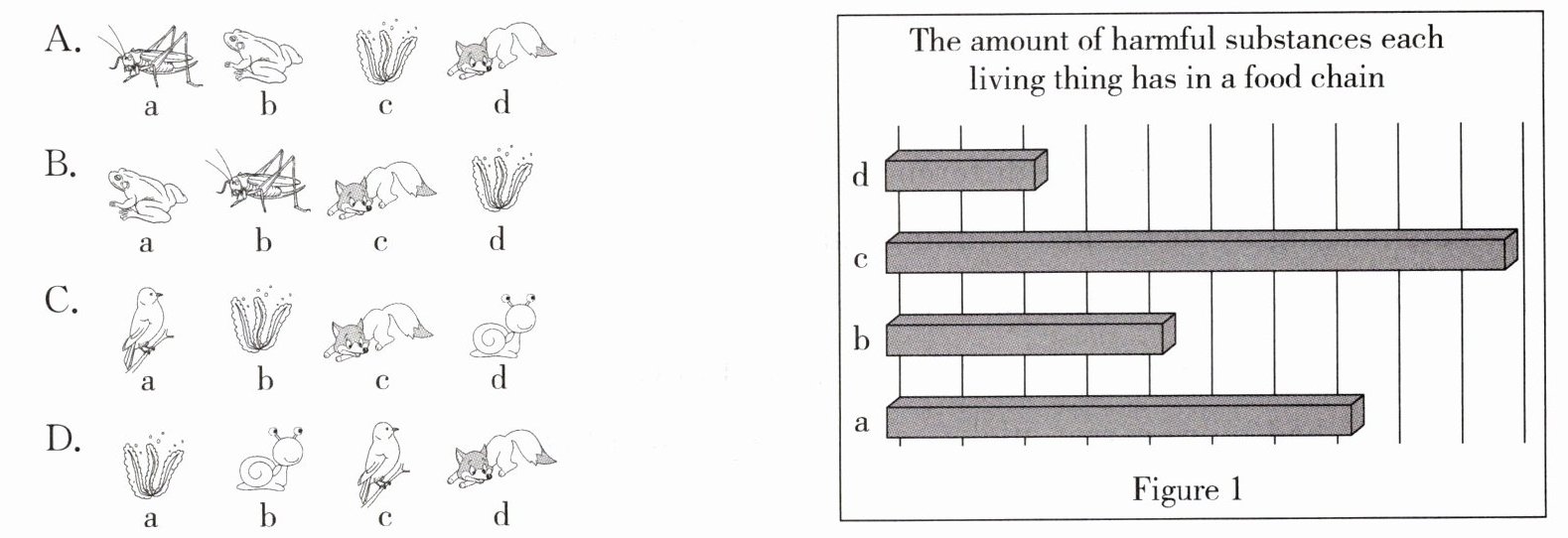
)37. According to the passage, what are the kinds of living things in Figure(图表) 1?(
C
)38. Which underlined word shares the same meaning with “consume” in Paragraph 4?A. She was consumed with regret all the time.
B. The house was quickly consumed by the fire.
C. He consumed a large bowl of soup for lunch.
D. She consumes time watching TV every evening.
(
D
)39. Which of the following ways is NOT used by the writer to develop his idea?A. Giving examples.
B. Giving reasons.
C. Listing numbers.
D. Telling stories.
(
D
)40. What can you infer from the passage?A. Top predators would like to eat all the living things in the whole food chain.
B. The change of one part of a food chain can cause problems to the whole chain.
C. Secondary consumers play a more important role in food chains than tertiary ones.
D. The increase of eagle population may have an influence on the population of foxes.
答案
D
【语篇解读】本文是一篇说明文,主要介绍了食物链中每个部分的重要性及呼吁携起手来一起保护大自然的平衡。
37~40 BCDD
【语篇解读】本文是一篇说明文,主要介绍了食物链中每个部分的重要性及呼吁携起手来一起保护大自然的平衡。
37~40 BCDD
解析
【分析】
本题为阅读理解题,围绕食物链相关知识设置4道题目,分别考查图表对应生物种类、词义猜测、写作手法判断和推理判断。解题时需先通读文章,掌握核心规律“食物链中营养级越高的生物,积累的有害物质越多”,再结合图表信息和各题题干逐一分析选项。
【解析】
37题:根据文章第③段内容,食物链中生物营养级越高,有害物质积累越多。结合Figure1中有害物质含量:c最多,a次之,b较少,d最少,可知食物链营养级从低到高为d→b→a→c。选项B的食物链为植物(d,生产者,营养级最低)→蝗虫(b,初级消费者)→青蛙(a,次级消费者)→狐狸(c,顶级消费者),符合有害物质含量规律,故选B。
38题:题干中“consume”在第④段意为“吃、消耗”。分析选项:A项“be consumed with”意为“被(情绪)困扰”;B项“be consumed by”意为“被……烧毁”;C项“consumed a large bowl of soup”中consume意为“吃”,与题干词义一致;D项“consumes time”意为“花费时间”,故选C。
39题:作者写作手法分析:第②段举蜗牛、蝗虫等例子(A项用到);第⑤段提到“decreased by about 40%”(C项用到);第⑤段解释食物链重要的原因(B项用到);全文未讲述故事,故选D。
40题:推理判断:A项文章未提及顶级捕食者吃所有生物,错误;B项第⑤段明确指出“食物链某一部分改变会引发整个食物链的问题”,正确;C项文章未比较次级和三级消费者的重要性,错误;D项文章未提及鹰和狐狸的数量关系,错误,故选D。
【答案】
37.B 38.C 39.D 40.D
【知识点】
阅读理解、词义猜测、推理判断
【点评】
本题结合食物链知识考查阅读理解综合能力,需准确把握文章细节与核心规律,解题时要紧扣题干要求,逐一排除错误选项。
【难度系数】
0.5
本题为阅读理解题,围绕食物链相关知识设置4道题目,分别考查图表对应生物种类、词义猜测、写作手法判断和推理判断。解题时需先通读文章,掌握核心规律“食物链中营养级越高的生物,积累的有害物质越多”,再结合图表信息和各题题干逐一分析选项。
【解析】
37题:根据文章第③段内容,食物链中生物营养级越高,有害物质积累越多。结合Figure1中有害物质含量:c最多,a次之,b较少,d最少,可知食物链营养级从低到高为d→b→a→c。选项B的食物链为植物(d,生产者,营养级最低)→蝗虫(b,初级消费者)→青蛙(a,次级消费者)→狐狸(c,顶级消费者),符合有害物质含量规律,故选B。
38题:题干中“consume”在第④段意为“吃、消耗”。分析选项:A项“be consumed with”意为“被(情绪)困扰”;B项“be consumed by”意为“被……烧毁”;C项“consumed a large bowl of soup”中consume意为“吃”,与题干词义一致;D项“consumes time”意为“花费时间”,故选C。
39题:作者写作手法分析:第②段举蜗牛、蝗虫等例子(A项用到);第⑤段提到“decreased by about 40%”(C项用到);第⑤段解释食物链重要的原因(B项用到);全文未讲述故事,故选D。
40题:推理判断:A项文章未提及顶级捕食者吃所有生物,错误;B项第⑤段明确指出“食物链某一部分改变会引发整个食物链的问题”,正确;C项文章未比较次级和三级消费者的重要性,错误;D项文章未提及鹰和狐狸的数量关系,错误,故选D。
【答案】
37.B 38.C 39.D 40.D
【知识点】
阅读理解、词义猜测、推理判断
【点评】
本题结合食物链知识考查阅读理解综合能力,需准确把握文章细节与核心规律,解题时要紧扣题干要求,逐一排除错误选项。
【难度系数】
0.5
