

 登录
登录
1. 嘴里含着食物说话是不礼貌的。(it's improper to)
2. 每周存一点钱,作用很大。(go a long way)
3. 在中国,外国朋友需要花时间习惯用筷子吃饭。(get used to)
4. 在西方国家,良好的餐桌礼仪意味着你应该安静地吃饭。(table manners)
5. 印度的这些习俗如此特殊,以至于吸引了很多游客。(so...that)
It's improper to talk with your mouth full.
2. 每周存一点钱,作用很大。(go a long way)
Saving a little money each week goes a long way.
3. 在中国,外国朋友需要花时间习惯用筷子吃饭。(get used to)
In China, foreign friends need time to get used to eating with chopsticks.
4. 在西方国家,良好的餐桌礼仪意味着你应该安静地吃饭。(table manners)
In Western countries, good table manners mean you should eat quietly.
5. 印度的这些习俗如此特殊,以至于吸引了很多游客。(so...that)
These customs in India are so special that they attract many tourists.
答案
1. It's improper to talk with your mouth full.
2. Saving a little money each week goes a long way.
3. In China, foreign friends need time to get used to eating with chopsticks.
4. In Western countries, good table manners mean you should eat quietly.
5. These customs in India are so special that they attract many tourists.
2. Saving a little money each week goes a long way.
3. In China, foreign friends need time to get used to eating with chopsticks.
4. In Western countries, good table manners mean you should eat quietly.
5. These customs in India are so special that they attract many tourists.
解析
【解析】
1. 考查it作形式主语的句式"It's improper to do sth.",it为形式主语,真正主语是不定式短语to talk with your mouth full,"嘴里含着食物"用with your mouth full作伴随状语。
2. 考查固定短语go a long way,"每周存一点钱"作主语,要变为动名词短语Saving a little money each week,动名词作主语时谓语动词用第三人称单数形式goes。
3. 考查固定短语get used to,其中to是介词,后接动名词形式,"习惯用筷子吃饭"译为get used to eating with chopsticks,结合need time to do sth.结构组句。
4. 考查固定短语table manners,"良好的餐桌礼仪"作主语,后接宾语从句说明其含义,"安静地吃饭"译为eat quietly。
5. 考查so...that...结构,so修饰形容词special,that引导结果状语从句,"吸引很多游客"译为attract many tourists。
【答案】
1. It's improper to talk with your mouth full.
2. Saving a little money each week goes a long way.
3. In China, foreign friends need time to get used to eating with chopsticks.
4. In Western countries, good table manners mean you should eat quietly.
5. These customs in India are so special that they attract many tourists.
【知识点】
固定短语搭配 动名词用法 特殊句式运用
【点评】
本题为基础汉译英题,围绕指定核心短语、句式命题,侧重考察短语的正确搭配和句式结构的规范使用,素材贴近生活场景,实用性较强,需注意get used to后接动名词、动名词作主语的主谓一致等易错点。
【难度系数】
0.7
1. 考查it作形式主语的句式"It's improper to do sth.",it为形式主语,真正主语是不定式短语to talk with your mouth full,"嘴里含着食物"用with your mouth full作伴随状语。
2. 考查固定短语go a long way,"每周存一点钱"作主语,要变为动名词短语Saving a little money each week,动名词作主语时谓语动词用第三人称单数形式goes。
3. 考查固定短语get used to,其中to是介词,后接动名词形式,"习惯用筷子吃饭"译为get used to eating with chopsticks,结合need time to do sth.结构组句。
4. 考查固定短语table manners,"良好的餐桌礼仪"作主语,后接宾语从句说明其含义,"安静地吃饭"译为eat quietly。
5. 考查so...that...结构,so修饰形容词special,that引导结果状语从句,"吸引很多游客"译为attract many tourists。
【答案】
1. It's improper to talk with your mouth full.
2. Saving a little money each week goes a long way.
3. In China, foreign friends need time to get used to eating with chopsticks.
4. In Western countries, good table manners mean you should eat quietly.
5. These customs in India are so special that they attract many tourists.
【知识点】
固定短语搭配 动名词用法 特殊句式运用
【点评】
本题为基础汉译英题,围绕指定核心短语、句式命题,侧重考察短语的正确搭配和句式结构的规范使用,素材贴近生活场景,实用性较强,需注意get used to后接动名词、动名词作主语的主谓一致等易错点。
【难度系数】
0.7
假定你是李华,你将给到校的英国交换生做一次关于中国餐桌礼仪的发言,请根据以下相关信息,用英语写一篇发言稿。
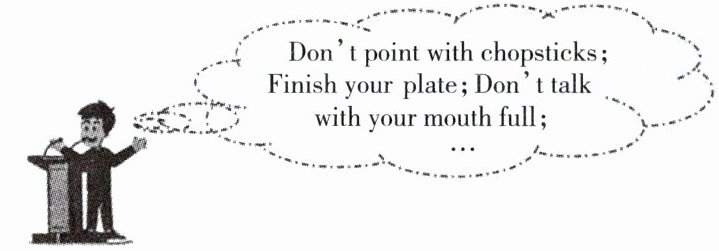
注意:
(1)文中不得出现真实姓名和校名等信息;
(2)写作词数为80左右(开头已给出,不计入总词数)。
Good afternoon, everyone! Welcome to our school!
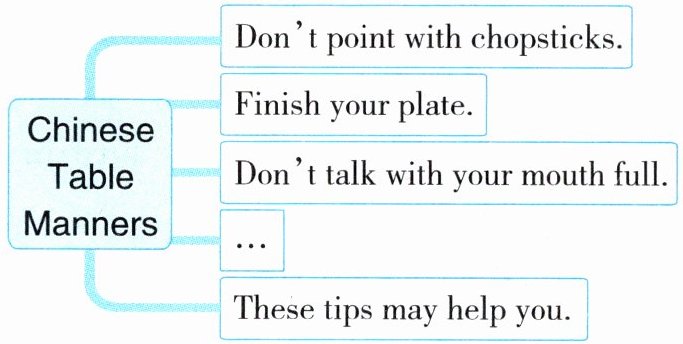
写作提纲:
规范作文:
Good afternoon, everyone! Welcome to our school!
注意:
(1)文中不得出现真实姓名和校名等信息;
(2)写作词数为80左右(开头已给出,不计入总词数)。
Good afternoon, everyone! Welcome to our school!
I'm Li Hua, and today I'd like to share some basic Chinese table manners with all of you.
First, don't point at others with your chopsticks while talking—it's really rude.
Also, it's polite to finish everything on your plate to show respect.
Remember, don't talk with your mouth full of food or drinks, and don't stick your chopsticks into food.
Last but not least, when serving or receiving dishes, use both hands—it's a sign of respect, too.
写作提纲:
规范作文:
Good afternoon, everyone! Welcome to our school!
I'm Li Hua, and today I'd like to share some basic Chinese table manners with all of you.
First, don't point at others with your chopsticks while talking—it's really rude.
Also, it's polite to finish everything on your plate to show respect.
Remember, don't talk with your mouth full of food or drinks, and don't stick your chopsticks into food.
Last but not least, when serving or receiving dishes, use both hands—it's a sign of respect, too.
I hope these tips may help you enjoy your meals here. Thank you!
答案
Good afternoon, everyone! Welcome to our school! I'm Li Hua, and today I'd like to share some basic Chinese table manners with all of you. First, don't point at others with your chopsticks while talking—it's really rude. Also, it's polite to finish everything on your plate to show respect. Remember, don't talk with your mouth full of food or drinks, and don't stick your chopsticks into food. Last but not least, when serving or receiving dishes, use both hands—it's a sign of respect, too. I hope these tips may help you enjoy your meals here. Thank you!
解析
【分析】
首先明确本题是面向英国交换生的主题发言稿写作,核心主题为科普中国餐桌礼仪。解题时第一步先承接题目给出的开头,自然点明自己的身份和本次发言的核心主题;第二步挑选辨识度高、外国友人容易忽略的典型中国餐桌礼仪要点,用合适的逻辑衔接词串联内容,避免内容零散;第三步收尾给出友好提示和祝愿,控制总词数在要求的80词左右,全程注意不要出现真实姓名、校名等违规信息,语气要亲切易懂,符合面向外国交换生科普的场景定位。
【解析】
1. 开篇承接给定开头,先自我介绍,直接引出本次发言要分享中国基础餐桌礼仪的核心内容,快速切入主题;
2. 使用first、also、last but not least等衔接词,依次介绍几个核心礼仪禁忌和礼貌行为:不要用筷子指人、不要把筷子插在食物里、不要满嘴食物说话、吃完盘中食物表示尊重、接递菜品用双手,内容清晰有条理,都是外国友人容易用到的实用提示;
3. 结尾补充美好祝愿,加上常规发言稿的致谢收尾,整体篇幅符合词数要求,没有出现违规信息,完全贴合题目要求。
【答案】
Good afternoon, everyone! Welcome to our school! I'm Li Hua, and today I'd like to share some basic Chinese table manners with all of you. First, don't point at others with your chopsticks while talking—it's really rude. Also, it's polite to finish everything on your plate to show respect. Remember, don't talk with your mouth full of food or drinks, and don't stick your chopsticks into food. Last but not least, when serving or receiving dishes, use both hands—it's a sign of respect, too. I hope these tips may help you enjoy your meals here. Thank you!
【知识点】
英语发言稿写作
餐桌礼仪话题表达
语篇逻辑衔接
【点评】
本篇范文完全贴合题目设定的发言场景,身份定位准确,覆盖了中国餐桌最具代表性的礼仪要点,衔接自然流畅,用词简单易懂,非常适合面向外国交换生的科普语境,词数符合题目要求,没有出现违规信息,是一篇非常规范的应用文范文。
【难度系数】
0.7
首先明确本题是面向英国交换生的主题发言稿写作,核心主题为科普中国餐桌礼仪。解题时第一步先承接题目给出的开头,自然点明自己的身份和本次发言的核心主题;第二步挑选辨识度高、外国友人容易忽略的典型中国餐桌礼仪要点,用合适的逻辑衔接词串联内容,避免内容零散;第三步收尾给出友好提示和祝愿,控制总词数在要求的80词左右,全程注意不要出现真实姓名、校名等违规信息,语气要亲切易懂,符合面向外国交换生科普的场景定位。
【解析】
1. 开篇承接给定开头,先自我介绍,直接引出本次发言要分享中国基础餐桌礼仪的核心内容,快速切入主题;
2. 使用first、also、last but not least等衔接词,依次介绍几个核心礼仪禁忌和礼貌行为:不要用筷子指人、不要把筷子插在食物里、不要满嘴食物说话、吃完盘中食物表示尊重、接递菜品用双手,内容清晰有条理,都是外国友人容易用到的实用提示;
3. 结尾补充美好祝愿,加上常规发言稿的致谢收尾,整体篇幅符合词数要求,没有出现违规信息,完全贴合题目要求。
【答案】
Good afternoon, everyone! Welcome to our school! I'm Li Hua, and today I'd like to share some basic Chinese table manners with all of you. First, don't point at others with your chopsticks while talking—it's really rude. Also, it's polite to finish everything on your plate to show respect. Remember, don't talk with your mouth full of food or drinks, and don't stick your chopsticks into food. Last but not least, when serving or receiving dishes, use both hands—it's a sign of respect, too. I hope these tips may help you enjoy your meals here. Thank you!
【知识点】
英语发言稿写作
餐桌礼仪话题表达
语篇逻辑衔接
【点评】
本篇范文完全贴合题目设定的发言场景,身份定位准确,覆盖了中国餐桌最具代表性的礼仪要点,衔接自然流畅,用词简单易懂,非常适合面向外国交换生的科普语境,词数符合题目要求,没有出现违规信息,是一篇非常规范的应用文范文。
【难度系数】
0.7
