

 登录
登录
一、选出画线部分发音不同的一项。
()1. A. chair B. catch C. teacher D. school
()2. A. bridge B. guess C. judge D. orange
()3. A. high B. laugh C. enough D. tough
()4. A. walk B. talk C. chalk D. always
()5. A. part B. start C. around D. smart
()1. A. chair B. catch C. teacher D. school
()2. A. bridge B. guess C. judge D. orange
()3. A. high B. laugh C. enough D. tough
()4. A. walk B. talk C. chalk D. always
()5. A. part B. start C. around D. smart
答案
1.D 2.B 3.A 4.D 5.C
解析
我们逐个分析每个单词画线部分的发音:
1. 选项A chair 中ch发音为/tʃ/;选项B catch 中ch发音为/tʃ/;选项C teacher 中ch发音为/tʃ/;选项D school 中ch发音为/k/,因此发音不同的是D。
2. 选项A bridge 中ge发音为/dʒ/;选项B guess 中u发音为/e/;选项C judge 中ge发音为/dʒ/;选项D orange 中ge发音为/dʒ/,因此发音不同的是B。
3. 选项A high 中h不发音;选项B laugh 中gh发音为/f/;选项C enough 中gh发音为/f/;选项D tough 中gh发音为/f/,因此发音不同的是A。
4. 选项A walk 中al发音为/ɔː/;选项B talk 中al发音为/ɔː/;选项C chalk 中al发音为/ɔː/;选项D always 中al发音为/ɔːl/,因此发音不同的是D。
5. 选项A part 中ar发音为/ɑː/;选项B start 中ar发音为/ɑː/;选项C around 中ar发音为/ə/;选项D smart 中ar发音为/ɑː/,因此发音不同的是C。
1. 选项A chair 中ch发音为/tʃ/;选项B catch 中ch发音为/tʃ/;选项C teacher 中ch发音为/tʃ/;选项D school 中ch发音为/k/,因此发音不同的是D。
2. 选项A bridge 中ge发音为/dʒ/;选项B guess 中u发音为/e/;选项C judge 中ge发音为/dʒ/;选项D orange 中ge发音为/dʒ/,因此发音不同的是B。
3. 选项A high 中h不发音;选项B laugh 中gh发音为/f/;选项C enough 中gh发音为/f/;选项D tough 中gh发音为/f/,因此发音不同的是A。
4. 选项A walk 中al发音为/ɔː/;选项B talk 中al发音为/ɔː/;选项C chalk 中al发音为/ɔː/;选项D always 中al发音为/ɔːl/,因此发音不同的是D。
5. 选项A part 中ar发音为/ɑː/;选项B start 中ar发音为/ɑː/;选项C around 中ar发音为/ə/;选项D smart 中ar发音为/ɑː/,因此发音不同的是C。
二、朗读下面的句子,仿照所给示例标出每个句子的语调。
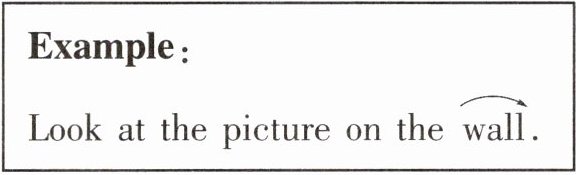
1. Are there any students in the classroom?
2. What about making a shopping list?
3. Do you know the water cycle?
4. Don't put too much food on your own plate.
5. What do you usually do to save water?
1. Are there any students in the classroom?
2. What about making a shopping list?
3. Do you know the water cycle?
4. Don't put too much food on your own plate.
5. What do you usually do to save water?
答案
1. 在句末单词classroom上方标注向上扬起的升调弧线:Are there any students in the classroom↗?
2. 在句末单词list上方标注向右下延伸的降调弧线:What about making a shopping list↘?
3. 在句末单词cycle上方标注向上扬起的升调弧线:Do you know the water cycle↗?
4. 在句末单词plate上方标注向右下延伸的降调弧线:Don't put too much food on your own plate↘.
5. 在句末单词water上方标注向右下延伸的降调弧线:What do you usually do to save water↘?
2. 在句末单词list上方标注向右下延伸的降调弧线:What about making a shopping list↘?
3. 在句末单词cycle上方标注向上扬起的升调弧线:Do you know the water cycle↗?
4. 在句末单词plate上方标注向右下延伸的降调弧线:Don't put too much food on your own plate↘.
5. 在句末单词water上方标注向右下延伸的降调弧线:What do you usually do to save water↘?
解析
初中英语基础语调规则:① 以be动词/助动词开头、可用yes/no直接回答的一般疑问句,朗读时句末实词处使用升调;② 特殊疑问词引导的特殊疑问句、祈使句、陈述句,朗读时句末实词处使用降调,参照示例的标注方式,在句末最后一个实词上方标注对应语调弧线即可。
一、阅读理解
Do you want to be a volunteer? Maybe you need some ideas about what to do. Here is some advice.
Help kids learn and grow. 1.
You can help little kids to learn or play with them.
Do something during the holidays. Serve dinner to the homeless people, volunteer at an old people's home, or give out toys to kids.
Help at an animal shelter (动物收容所). Most shelters depend on volunteers to keep the cats and dogs happy and take them to exercise. 2.
Protect the environment. 3. You can plant a tree. Or you can join a group to work together to protect a river.
4. Helping others can make you feel good. When you cheer sick people up, you also feel happy. 5. For example, if you love kids and are good at painting and dancing, visit a children's hospital and teach them some interesting things.
根据材料内容,从下面五个选项中选出能填入文中空缺处的最佳选项,使文章意思通顺、内容完整。
A. And when you walk the dog, you get some exercise, too.
B. Help sick people.
C. Be a big brother or sister at an after-school care center.
D. If you have several hobbies, find a way to use them well.
E. You can take part in a park clean-up activity.
二、完形填空
B、C、D 四个选项中选出一个可以填入相应空白处的最佳答案。
Mrs. Yang was on a train. She was going on a 1 to Mount Wuyishan.
A young man sat 2 her. He ate with a mask on and looked at his watch from time to time. Mrs. Yang asked, “What 3 to you? Do you need any help?”
But the young man just 4 his head. He even didn't 5 her. 6, his mobile phone rang. Mrs. Yang 7 him answer the call with a bad tone (语气).
“Is he a bad man? Did he 8 from the police station just now?” She was too 9 to think. She didn't want to 10 with the man any more. She went to the bathroom and called the railway police. The police 11 a few minutes later.
Soon they knew the truth. The young man fell down 12 climbing the mountains. His two front teeth dropped out, so he didn't feel well along the 13. Knowing this, Mrs. Yang said 14 to the young man.
Mrs. Yang won't forget this special 15.
()1. A. picnic B. hike C. trip D. break
()2. A. under B. across C. from D. beside
()3. A. liked B. happened
Do you want to be a volunteer? Maybe you need some ideas about what to do. Here is some advice.
Help kids learn and grow. 1.
You can help little kids to learn or play with them.
Do something during the holidays. Serve dinner to the homeless people, volunteer at an old people's home, or give out toys to kids.
Help at an animal shelter (动物收容所). Most shelters depend on volunteers to keep the cats and dogs happy and take them to exercise. 2.
Protect the environment. 3. You can plant a tree. Or you can join a group to work together to protect a river.
4. Helping others can make you feel good. When you cheer sick people up, you also feel happy. 5. For example, if you love kids and are good at painting and dancing, visit a children's hospital and teach them some interesting things.
根据材料内容,从下面五个选项中选出能填入文中空缺处的最佳选项,使文章意思通顺、内容完整。
A. And when you walk the dog, you get some exercise, too.
B. Help sick people.
C. Be a big brother or sister at an after-school care center.
D. If you have several hobbies, find a way to use them well.
E. You can take part in a park clean-up activity.
二、完形填空
B、C、D 四个选项中选出一个可以填入相应空白处的最佳答案。
Mrs. Yang was on a train. She was going on a 1 to Mount Wuyishan.
A young man sat 2 her. He ate with a mask on and looked at his watch from time to time. Mrs. Yang asked, “What 3 to you? Do you need any help?”
But the young man just 4 his head. He even didn't 5 her. 6, his mobile phone rang. Mrs. Yang 7 him answer the call with a bad tone (语气).
“Is he a bad man? Did he 8 from the police station just now?” She was too 9 to think. She didn't want to 10 with the man any more. She went to the bathroom and called the railway police. The police 11 a few minutes later.
Soon they knew the truth. The young man fell down 12 climbing the mountains. His two front teeth dropped out, so he didn't feel well along the 13. Knowing this, Mrs. Yang said 14 to the young man.
Mrs. Yang won't forget this special 15.
()1. A. picnic B. hike C. trip D. break
()2. A. under B. across C. from D. beside
()3. A. liked B. happened
答案
一、1.C 2.A 3.E 4.B 5.D
二、1.C 2.D 3.B
二、1.C 2.D 3.B
解析
一、阅读理解部分:
1. 本段主题是帮助孩子学习成长,C选项“在课后托管中心当大哥哥大姐姐”贴合该志愿场景,和后文帮助小孩学习、玩耍的内容衔接自然。
2. 前文提到在动物收容所需要带猫狗外出锻炼,A选项“而且当你遛狗的时候,你自己也能得到锻炼”承接遛狗的相关内容,逻辑通顺。
3. 本段主题是保护环境,E选项“你可以参加公园清扫活动”属于环保类志愿活动,和后文种树、保护河流的内容呼应。
4. 后文提到鼓励、安慰生病的人,B选项“帮助病人”是本段的核心主题,引出下文内容。
5. 后文举例说明擅长画画、跳舞就可以去儿童医院教孩子相关内容,D选项“如果你有多个爱好,找到好好利用它们的方式”总领该举例内容,逻辑匹配。
二、完形填空部分:
1. 固定搭配go on a trip表示“去旅行”,符合坐火车前往武夷山的语境,其余选项picnic野餐、hike远足、break休息均不符合语境。
2. 火车座位的场景下,年轻人坐在杨女士旁边符合常理,beside表示“在……旁边”,其余选项语义不符合场景。
3. 固定句型What happened to you? 意为“你怎么了?你发生什么事了?”,符合杨女士看到年轻人状态不对上前询问的语境。
1. 本段主题是帮助孩子学习成长,C选项“在课后托管中心当大哥哥大姐姐”贴合该志愿场景,和后文帮助小孩学习、玩耍的内容衔接自然。
2. 前文提到在动物收容所需要带猫狗外出锻炼,A选项“而且当你遛狗的时候,你自己也能得到锻炼”承接遛狗的相关内容,逻辑通顺。
3. 本段主题是保护环境,E选项“你可以参加公园清扫活动”属于环保类志愿活动,和后文种树、保护河流的内容呼应。
4. 后文提到鼓励、安慰生病的人,B选项“帮助病人”是本段的核心主题,引出下文内容。
5. 后文举例说明擅长画画、跳舞就可以去儿童医院教孩子相关内容,D选项“如果你有多个爱好,找到好好利用它们的方式”总领该举例内容,逻辑匹配。
二、完形填空部分:
1. 固定搭配go on a trip表示“去旅行”,符合坐火车前往武夷山的语境,其余选项picnic野餐、hike远足、break休息均不符合语境。
2. 火车座位的场景下,年轻人坐在杨女士旁边符合常理,beside表示“在……旁边”,其余选项语义不符合场景。
3. 固定句型What happened to you? 意为“你怎么了?你发生什么事了?”,符合杨女士看到年轻人状态不对上前询问的语境。
