

 登录
登录
十、中国传统饮食文化讲究顺应四季、合理饮食。阅读短文,选择正确的选项。
In China, food is not only for eating but also for keeping us healthy. There is a traditional idea, "Food and medicine share the same origin"(药食同源).
Chinese food culture teaches us to eat with the seasons. In spring, we eat light and fresh food like bamboo shoots to make our bodies active. In winter, we have warm food such as lamb and radishes(萝卜) to keep us strong and stay away from the cold. The most important rule is balance. We should not eat too much or too little.
With the development of science and technology, we can enjoy rich fruit and vegetables in every season now. Life is easier now than before. But to be healthy, we should still eat food in season.
In Chinese eating culture, our bodies and nature work together. It shows a good way of staying healthy in daily life. This culture started in ancient China. It has a long history and it is still helpful today.
(
A. Heavy meals. B. Hot soup. C. Fresh vegetables.
(
A. fight(对抗) the cold B. look nice C. sleep well
(
A. The old idea is still helpful. B. Modern life is better. C. Eating with the seasons is not important.
(
A. we can eat a lot in every meal B. Chinese food culture follows nature C. people don't care about seasons
(
A. Different food in four seasons B. Healthy eating in Chinese culture C. How to cook Chinese food
In China, food is not only for eating but also for keeping us healthy. There is a traditional idea, "Food and medicine share the same origin"(药食同源).
Chinese food culture teaches us to eat with the seasons. In spring, we eat light and fresh food like bamboo shoots to make our bodies active. In winter, we have warm food such as lamb and radishes(萝卜) to keep us strong and stay away from the cold. The most important rule is balance. We should not eat too much or too little.
With the development of science and technology, we can enjoy rich fruit and vegetables in every season now. Life is easier now than before. But to be healthy, we should still eat food in season.
In Chinese eating culture, our bodies and nature work together. It shows a good way of staying healthy in daily life. This culture started in ancient China. It has a long history and it is still helpful today.
(
C
)1. What is good to have in spring?A. Heavy meals. B. Hot soup. C. Fresh vegetables.
(
A
)2. People eat warm food like lamb and radishes in winter to fight(对抗) the cold
.A. fight(对抗) the cold B. look nice C. sleep well
(
A
)3. What does the writer mainly tell us in the third paragraph?A. The old idea is still helpful. B. Modern life is better. C. Eating with the seasons is not important.
(
B
)4. From the passage, we can learn that Chinese food culture follows nature
.A. we can eat a lot in every meal B. Chinese food culture follows nature C. people don't care about seasons
(
B
)5. What is the best title of the passage?A. Different food in four seasons B. Healthy eating in Chinese culture C. How to cook Chinese food
答案
1. C 2. A 3. A 4. B 5. B
解析
1. 句意:在春天适合吃什么?
依据:In spring, we eat light and fresh food like bamboo shoots to make our bodies active.
分析:春天吃清淡新鲜的食物,如竹笋,故选 C。
2. 句意:人们在冬天吃羊肉、萝卜等温性食物是为了________。
依据:In winter, we have warm food such as lamb and radishes to keep us strong and stay away from the cold.
分析:冬天吃温性食物是为了保持强壮和远离寒冷,故选 A。
3. 句意:作者在第三段中主要告诉我们什么?
依据:Life is easier now than before. But to be healthy, we should still eat food in season.
分析:文章强调即使现在食物很丰富,获取很容易,但仍需顺应自然饮食,这都是为了说明传统方法的有用性,故选 A。
4. 句意:从这篇文章中,我们可以了解到________。
依据:①The most important rule is balance. We should not eat too much or too little.
②In Chinese eating culture, our bodies and nature work together.
分析:我们应平衡饮食,不能多吃,也不能少吃,A 错误。中国饮食文化中,我们的身体与自然紧密相关,B 正确。文中一直在讲述饮食与四季的关系,没有说人们并不关心这个,C 错误。故选 B。
5. 句意:这篇文章的最佳标题是什么?
分析:全文围绕“饮食顺应四季”这个中国传统饮食文化中的健康理念展开,旨在介绍中国健康饮食文化,故选 B。
解析
1. 句意:在春天适合吃什么?
依据:In spring, we eat light and fresh food like bamboo shoots to make our bodies active.
分析:春天吃清淡新鲜的食物,如竹笋,故选 C。
2. 句意:人们在冬天吃羊肉、萝卜等温性食物是为了________。
依据:In winter, we have warm food such as lamb and radishes to keep us strong and stay away from the cold.
分析:冬天吃温性食物是为了保持强壮和远离寒冷,故选 A。
3. 句意:作者在第三段中主要告诉我们什么?
依据:Life is easier now than before. But to be healthy, we should still eat food in season.
分析:文章强调即使现在食物很丰富,获取很容易,但仍需顺应自然饮食,这都是为了说明传统方法的有用性,故选 A。
4. 句意:从这篇文章中,我们可以了解到________。
依据:①The most important rule is balance. We should not eat too much or too little.
②In Chinese eating culture, our bodies and nature work together.
分析:我们应平衡饮食,不能多吃,也不能少吃,A 错误。中国饮食文化中,我们的身体与自然紧密相关,B 正确。文中一直在讲述饮食与四季的关系,没有说人们并不关心这个,C 错误。故选 B。
5. 句意:这篇文章的最佳标题是什么?
分析:全文围绕“饮食顺应四季”这个中国传统饮食文化中的健康理念展开,旨在介绍中国健康饮食文化,故选 B。
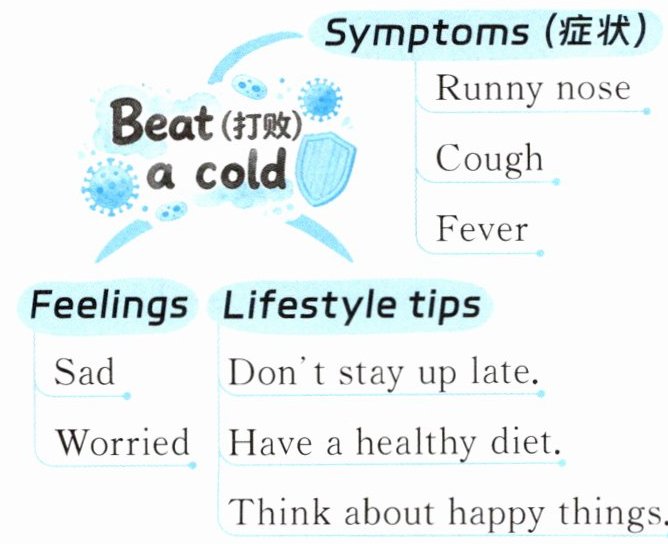
十一、校园里,同学们难免会患上感冒。根据思维导图,写一篇短文介绍一下怎样战胜感冒、养好身体。要求:不少于5句话。
Do you hate colds? Yes, I do. A cold makes you feel bad.
Do you hate colds? Yes, I do. A cold makes you feel bad.
答案
示例:
Do you hate colds? Yes, I do. A cold makes you feel bad. You may have a runny nose, a cough or a fever. You may feel sad and worried.
To beat a cold, you need healthy lifestyle tips. First, don't stay up late. Get enough sleep to let your body rest. Second, have a healthy diet. Eat more fruit and vegetables. Third, think about happy things to cheer yourself up.
Follow these tips and you will get better soon!
解析
|写作思路|1. 开头引入:先点明感冒的不适,再介绍症状与情绪影响。
2. 主体展开:围绕思维导图的“生活方式建议”,分点给出应对感冒的方法。
3. 结尾收束:总结建议,传递积极的心理预期。|
|写作注意事项|1. 要点全面:包含思维导图的症状、感受、建议三部分内容。
2. 结构清晰:按“引入、方法、总结”的顺序,用连接词衔接。
3. 内容完整:不少于5句话。|
Do you hate colds? Yes, I do. A cold makes you feel bad. You may have a runny nose, a cough or a fever. You may feel sad and worried.
To beat a cold, you need healthy lifestyle tips. First, don't stay up late. Get enough sleep to let your body rest. Second, have a healthy diet. Eat more fruit and vegetables. Third, think about happy things to cheer yourself up.
Follow these tips and you will get better soon!
解析
|写作思路|1. 开头引入:先点明感冒的不适,再介绍症状与情绪影响。
2. 主体展开:围绕思维导图的“生活方式建议”,分点给出应对感冒的方法。
3. 结尾收束:总结建议,传递积极的心理预期。|
|写作注意事项|1. 要点全面:包含思维导图的症状、感受、建议三部分内容。
2. 结构清晰:按“引入、方法、总结”的顺序,用连接词衔接。
3. 内容完整:不少于5句话。|
