

 登录
登录
一、阅读短文,选择正确的答案。
Tom always gets up late in the morning. But today he gets up at 6:00 a.m. His mother says "The Sun rises in the west." Does the Sun rise in the west? No. From Earth, the Sun, the stars and the Moon rise in the east and go down in the west. But does the Sun really rise in the east? The answer is no.
That is because the Sun is in the centre of the solar system. It stays in one position (位置). It seems(看似) to move because Earth moves. Earth spins towards(朝着) the east so we see the rising and setting of the Sun every 24 hours.
(
A.morning; evening B.west; east C.east; west
(
A.The Sun rises in the west. B.The Sun rises in the east.
C.Tom rarely(几乎不) gets up early.
(
A.上升 B.降落 C.转动
(
A.In the east. B.In the west. C.In the centre of the solar system.
(
A.24 hours B.12 hours C.36 hours
Tom always gets up late in the morning. But today he gets up at 6:00 a.m. His mother says "The Sun rises in the west." Does the Sun rise in the west? No. From Earth, the Sun, the stars and the Moon rise in the east and go down in the west. But does the Sun really rise in the east? The answer is no.
That is because the Sun is in the centre of the solar system. It stays in one position (位置). It seems(看似) to move because Earth moves. Earth spins towards(朝着) the east so we see the rising and setting of the Sun every 24 hours.
(
C
)1.From Earth, the Sun, the stars and the Moon rise in the and go down in the .A.morning; evening B.west; east C.east; west
(
C
)2.What does Tom's mother mean?A.The Sun rises in the west. B.The Sun rises in the east.
C.Tom rarely(几乎不) gets up early.
(
B
)3.What does the underlined word "setting" mean in Chinese?A.上升 B.降落 C.转动
(
C
)4.Where is the Sun?A.In the east. B.In the west. C.In the centre of the solar system.
(
A
)5.The Sun rises every .A.24 hours B.12 hours C.36 hours
答案
1.C 2.C 3.B 4.C 5.A
解析
【分析】
本题为英语阅读理解选择题,解题思路为:先通读短文把握主旨,再针对每道小题的问题,定位原文对应内容,结合细节理解、词义猜测等方法选出正确答案。具体来看:第1题需定位太阳、星星、月亮升起和落下的方位;第2题需结合Tom平时的起床习惯理解妈妈的反话含义;第3题需根据上下文猜测划线词的词义;第4题需查找太阳的位置;第5题需定位太阳升起的时间间隔。
【解析】
1. 定位原文第一段“From Earth, the Sun, the stars and the Moon rise in the east and go down in the west.”,可知对应选项C。
2. 根据第一段“Tom always gets up late in the morning. But today he gets up at 6:00 a.m. His mother says 'The Sun rises in the west.'”,妈妈说反话,实际指Tom很少早起,对应选项C。
3. 划线词“setting”与前文“rising(上升)”对应,结合“go down”的语境,可知意为“降落”,对应选项B。
4. 定位原文第二段“That is because the Sun is in the centre of the solar system.”,可知太阳在太阳系中心,对应选项C。
5. 定位原文最后一句“Earth spins towards the east so we see the rising and setting of the Sun every 24 hours.”,可知太阳升起的时间间隔为24小时,对应选项A。
【答案】
1.C 2.C 3.B 4.C 5.A
【知识点】
英语阅读理解、细节理解、词义猜测
【点评】
本题是结合天文知识的英语阅读理解题,主要考查细节查找和词义猜测能力,题目难度适中,适合基础阶段学生练习,能帮助学生巩固阅读理解的解题方法。
【难度系数】
0.7
本题为英语阅读理解选择题,解题思路为:先通读短文把握主旨,再针对每道小题的问题,定位原文对应内容,结合细节理解、词义猜测等方法选出正确答案。具体来看:第1题需定位太阳、星星、月亮升起和落下的方位;第2题需结合Tom平时的起床习惯理解妈妈的反话含义;第3题需根据上下文猜测划线词的词义;第4题需查找太阳的位置;第5题需定位太阳升起的时间间隔。
【解析】
1. 定位原文第一段“From Earth, the Sun, the stars and the Moon rise in the east and go down in the west.”,可知对应选项C。
2. 根据第一段“Tom always gets up late in the morning. But today he gets up at 6:00 a.m. His mother says 'The Sun rises in the west.'”,妈妈说反话,实际指Tom很少早起,对应选项C。
3. 划线词“setting”与前文“rising(上升)”对应,结合“go down”的语境,可知意为“降落”,对应选项B。
4. 定位原文第二段“That is because the Sun is in the centre of the solar system.”,可知太阳在太阳系中心,对应选项C。
5. 定位原文最后一句“Earth spins towards the east so we see the rising and setting of the Sun every 24 hours.”,可知太阳升起的时间间隔为24小时,对应选项A。
【答案】
1.C 2.C 3.B 4.C 5.A
【知识点】
英语阅读理解、细节理解、词义猜测
【点评】
本题是结合天文知识的英语阅读理解题,主要考查细节查找和词义猜测能力,题目难度适中,适合基础阶段学生练习,能帮助学生巩固阅读理解的解题方法。
【难度系数】
0.7
二、阅读短文,判断正(T)误(F)。
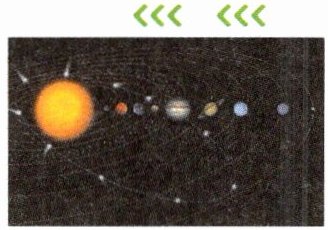
The solar system has eight round planets: Mercury, Venus, Earth, Mars, Jupiter, Saturn, Uranus, and Neptune. All go around the Sun.
Mercury is closest to the Sun and very hot, while the farther planets are cold. Venus is between Mercury and Earth, called Earth’s “sister planet” for similar size and shape. Earth, our blue home, looks blue from space because of water. Jupiter is the largest, and Saturn is famous for its rings. Uranus was first found with a telescope—we can see Venus, Mars, Jupiter and Saturn with our eyes, but not Uranus. Neptune is the eighth and farthest planet.
Probes (space machines) fly into space and take photos of the planets. We learn a lot from these pictures.
(
(
(
(
(
The solar system has eight round planets: Mercury, Venus, Earth, Mars, Jupiter, Saturn, Uranus, and Neptune. All go around the Sun.
Mercury is closest to the Sun and very hot, while the farther planets are cold. Venus is between Mercury and Earth, called Earth’s “sister planet” for similar size and shape. Earth, our blue home, looks blue from space because of water. Jupiter is the largest, and Saturn is famous for its rings. Uranus was first found with a telescope—we can see Venus, Mars, Jupiter and Saturn with our eyes, but not Uranus. Neptune is the eighth and farthest planet.
Probes (space machines) fly into space and take photos of the planets. We learn a lot from these pictures.
(
F
)1.There are nine planets in the solar system.(
F
)2.Venus is called Earth’s “sister planet” because it has the same colour as Earth.(
T
)3.Earth looks blue from space because it has lots of water.(
F
)4.We can see Uranus with our own eyes.(
T
)5.Neptune is the farthest planet from the Sun.答案
1.F 2.F 3.T 4.F 5.T
解析
【分析】先通读短文理解内容,再将每个小题的表述与短文原文的对应信息逐一比对,判断正误即可,需注意区分细节描述,避免混淆行星相关的细节信息。
【解析】1. 短文第一段明确提到“The solar system has eight round planets”,即太阳系有8颗行星,而非9颗,故本题错误(F)。
2. 短文第二段说明金星被称为地球的“sister planet”是因为“similar size and shape”(大小和形状相似),并非颜色相同,故本题错误(F)。
3. 短文第二段明确指出“Earth...looks blue from space because of water”,即地球因大量水从太空看呈蓝色,故本题正确(T)。
4. 短文第二段提到“we can see Venus, Mars, Jupiter and Saturn with our eyes, but not Uranus”,即肉眼无法看到天王星,故本题错误(F)。
5. 短文第二段说明“Neptune is the eighth and farthest planet”,即海王星是距离太阳最远的行星,故本题正确(T)。
【答案】1.F 2.F 3.T 4.F 5.T
【知识点】英语阅读理解、科普常识
【点评】本题是结合英语阅读与天文常识的判断题,核心考查学生对原文细节信息的定位与理解能力,难度适中,仔细比对原文即可正确作答。
【难度系数】0.6
【解析】1. 短文第一段明确提到“The solar system has eight round planets”,即太阳系有8颗行星,而非9颗,故本题错误(F)。
2. 短文第二段说明金星被称为地球的“sister planet”是因为“similar size and shape”(大小和形状相似),并非颜色相同,故本题错误(F)。
3. 短文第二段明确指出“Earth...looks blue from space because of water”,即地球因大量水从太空看呈蓝色,故本题正确(T)。
4. 短文第二段提到“we can see Venus, Mars, Jupiter and Saturn with our eyes, but not Uranus”,即肉眼无法看到天王星,故本题错误(F)。
5. 短文第二段说明“Neptune is the eighth and farthest planet”,即海王星是距离太阳最远的行星,故本题正确(T)。
【答案】1.F 2.F 3.T 4.F 5.T
【知识点】英语阅读理解、科普常识
【点评】本题是结合英语阅读与天文常识的判断题,核心考查学生对原文细节信息的定位与理解能力,难度适中,仔细比对原文即可正确作答。
【难度系数】0.6
