

 登录
一、阅读理解
A
Holmes said, “Somebody sent a letter with five pips (桔核) in it from India, and arrived seven weeks later to kill John's uncle. Then they sent five pips from Scotland and arrived three days later to kill John's father. Now they have sent five pips to John from London!”
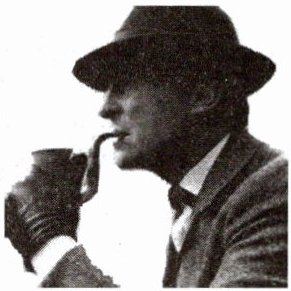
“The letters are all from sea ports (海港). The writer was on a ship when he wrote the letters,” I replied.
“Very good, Watson! And John's enemy is in London already!”
“Well, I hope they won't kill young John,” I said.
But they did. The next morning we read in the newspaper that a policeman found him die near Waterloo station. Holmes was very angry about it.
“He came to me for help and those men murdered him! I'm going to find them, if it's the last thing I do!” he said to me, and he hurried out of the house.
At night, when he came back, he was tired, but pleased, he said, “I know the names of John's enemies! And now I'm going to send them a surprise! This will frighten them!” He took five pips from an orange and put them in an envelope (信封). On it he wrote “S. H. for J. C.”
“I'm sending the pips to captain James Calhoun. His ship is called the *Star*. He and his men are sailing back to Georgia, USA.”
“How did you find him, Holmes?” I asked.
“Ship's papers,” he said, “I've looked at hundreds of them today. Only one ship, the *Star*, was in the three ports at the right times, and this morning the *Star* left London to sail back to Georgia. I found out that the captain and two of his men, all Americans, weren't on the ship last night, so I'm sure they killed John. When they arrive in America, they'll get the pips and then the police will catch them!”
(
A. curious
B. angry
C. crazy
D. worried
(
A. Canada
B. Australia
C. India
D. America
(
A. James Calhoun.
B. James Columbus.
C. John Calhoun.
D. John Columbus.
(
① John came to Holmes for help.
② John received a letter with five pips.
③ John was killed.
④ Holmes sent five pips to J. C.
A. ③①④②
B. ③④①②
C. ④①③②
D. ②①③④
A
Holmes said, “Somebody sent a letter with five pips (桔核) in it from India, and arrived seven weeks later to kill John's uncle. Then they sent five pips from Scotland and arrived three days later to kill John's father. Now they have sent five pips to John from London!”
“The letters are all from sea ports (海港). The writer was on a ship when he wrote the letters,” I replied.
“Very good, Watson! And John's enemy is in London already!”
“Well, I hope they won't kill young John,” I said.
But they did. The next morning we read in the newspaper that a policeman found him die near Waterloo station. Holmes was very angry about it.
“He came to me for help and those men murdered him! I'm going to find them, if it's the last thing I do!” he said to me, and he hurried out of the house.
At night, when he came back, he was tired, but pleased, he said, “I know the names of John's enemies! And now I'm going to send them a surprise! This will frighten them!” He took five pips from an orange and put them in an envelope (信封). On it he wrote “S. H. for J. C.”
“I'm sending the pips to captain James Calhoun. His ship is called the *Star*. He and his men are sailing back to Georgia, USA.”
“How did you find him, Holmes?” I asked.
“Ship's papers,” he said, “I've looked at hundreds of them today. Only one ship, the *Star*, was in the three ports at the right times, and this morning the *Star* left London to sail back to Georgia. I found out that the captain and two of his men, all Americans, weren't on the ship last night, so I'm sure they killed John. When they arrive in America, they'll get the pips and then the police will catch them!”
(
B
)1. Holmes was ______ about John's death.A. curious
B. angry
C. crazy
D. worried
(
D
)2. The *Star* left London for ______.A. Canada
B. Australia
C. India
D. America
(
A
)3. Who do you think the underlined letters “J. C.” stand for?A. James Calhoun.
B. James Columbus.
C. John Calhoun.
D. John Columbus.
(
D
)4. Which order is correct according to the story?① John came to Holmes for help.
② John received a letter with five pips.
③ John was killed.
④ Holmes sent five pips to J. C.
A. ③①④②
B. ③④①②
C. ④①③②
D. ②①③④
答案
1.B 2.D 3.A 4.D
解析
翻译:
### 一、阅读理解
#### A
福尔摩斯说:“有人从印度寄了一封装有五颗桔核的信,七周后,约翰的叔叔就被杀害了。然后他们从苏格兰寄了五颗桔核,三天后,约翰的父亲也被杀害了。现在他们从伦敦给约翰寄了五颗桔核!”
“这些信都来自海港。写信的人当时在船上。”我回答道。
“非常好,华生!而且约翰的敌人已经在伦敦了!”
“嗯,我希望他们不会杀害年轻的约翰。”我说。
但他们还是这么做了。第二天早上,我们在报纸上看到,一名警察发现他死在滑铁卢车站附近。福尔摩斯对此非常生气。
“他来找我寻求帮助,而那些人却谋杀了他!我要找到他们,就算这是我做的最后一件事!”他对我说,然后匆匆走出了房子。
晚上,当他回来时,他很疲惫,但却很高兴,他说:“我知道约翰的敌人的名字了!现在我要给他们一个惊喜!这会吓到他们的!”他从一个橘子上取下五颗桔核,放进一个信封里。在信封上他写道“S. H. 致 J. C.”。
“我要把这些桔核寄给詹姆斯·卡尔霍恩船长。他的船叫‘星号’。他和他的手下正乘船返回美国佐治亚州。”
“你是怎么找到他的,福尔摩斯?”我问道。
“通过船舶文件,”他说,“我今天看了几百份文件。只有一艘船,‘星号’,在合适的时间出现在了这三个港口,而且今天早上‘星号’离开伦敦返回佐治亚州。我发现船长和他的两名手下,都是美国人,昨晚不在船上,所以我确定是他们杀害了约翰。当他们到达美国时,他们会收到这些桔核,然后警察就会抓住他们!”
( )1. 福尔摩斯对约翰的死感到______。
A. 好奇的
B. 生气的
C. 疯狂的
D. 担心的
( )2. “星号”离开伦敦前往______。
A. 加拿大
B. 澳大利亚
C. 印度
D. 美国
( )3. 你认为划线的字母“J. C.”代表谁?
A. 詹姆斯·卡尔霍恩
B. 詹姆斯·哥伦布
C. 约翰·卡尔霍恩
D. 约翰·哥伦布
( )4. 根据这个故事,哪个顺序是正确的?
① 约翰来找福尔摩斯寻求帮助。
② 约翰收到一封装有五颗桔核的信。
③ 约翰被杀害。
④ 福尔摩斯给J. C. 寄了五颗桔核。
A. ③①④②
B. ③④①②
C. ④①③②
D. ②①③④
B
Nature and culture are often seen as opposite ideas. What belongs to nature cannot be the result of human activities and, on the other hand, cultural development is achieved against nature. However, this is not the only opinion on the relationship between nature and culture. Studies in the development of humans suggest that culture, whether taken as an effort against nature or a natural effort, is part of the development of the human species (物种).
Several modern writers saw the process of education as a struggle (斗争) against human nature. We are born with wild natures, such as eating and behaving in a disorganized way or acting selfishly. Education uses culture as a way to get us out of our wildest natures; it is thanks to culture that the human species could learn to adapt (适应), progress and raise itself above and beyond other species.
Over the past century and a half, however, studies in the history of human development have shown that the formation of culture is part of the biological (生物学的) adaptation. Consider, for example, hunting. It seems to be an adaptation, which allowed humans to move into new and different areas, opening up the chance to change living habits. At the same time, the development of weapons (武器) is connected to that adaptation—from rocks and stones to a set of hunting tools, and from hunting tools to rules connecting to the proper use of weapons. Hunting also seems to be responsible for a whole set of bodily abilities, such as balancing on one foot. Just think of how this very simple thing is closely connected to dance, a key expression of human culture. It is then clear that biological development and cultural development are closely tied.
The transmission of culture seems to be directly connected to what's in our blood. Just as snails carry their shell, so do we bring along our culture. However, culture is also passed on among people of the same times or among people belonging to different populations. We can learn how to make jiaozi even if we were born from Russian parents in Paris just as we can learn how to speak English even if none of our family or friends speaks that language.
( )5. What is Paragraph 2 mainly about?
A. Culture belongs to human nature.
B. Nature teaches humans how to adapt.
C. Humans are supposed to be well organized.
D. Education pushes the human species to progress.
(
( )6. Why does the writer talk about hunting in Paragraph 3?
A. To suggest some possible ways of changing living habits.
B. To stress the importance of tools in humans' struggle for life.
C. To show how culture develops as humans adapt to the environment.
D. To explain why there is a need to call for the proper use of weapons.
(
( )7. The underlined word “transmission” in Paragraph 4 probably means “______”.
A. system
B. spread
C. start
D. spirit
(
( )8. What is the writer's opinion on the nature - culture relationship?
A. Culture and nature are separate yet balanced.
B. Culture depends much on nature to progress.
C. Nature and culture are different but connected.
D. Nature follows the unwritten rules set by culture.
(
Nature and culture are often seen as opposite ideas. What belongs to nature cannot be the result of human activities and, on the other hand, cultural development is achieved against nature. However, this is not the only opinion on the relationship between nature and culture. Studies in the development of humans suggest that culture, whether taken as an effort against nature or a natural effort, is part of the development of the human species (物种).
Several modern writers saw the process of education as a struggle (斗争) against human nature. We are born with wild natures, such as eating and behaving in a disorganized way or acting selfishly. Education uses culture as a way to get us out of our wildest natures; it is thanks to culture that the human species could learn to adapt (适应), progress and raise itself above and beyond other species.
Over the past century and a half, however, studies in the history of human development have shown that the formation of culture is part of the biological (生物学的) adaptation. Consider, for example, hunting. It seems to be an adaptation, which allowed humans to move into new and different areas, opening up the chance to change living habits. At the same time, the development of weapons (武器) is connected to that adaptation—from rocks and stones to a set of hunting tools, and from hunting tools to rules connecting to the proper use of weapons. Hunting also seems to be responsible for a whole set of bodily abilities, such as balancing on one foot. Just think of how this very simple thing is closely connected to dance, a key expression of human culture. It is then clear that biological development and cultural development are closely tied.
The transmission of culture seems to be directly connected to what's in our blood. Just as snails carry their shell, so do we bring along our culture. However, culture is also passed on among people of the same times or among people belonging to different populations. We can learn how to make jiaozi even if we were born from Russian parents in Paris just as we can learn how to speak English even if none of our family or friends speaks that language.
( )5. What is Paragraph 2 mainly about?
A. Culture belongs to human nature.
B. Nature teaches humans how to adapt.
C. Humans are supposed to be well organized.
D. Education pushes the human species to progress.
(
D
)( )6. Why does the writer talk about hunting in Paragraph 3?
A. To suggest some possible ways of changing living habits.
B. To stress the importance of tools in humans' struggle for life.
C. To show how culture develops as humans adapt to the environment.
D. To explain why there is a need to call for the proper use of weapons.
(
C
)( )7. The underlined word “transmission” in Paragraph 4 probably means “______”.
A. system
B. spread
C. start
D. spirit
(
B
)( )8. What is the writer's opinion on the nature - culture relationship?
A. Culture and nature are separate yet balanced.
B. Culture depends much on nature to progress.
C. Nature and culture are different but connected.
D. Nature follows the unwritten rules set by culture.
(
C
)答案
5.D 6.C 7.B 8.C
解析
翻译:
B
自然和文化常常被视为对立的概念。属于自然的事物不可能是人类活动的结果,另一方面,文化的发展是在与自然对抗中实现的。然而,这并不是关于自然与文化关系的唯一观点。对人类发展的研究表明,文化,无论是被视为与自然对抗的努力还是自然的努力,都是人类物种发展的一部分。
一些现代作家将教育过程视为与人性的斗争。我们生来就有野性,比如饮食和行为杂乱无章,或者行为自私。教育以文化为手段让我们摆脱最野性的本能;正是由于文化,人类物种才得以学会适应、进步,并超越其他物种。
然而,在过去的一个半世纪里,对人类发展历史的研究表明,文化的形成是生物适应的一部分。例如,想想狩猎。它似乎是一种适应,使人类能够进入新的、不同的地区,开启改变生活习惯的机会。同时,武器的发展与这种适应有关——从岩石和石头到一套狩猎工具,再从狩猎工具到与武器正确使用相关的规则。狩猎似乎还造就了一整套身体能力,比如单脚平衡。想想这个非常简单的动作与舞蹈是多么紧密地联系在一起,而舞蹈是人类文化的一个关键表现形式。由此可见,生物发展和文化发展是紧密相连的。
文化的**传承**似乎与我们血液中的东西直接相关。就像蜗牛背着它们的壳一样,我们也带着我们的文化。然而,文化也在同时代的人之间或不同人群之间传承。即使我们出生在巴黎,父母是俄罗斯人,我们也能学会包饺子,就像即使我们的家人和朋友都不会说英语,我们也能学会说英语一样。
5. 第二段主要讲了什么?
A. 文化属于人性。
B. 自然教会人类如何适应。
C. 人类应该井然有序。
D. 教育推动人类物种进步。
6. 作者在第三段中为什么谈到狩猎?
A. 提出一些改变生活习惯的可能方法。
B. 强调工具在人类为生存而斗争中的重要性。
C. 展示文化是如何随着人类适应环境而发展的。
D. 解释为什么需要呼吁正确使用武器。
7. 第四段中划线的单词“transmission”可能的意思是“______”。
A. 系统
B. 传播
C. 开始
D. 精神
8. 作者对自然与文化关系的看法是什么?
A. 文化和自然是分离但平衡的。
B. 文化在很大程度上依赖自然来进步。
C. 自然和文化不同但相互联系。
D. 自然遵循文化设定的不成文规则。
