

 登录
登录
一、看图,写出对应的单词或短语。


1.
2.
3.
4.
5.
1.
do kung fu
2.
dance
3.
draw pictures
4.
play the <i>pipa </i>
5.
sing English songs
答案
1.do kung fu 2.dance 3.draw pictures 4.play the pipa 5.sing English songs
解析
1. 图1显示两个孩子在练武术,对应短语"do kung fu"。
2. 图2是女孩跳芭蕾舞,对应短语"dance"。
3. 图3为纸上画龙和铅笔,对应短语"draw pictures"。
4. 图4是女子弹琵琶,对应短语"play the pipa"。
5. 图5是女孩唱ABC,对应短语"sing English songs"。
翻译:
一、看图,写出对应的单词或短语。
1.
2.
3.
4.
5.
2. 图2是女孩跳芭蕾舞,对应短语"dance"。
3. 图3为纸上画龙和铅笔,对应短语"draw pictures"。
4. 图4是女子弹琵琶,对应短语"play the pipa"。
5. 图5是女孩唱ABC,对应短语"sing English songs"。
翻译:
一、看图,写出对应的单词或短语。
1.
2.
3.
4.
5.
二、选词填空。
1. I'll have
2. I can
3. What can he
4. Amy can sing English
5. I can dance. What
1. I'll have
an
(a/an) English party next Sunday.2. I can
play
(play/playing) the *pipa*.3. What can he
do
(do/does)?4. Amy can sing English
songs
(song/songs).5. I can dance. What
about
(about/do) you?答案
1.an 2.play 3.do 4.songs 5.about
解析
1. "English"以元音音素开头,用"an"。2. "can"后接动词原形,选"play"。3. "can"后接动词原形,选"do"。4. "sing English songs"是固定搭配,用复数"songs"。5. "What about you?"是固定句型,选"about"。
翻译:
二、选词填空。
1. 下周日我将举办一场英语派对。
2. 我会弹琵琶。
3. 他会做什么?
4. 艾米会唱英文歌。
5. 我会跳舞。你呢?
翻译:
二、选词填空。
1. 下周日我将举办一场英语派对。
2. 我会弹琵琶。
3. 他会做什么?
4. 艾米会唱英文歌。
5. 我会跳舞。你呢?
三、根据图片写问句或答语。
1. — What can you do?
—
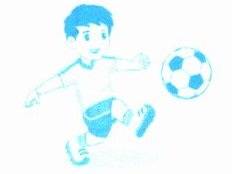
2. — What can Han Mei do?
—
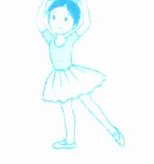
3. —
— I can read storybooks.
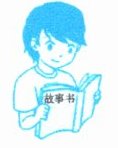
4. — What can he do?
—

1. — What can you do?
—
I can play football.
2. — What can Han Mei do?
—
She can dance.
3. —
What can you do?
— I can read storybooks.
4. — What can he do?
—
He can sing English songs.
答案
1. I can play football.
2. She can dance.
3. What can you do?
4. He can sing English songs.
2. She can dance.
3. What can you do?
4. He can sing English songs.
解析
1. 观察插图1,男孩在踢足球,问句是“What can you do?”,答语用“I can play football.”。
2. 插图2中女孩在跳舞,问句问韩梅能做什么,答语为“She can dance.”。
3. 答语是“I can read storybooks.”,问句应询问“你能做什么?”,即“What can you do?”。
4. 插图4男孩拿着麦克风说ABC,问句问他能做什么,答语是“He can sing English songs.”。
翻译:
三、根据图片写问句或答语。
1. — 你会做什么?
—
2. — 韩梅会做什么?
—
3. —
— 我会读故事书。
4. — 他会做什么?
—
2. 插图2中女孩在跳舞,问句问韩梅能做什么,答语为“She can dance.”。
3. 答语是“I can read storybooks.”,问句应询问“你能做什么?”,即“What can you do?”。
4. 插图4男孩拿着麦克风说ABC,问句问他能做什么,答语是“He can sing English songs.”。
翻译:
三、根据图片写问句或答语。
1. — 你会做什么?
—
2. — 韩梅会做什么?
—
3. —
— 我会读故事书。
4. — 他会做什么?
—
四、选择合适的选项,补全对话。
Amy: 1.
John: Great!
Amy: 2.
John: I can sing English songs. 3.
Amy: I can dance. 4.
John: She can draw cartoons. 5.
Amy: He can play the violin.
John: Wonderful!
A. What can Tom do?
B. How about you, Amy?
C. What can Lucy do?
D. What can you do, John?
E. We'll have a party this weekend.
Amy: 1.
E
John: Great!
Amy: 2.
D
John: I can sing English songs. 3.
B
Amy: I can dance. 4.
C
John: She can draw cartoons. 5.
A
Amy: He can play the violin.
John: Wonderful!
A. What can Tom do?
B. How about you, Amy?
C. What can Lucy do?
D. What can you do, John?
E. We'll have a party this weekend.
答案
1. E
2. D
3. B
4. C
5. A
2. D
3. B
4. C
5. A
解析
翻译:
四、选择合适的选项,补全对话。
艾米:1. 这个周末我们将举办一场派对。
约翰:太棒了!
艾米:2. 约翰,你会做什么?
约翰:我会唱英文歌。3. 艾米,你呢?
艾米:我会跳舞。4. 露西会做什么?
约翰:她会画漫画。5. 汤姆会做什么?
艾米:他会拉小提琴。
约翰:太棒了!
四、选择合适的选项,补全对话。
艾米:1. 这个周末我们将举办一场派对。
约翰:太棒了!
艾米:2. 约翰,你会做什么?
约翰:我会唱英文歌。3. 艾米,你呢?
艾米:我会跳舞。4. 露西会做什么?
约翰:她会画漫画。5. 汤姆会做什么?
艾米:他会拉小提琴。
约翰:太棒了!
五、阅读短文,判断句子正(T)误(F)。
Hello! I'm Jenny. I have a new friend. He is friendly and funny. He can speak English, Chinese and Japanese. We often learn from each other. He can do some kung fu and dance. He can play ping-pong. I can play ping-pong, too. We often play it together after school. I can swim, but he can't swim! Who's he? Can you guess? Let me tell you. He is Robin, the robot!
(
(
(
(
(
Hello! I'm Jenny. I have a new friend. He is friendly and funny. He can speak English, Chinese and Japanese. We often learn from each other. He can do some kung fu and dance. He can play ping-pong. I can play ping-pong, too. We often play it together after school. I can swim, but he can't swim! Who's he? Can you guess? Let me tell you. He is Robin, the robot!
(
T
)1. Jenny can play ping-pong and swim.(
T
)2. Jenny's new friend is a robot.(
F
)3. Robin can't speak Chinese.(
T
)4. Robin is friendly.(
F
)5. Robin can do some kung fu and swim.答案
1. T
2. T
3. F
4. T
5. F
2. T
3. F
4. T
5. F
解析
1. 文中提到“I can play ping-pong, too.”以及“I can swim”,说明Jenny会打乒乓球和游泳。
2. 文中明确提到“He is Robin, the robot!”,所以Jenny的新朋友是机器人。
3. 文中说“He can speak English, Chinese and Japanese.”,表明Robin会说中文。
4. 文中提到“I have a new friend. He is friendly and funny.”,这里的“他”指Robin,所以Robin很友好。
5. 文中说“He can do some kung fu and dance. He can play ping-pong. I can swim, but he can't swim!”,说明Robin不会游泳。
翻译:
五、阅读短文,判断句子正(T)误(F)。
你好!我是珍妮。我有一个新朋友。他既友好又有趣。他会说英语、汉语和日语。我们经常互相学习。他会一些功夫和跳舞。他会打乒乓球。我也会打乒乓球。我们放学后经常一起打乒乓球。我会游泳,但他不会游泳!他是谁?你能猜到吗?让我来告诉你。他是罗宾,那个机器人!
( )1. 珍妮会打乒乓球和游泳。
( )2. 珍妮的新朋友是一个机器人。
( )3. 罗宾不会说汉语。
( )4. 罗宾很友好。
( )5. 罗宾会一些功夫和游泳。
2. 文中明确提到“He is Robin, the robot!”,所以Jenny的新朋友是机器人。
3. 文中说“He can speak English, Chinese and Japanese.”,表明Robin会说中文。
4. 文中提到“I have a new friend. He is friendly and funny.”,这里的“他”指Robin,所以Robin很友好。
5. 文中说“He can do some kung fu and dance. He can play ping-pong. I can swim, but he can't swim!”,说明Robin不会游泳。
翻译:
五、阅读短文,判断句子正(T)误(F)。
你好!我是珍妮。我有一个新朋友。他既友好又有趣。他会说英语、汉语和日语。我们经常互相学习。他会一些功夫和跳舞。他会打乒乓球。我也会打乒乓球。我们放学后经常一起打乒乓球。我会游泳,但他不会游泳!他是谁?你能猜到吗?让我来告诉你。他是罗宾,那个机器人!
( )1. 珍妮会打乒乓球和游泳。
( )2. 珍妮的新朋友是一个机器人。
( )3. 罗宾不会说汉语。
( )4. 罗宾很友好。
( )5. 罗宾会一些功夫和游泳。
