

 登录
登录
五、Read and choose. Sarah 和 Sam 正在交流各自本月的消费计划。请读一读,选择合适的句子补全对话。
Sarah: Hi, Sam! How much pocket money do you have?
Sam: 1.
Sarah: How are you going to spend your money this month?
Sam: 2.
Sarah: OK. We use money to pay for all kinds of services.
Sam: Oh, right! How are you going to spend your money?
Sarah: 3.
Sam: Sounds good! 4.
Sarah: Yes, I also need to buy some clothes for the Spring Festival.
Sam: Nice! 5.
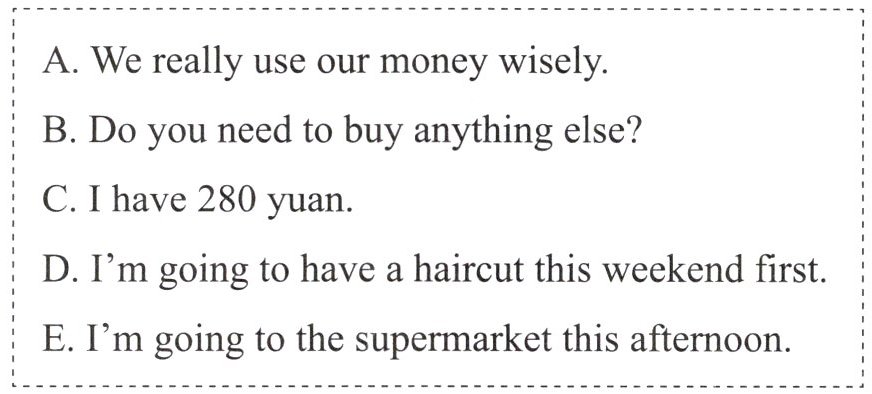
Sarah: Hi, Sam! How much pocket money do you have?
Sam: 1.
C
Sarah: How are you going to spend your money this month?
Sam: 2.
D
I need this service!Sarah: OK. We use money to pay for all kinds of services.
Sam: Oh, right! How are you going to spend your money?
Sarah: 3.
E
I’ll buy food and drinks for our family.Sam: Sounds good! 4.
B
Sarah: Yes, I also need to buy some clothes for the Spring Festival.
Sam: Nice! 5.
A
答案
1. C 2. D 3. E 4. B 5. A
解析
【分析】
本题为补全对话题型,需结合上下文的问答逻辑与语境匹配句子:第一步,Sarah询问Sam的零花钱数量,答句需对应钱数,选C;第二步,Sarah问花钱方式,后句提到“服务”,对应理发的D选项;第三步,Sarah说买食物饮料,对应去超市的E选项;第四步,Sarah的回答是“Yes”,说明前句是一般疑问句,选B;第五步,对Sarah的花钱计划夸赞,选A。
【解析】
1. 上句Sarah问“How much pocket money do you have?”,答句应回答具体金额,C选项“I have 280 yuan.”符合,故1选C。
2. 上句问花钱方式,后句提到“need this service”,D选项“have a haircut”属于服务类,符合语境,故2选D。
3. 上句问Sarah的花钱计划,后句说买食物饮料,E选项“go to the supermarket”是买东西的合理场所,故3选E。
4. 下句Sarah用“Yes”回答,说明前句是一般疑问句,B选项“Do you need to buy anything else?”为一般疑问句,符合问答逻辑,故4选B。
5. 前面Sarah说明花钱计划,A选项“We really use our money wisely.”是对其计划的夸赞,符合语境,故5选A。
【答案】
1.C 2.D 3.E 4.B 5.A
【知识点】
补全对话、情景交际
【点评】
本题围绕日常消费计划的话题展开,考查学生对情景对话逻辑的理解,需结合上下文语境匹配句子,难度适中,是基础的英语交际类题目。
【难度系数】
0.3
本题为补全对话题型,需结合上下文的问答逻辑与语境匹配句子:第一步,Sarah询问Sam的零花钱数量,答句需对应钱数,选C;第二步,Sarah问花钱方式,后句提到“服务”,对应理发的D选项;第三步,Sarah说买食物饮料,对应去超市的E选项;第四步,Sarah的回答是“Yes”,说明前句是一般疑问句,选B;第五步,对Sarah的花钱计划夸赞,选A。
【解析】
1. 上句Sarah问“How much pocket money do you have?”,答句应回答具体金额,C选项“I have 280 yuan.”符合,故1选C。
2. 上句问花钱方式,后句提到“need this service”,D选项“have a haircut”属于服务类,符合语境,故2选D。
3. 上句问Sarah的花钱计划,后句说买食物饮料,E选项“go to the supermarket”是买东西的合理场所,故3选E。
4. 下句Sarah用“Yes”回答,说明前句是一般疑问句,B选项“Do you need to buy anything else?”为一般疑问句,符合问答逻辑,故4选B。
5. 前面Sarah说明花钱计划,A选项“We really use our money wisely.”是对其计划的夸赞,符合语境,故5选A。
【答案】
1.C 2.D 3.E 4.B 5.A
【知识点】
补全对话、情景交际
【点评】
本题围绕日常消费计划的话题展开,考查学生对情景对话逻辑的理解,需结合上下文语境匹配句子,难度适中,是基础的英语交际类题目。
【难度系数】
0.3
六、Read and finish. Anna 向妈妈了解了家庭的支出情况。请读一读,完成下列任务。
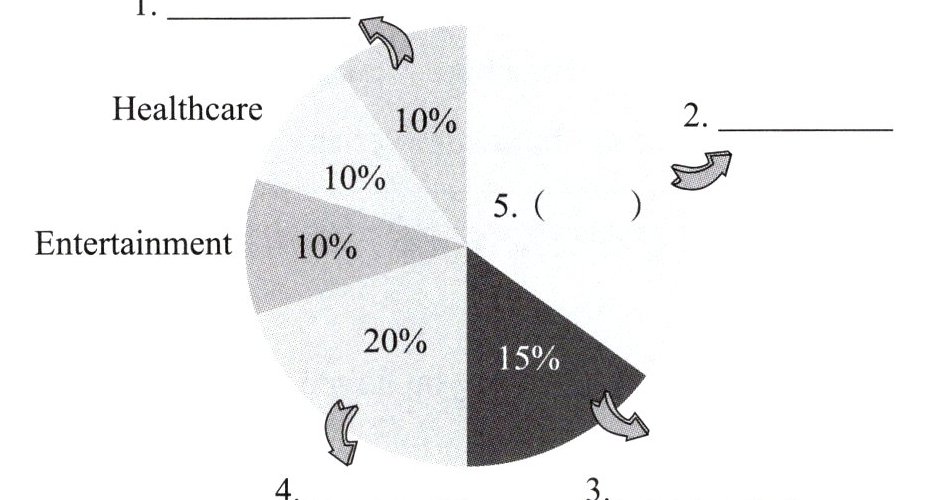
Hi, everyone! Let me tell you how my family uses money every month. We make a plan, and housing is our biggest cost at 35%. Food takes 20%, for buying vegetables, meat, milk and snacks. Transportation (交通) takes 15%, paying for bus and subway tickets, and our holiday
trips.
Savings, healthcare (健康) and entertainment (娱乐) each takes 10%. We save for future trips or other things. Healthcare is for yearly health checks, and entertainment is for movie tickets and books. Making a plan helps us use money wisely, and we have enough for what we need and want.
任务一:根据短文内容,将饼状图补充完整。(横线上填写内容,括号内填写比例)
任务二:根据短文内容,选择合适的选项。
(
A. Food. B. Housing. C. Transportation.
(
A. Savings, healthcare and entertainment.
B. Food, transportation and healthcare.
C. Housing, savings and entertainment.
(
A. Because they want to save all their money for expensive things.
B. Because they want to use money in a wise way.
C. Because they don’t have enough money for daily needs.
任务三:根据你的实际情况,回答问题。
1. What is your family’s biggest cost?
2. 模仿任务一中的统计方式,制作你自己家庭支出的饼状图。

Hi, everyone! Let me tell you how my family uses money every month. We make a plan, and housing is our biggest cost at 35%. Food takes 20%, for buying vegetables, meat, milk and snacks. Transportation (交通) takes 15%, paying for bus and subway tickets, and our holiday
trips.
Savings, healthcare (健康) and entertainment (娱乐) each takes 10%. We save for future trips or other things. Healthcare is for yearly health checks, and entertainment is for movie tickets and books. Making a plan helps us use money wisely, and we have enough for what we need and want.
任务一:根据短文内容,将饼状图补充完整。(横线上填写内容,括号内填写比例)
任务二:根据短文内容,选择合适的选项。
(
B
) 1. What is the biggest cost of Anna’s family?A. Food. B. Housing. C. Transportation.
(
A
) 2. Which three things each takes up 10% of the family’s plan?A. Savings, healthcare and entertainment.
B. Food, transportation and healthcare.
C. Housing, savings and entertainment.
(
B
) 3. Why does Anna’s family make a plan?A. Because they want to save all their money for expensive things.
B. Because they want to use money in a wise way.
C. Because they don’t have enough money for daily needs.
任务三:根据你的实际情况,回答问题。
1. What is your family’s biggest cost?
Education is my family’s biggest cost.(答案不唯一)
2. 模仿任务一中的统计方式,制作你自己家庭支出的饼状图。
答案
任务一:1. Savings 2. Housing 3. Transportation 4. Food 5. 35%
任务二:1. B 2. A 3. B
任务三:1. Education is my family’s biggest cost.(答案不唯一)
2. 略
任务二:1. B 2. A 3. B
任务三:1. Education is my family’s biggest cost.(答案不唯一)
2. 略
解析
【分析】
先通读短文,明确Anna家每月各项家庭支出的名称及对应比例;针对任务一,提取短文中各支出项的占比信息,匹配饼状图空缺;任务二的选择题需定位原文对应关键句,匹配正确选项;任务三结合自身实际情况回答即可。
【解析】
任务一:从短文第一段可知,住房(housing)占比35%,是最大支出;食品(food)占20%;交通(transportation)占15%;第二段提到储蓄(savings)、医疗保健(healthcare)、娱乐(entertainment)各占10%,据此补充饼状图内容。
任务二:1. 原文明确说明“housing is our biggest cost at 35%”,对应选项B;2. 原文指出“Savings, healthcare and entertainment each takes 10%”,对应选项A;3. 原文提到“Making a plan helps us use money wisely”,对应选项B。
任务三:1. 结合自身家庭实际情况回答,示例为“Education is my family’s biggest cost.”(答案不唯一);2. 略。
【答案】
任务一:1. Savings 2. Housing 3. Transportation 4. Food 5. 35%
任务二:1. B 2. A 3. B
任务三:1. Education is my family’s biggest cost.(答案不唯一)2. 略
【知识点】
英语阅读理解、细节信息提取、生活应用类阅读
【点评】
本题以家庭支出为生活场景,考查学生对英语短文细节的理解与信息提取能力,题目贴近生活,难度适中,能引导学生关注家庭消费规划。
【难度系数】
0.7
先通读短文,明确Anna家每月各项家庭支出的名称及对应比例;针对任务一,提取短文中各支出项的占比信息,匹配饼状图空缺;任务二的选择题需定位原文对应关键句,匹配正确选项;任务三结合自身实际情况回答即可。
【解析】
任务一:从短文第一段可知,住房(housing)占比35%,是最大支出;食品(food)占20%;交通(transportation)占15%;第二段提到储蓄(savings)、医疗保健(healthcare)、娱乐(entertainment)各占10%,据此补充饼状图内容。
任务二:1. 原文明确说明“housing is our biggest cost at 35%”,对应选项B;2. 原文指出“Savings, healthcare and entertainment each takes 10%”,对应选项A;3. 原文提到“Making a plan helps us use money wisely”,对应选项B。
任务三:1. 结合自身家庭实际情况回答,示例为“Education is my family’s biggest cost.”(答案不唯一);2. 略。
【答案】
任务一:1. Savings 2. Housing 3. Transportation 4. Food 5. 35%
任务二:1. B 2. A 3. B
任务三:1. Education is my family’s biggest cost.(答案不唯一)2. 略
【知识点】
英语阅读理解、细节信息提取、生活应用类阅读
【点评】
本题以家庭支出为生活场景,考查学生对英语短文细节的理解与信息提取能力,题目贴近生活,难度适中,能引导学生关注家庭消费规划。
【难度系数】
0.7
