

 登录
四、阅读理解
Confucianism (儒家思想) has been followed by Chinese people for more than two thousand years.
To help people understand how to behave towards others, Confucianism teaches the Five Constants. These are *ren*, *yi*, *li*, *zhi* and *xin*. They are general virtues(美德) around the world. The most important two are *ren* and *li*.
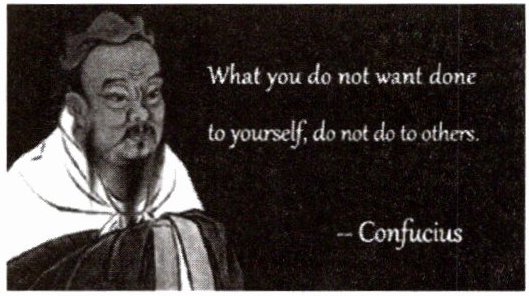
*Ren* is the feeling of care and love we should have for others. Confucius explained *ren* could best be understood as loving others. He is famous for teaching people “What you do not want done to yourself, do not do to others”. It is quite similar to what is known in the West as the Golden Rule (treat others as you wish to be treated).
While the meaning of *ren* is easy to understand, *li* is a little harder to express. It can be thought of as duty or even respect. Generally, *li* is the way we should connect with people in our everyday life. In Confucian writings, discussions about *li* include the proper way to drink tea and how to remember ancestors(祖先). While *ren* is mostly about our opinions and feelings, *li* is about how we express our opinions and feelings towards others and towards the world around us.
Perhaps the most well-known Confucian virtue is *xiao*. This is the duty children have to their parents. *Xiao* means loving, respecting, obeying and taking care of one's parents in their old age. In Confucianism, *xiao* is important for a harmonious(和谐的) society: Without it, the whole world would fall into a mess.
(
A. 博学于文,约之以礼。
B. 学而不思则罔,思而不学则殆。
C. 己所不欲,勿施于人。
D. 君子和而不同,小人同而不和。
(
A. Building a harmonious society.
B. Taking care of one's children.
C. Obeying rules for drinking tea.
D. Learning all through one's life.
(
A. Its general virtues.
B. Its long history.
C. Its new challenges.
D. Its golden rules.
Confucianism (儒家思想) has been followed by Chinese people for more than two thousand years.
To help people understand how to behave towards others, Confucianism teaches the Five Constants. These are *ren*, *yi*, *li*, *zhi* and *xin*. They are general virtues(美德) around the world. The most important two are *ren* and *li*.
*Ren* is the feeling of care and love we should have for others. Confucius explained *ren* could best be understood as loving others. He is famous for teaching people “What you do not want done to yourself, do not do to others”. It is quite similar to what is known in the West as the Golden Rule (treat others as you wish to be treated).
While the meaning of *ren* is easy to understand, *li* is a little harder to express. It can be thought of as duty or even respect. Generally, *li* is the way we should connect with people in our everyday life. In Confucian writings, discussions about *li* include the proper way to drink tea and how to remember ancestors(祖先). While *ren* is mostly about our opinions and feelings, *li* is about how we express our opinions and feelings towards others and towards the world around us.
Perhaps the most well-known Confucian virtue is *xiao*. This is the duty children have to their parents. *Xiao* means loving, respecting, obeying and taking care of one's parents in their old age. In Confucianism, *xiao* is important for a harmonious(和谐的) society: Without it, the whole world would fall into a mess.
(
C
)1. What is the best Chinese for the underlined sentence in Paragraph 3?A. 博学于文,约之以礼。
B. 学而不思则罔,思而不学则殆。
C. 己所不欲,勿施于人。
D. 君子和而不同,小人同而不和。
(
C
)2. Which of the following is an example of *li*?A. Building a harmonious society.
B. Taking care of one's children.
C. Obeying rules for drinking tea.
D. Learning all through one's life.
(
A
)3. What does the passage mainly tell us about Confucianism?A. Its general virtues.
B. Its long history.
C. Its new challenges.
D. Its golden rules.
答案
1. C 2. C 3. A
解析
翻译:
### 四、阅读理解
儒家思想已经被中国人遵循了两千多年。
为了帮助人们了解如何对待他人,儒家思想教导人们“五常”。它们是仁、义、礼、智、信。这些是全世界通用的美德。其中最重要的两个是“仁”和“礼”。
“仁”是我们应该对他人怀有的关爱之情。孔子解释说,“仁”最能被理解为爱人。他因教导人们“己所不欲,勿施于人”而闻名。这与西方所知的“黄金法则”(以你希望被对待的方式对待他人)非常相似。
虽然“仁”的含义很容易理解,但“礼”却有点难以表达。它可以被理解为责任,甚至是尊重。一般来说,“礼”是我们在日常生活中与人交往的方式。在儒家著作中,关于“礼”的讨论包括正确的饮茶方式以及如何纪念祖先。虽然“仁”主要关乎我们的观点和感受,但“礼”关乎我们如何向他人以及我们周围的世界表达我们的观点和感受。
也许最著名的儒家美德是“孝”。这是子女对父母的责任。“孝”意味着爱、尊重、顺从并在父母年老时照顾他们。在儒家思想中,“孝”对和谐社会很重要:没有它,整个世界将陷入混乱。
1. 第三段中划线句子的最佳中文翻译是什么?
A. 博学于文,约之以礼。
B. 学而不思则罔,思而不学则殆。
C. 己所不欲,勿施于人。
D. 君子和而不同,小人同而不和。
2. 以下哪一项是“礼”的例子?
A. 建设和谐社会。
B. 照顾自己的孩子。
C. 遵守饮茶的规矩。
D. 活到老,学到老。
3. 这篇文章主要告诉我们关于儒家思想的什么?
A. 它的通用美德。
B. 它的悠久历史。
C. 它的新挑战。
D. 它的黄金法则。
