

 登录
登录
二、(2025·辽宁改编)阅读理解
KEY→P8
范畴:人与社会 主题:精神传承 体裁:记叙文 难度:★★★ 建议用时:5分钟 评价:/5
热考素材 社会主义先进文化 "The Five-Starred Red Flag flies high ..."
Whenever we hear the song, we will sing along. The song is called "Ode to the Motherland(《歌唱祖国》)". It was written by Wang Xin.
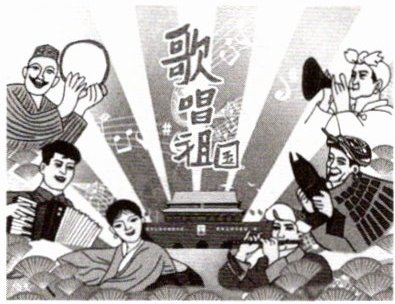
On October 1, 1949, Wang Xin attended the Founding Ceremony(开国大典) of the People's Republic of China. He was deeply moved and decided to write a song at once for New China with his love and pride. He had many ideas but none was good enough to him.
One day in September 1950, on the way to Beijing Railway Station, Wang Xin walked past Tian'anmen Square. The moment he saw the Five-Starred Red Flag flying in the wind, a few words for the song came into his mind. On the train back to Tianjin, when he saw the fields and mountains outside the window, the main part of the song began to take shape, "Over the mountains, across the plains(平原) ..."
When Wang Xin arrived home, he said with excitement, "I made it! I made it!" He completed the whole song right away. The next morning, he went to a local newspaper, hoping to get the song published. But it wasn't accepted. However, Wang Xin didn't give up. He led a music group to perform the song in different places. The song really brought people power, pride and more love for the country.
In September 1951, "Ode to the Motherland" was finally published in the *People's Daily* and got popular across the country. From then on, it was sung during many important national events.
Wang Xin once said, "I've written many works in my life, but I believe I've only written 'two songs'. One is 'Ode to the Motherland', a song written with musical notes, and the other is a song written for the motherland with all my heart."
英语嗨吧
( )1. Why does the writer begin the text with part of the song?
A. To answer a question.
B. To catch readers' interest.
C. To start a conversation.
D. To introduce the writer's plan.
(
A. In October 1949.
B. In September 1950.
C. In October 1950.
D. In September 1951.
(
A. The Founding Ceremony of New China.
B. The encouragement from the local newspaper.
C. The very beautiful scenery of mountains and plains.
D. The Five-Starred Red Flag and the motherland's landscape.
(
A. Never giving up.
B. Never showing off.
C. Keeping on learning.
D. Helping those in need.
(
A. He sang two songs in his life.
B. He put his heart into his own life.
C. He wrote a song in two cities.
D. He had deep love for the motherland.
KEY→P8
范畴:人与社会 主题:精神传承 体裁:记叙文 难度:★★★ 建议用时:5分钟 评价:/5
热考素材 社会主义先进文化 "The Five-Starred Red Flag flies high ..."
Whenever we hear the song, we will sing along. The song is called "Ode to the Motherland(《歌唱祖国》)". It was written by Wang Xin.
On October 1, 1949, Wang Xin attended the Founding Ceremony(开国大典) of the People's Republic of China. He was deeply moved and decided to write a song at once for New China with his love and pride. He had many ideas but none was good enough to him.
One day in September 1950, on the way to Beijing Railway Station, Wang Xin walked past Tian'anmen Square. The moment he saw the Five-Starred Red Flag flying in the wind, a few words for the song came into his mind. On the train back to Tianjin, when he saw the fields and mountains outside the window, the main part of the song began to take shape, "Over the mountains, across the plains(平原) ..."
When Wang Xin arrived home, he said with excitement, "I made it! I made it!" He completed the whole song right away. The next morning, he went to a local newspaper, hoping to get the song published. But it wasn't accepted. However, Wang Xin didn't give up. He led a music group to perform the song in different places. The song really brought people power, pride and more love for the country.
In September 1951, "Ode to the Motherland" was finally published in the *People's Daily* and got popular across the country. From then on, it was sung during many important national events.
Wang Xin once said, "I've written many works in my life, but I believe I've only written 'two songs'. One is 'Ode to the Motherland', a song written with musical notes, and the other is a song written for the motherland with all my heart."
英语嗨吧
( )1. Why does the writer begin the text with part of the song?
A. To answer a question.
B. To catch readers' interest.
C. To start a conversation.
D. To introduce the writer's plan.
(
A
)2. When did Wang Xin decide to write a song for New China?A. In October 1949.
B. In September 1950.
C. In October 1950.
D. In September 1951.
(
D
)3. Where did Wang Xin mainly get his inspiration from?A. The Founding Ceremony of New China.
B. The encouragement from the local newspaper.
C. The very beautiful scenery of mountains and plains.
D. The Five-Starred Red Flag and the motherland's landscape.
(
A
)4. What spirit can we learn from Wang Xin?A. Never giving up.
B. Never showing off.
C. Keeping on learning.
D. Helping those in need.
(
D
)5. What can we infer from Wang Xin's words in the last paragraph?A. He sang two songs in his life.
B. He put his heart into his own life.
C. He wrote a song in two cities.
D. He had deep love for the motherland.
答案
阅读理解 1.B 2.A 3.D 4.A 5.D
《歌唱祖国》由王莘创作,1949年开国大典后他深受触动开始构思。1950年他途经天安门广场,在火车上灵感迸发,完成歌曲。虽起初投稿被拒,但他仍坚持推广,1951年歌曲正式发表并传遍全国,成为他献给祖国的心声之作。
1. B 推理判断题。由第一段中“Whenever we hear the song, we will sing along.”可知,作者以歌词开头是为了通过熟悉的旋律吸引读者注意,激发阅读兴趣。
2. A 细节理解题。由第二段中“On October 1, 1949, Wang Xin attended the Founding Ceremony ... He was deeply moved and decided to write a song at once for New China ...”可知,王莘在1949年10月参加开国大典后决定创作歌曲。
3. D 细节理解题。由第三段中“The moment he saw the Five-Starred Red Flag flying in the wind ... when he saw the fields and mountains outside the window ...”可知,王莘主要从五星红旗与祖国的风景中获得创作灵感。
4. A 细节理解题。由第四段中“But it wasn't accepted. However, Wang Xin didn't give up.”可知,王莘在投稿被拒后仍坚持推广歌曲,体现了“永不放弃”的精神。
5. D 推理判断题。由最后一段中“One is ‘Ode to the Motherland’ ... and the other is a song written for the motherland with all my heart.”可知,他用音符和心灵表达对祖国的深情,推断出他对祖国有深厚的热爱。
《歌唱祖国》由王莘创作,1949年开国大典后他深受触动开始构思。1950年他途经天安门广场,在火车上灵感迸发,完成歌曲。虽起初投稿被拒,但他仍坚持推广,1951年歌曲正式发表并传遍全国,成为他献给祖国的心声之作。
1. B 推理判断题。由第一段中“Whenever we hear the song, we will sing along.”可知,作者以歌词开头是为了通过熟悉的旋律吸引读者注意,激发阅读兴趣。
2. A 细节理解题。由第二段中“On October 1, 1949, Wang Xin attended the Founding Ceremony ... He was deeply moved and decided to write a song at once for New China ...”可知,王莘在1949年10月参加开国大典后决定创作歌曲。
3. D 细节理解题。由第三段中“The moment he saw the Five-Starred Red Flag flying in the wind ... when he saw the fields and mountains outside the window ...”可知,王莘主要从五星红旗与祖国的风景中获得创作灵感。
4. A 细节理解题。由第四段中“But it wasn't accepted. However, Wang Xin didn't give up.”可知,王莘在投稿被拒后仍坚持推广歌曲,体现了“永不放弃”的精神。
5. D 推理判断题。由最后一段中“One is ‘Ode to the Motherland’ ... and the other is a song written for the motherland with all my heart.”可知,他用音符和心灵表达对祖国的深情,推断出他对祖国有深厚的热爱。
