

 登录
登录
D
Good friends are very important to us, so it's not surprising that a fight with a friend can be very sad. How should we keep the friendship with others? 16.
Communicate with each other.
17. It is common for us to fight with our friends, because others may not understand us all the time, even our best friends. Different living habits and personal thoughts can easily cause small disagreements between friends. So in our lives, we should tell them our ideas and communicate with them often. Timely communication can clear up misunderstandings quickly and stop small problems from turning into big fights.
18.
When our friends have problems, we should listen to them first. Do not tell our thoughts and stories all the time. Instead, we can put down our phones, make eye contact and let them finish talking without cutting in. We can also nod or say short words like "I see" to show we are paying attention to what they said. Listening to friends carefully can make them feel that we truly care about them, which helps build deeper trust between each other. Being a good listener is as important as sharing our own feelings. 19.
Use "I" message.
When we want to tell our friends something that we want to share with them, we'd better use "I" message. 20. It's better to say "I think" than "You should". "You" message can make our friends feel that we are instructing them to do something. It is terrible and may hurt their feelings, even push them away from us. For example, saying "I feel worried when plans change last minute" is far more gentle than "You always mess up our plans". Using "I" message shows respect to our friends and makes the conversation more comfortable. In this way, friends will be more willing to accept our suggestions and keep the friendship warm and long-lasting.
根据上下文,将下列句子还原到短文中。有一个多余选项。
Good friends are very important to us, so it's not surprising that a fight with a friend can be very sad. How should we keep the friendship with others? 16.
Communicate with each other.
17. It is common for us to fight with our friends, because others may not understand us all the time, even our best friends. Different living habits and personal thoughts can easily cause small disagreements between friends. So in our lives, we should tell them our ideas and communicate with them often. Timely communication can clear up misunderstandings quickly and stop small problems from turning into big fights.
18.
When our friends have problems, we should listen to them first. Do not tell our thoughts and stories all the time. Instead, we can put down our phones, make eye contact and let them finish talking without cutting in. We can also nod or say short words like "I see" to show we are paying attention to what they said. Listening to friends carefully can make them feel that we truly care about them, which helps build deeper trust between each other. Being a good listener is as important as sharing our own feelings. 19.
Use "I" message.
When we want to tell our friends something that we want to share with them, we'd better use "I" message. 20. It's better to say "I think" than "You should". "You" message can make our friends feel that we are instructing them to do something. It is terrible and may hurt their feelings, even push them away from us. For example, saying "I feel worried when plans change last minute" is far more gentle than "You always mess up our plans". Using "I" message shows respect to our friends and makes the conversation more comfortable. In this way, friends will be more willing to accept our suggestions and keep the friendship warm and long-lasting.
根据上下文,将下列句子还原到短文中。有一个多余选项。
答案
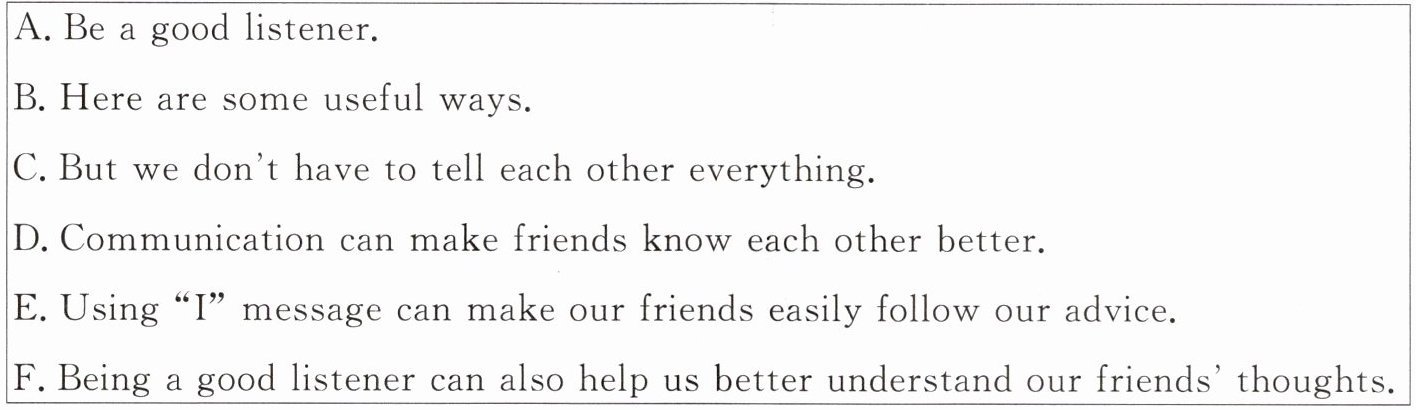
16. B 17. D 18. A 19. F 20. E
解析
我们逐空结合上下文逻辑分析:
1. 第16空:前文提出问题“我们应该如何维系和他人的友谊?”,后文开始逐条介绍维系友谊的具体方法,B选项“Here are some useful ways.(这里有一些有用的方法)”起到承上启下的作用,符合语境。
2. 第17空:本段小标题是“互相交流”,后文介绍了及时沟通可以消除误会、避免小矛盾演变为大争吵,D选项“Communication can make friends know each other better.(交流能让朋友更了解彼此)”贴合本段交流的主题,自然引出后文内容。
3. 第18空:本段全部围绕倾听朋友、做合格的倾听者展开介绍,是本段的小标题,A选项“Be a good listener.(做一个好的倾听者)”精准概括本段核心内容。
4. 第19空:前文提到认真倾听朋友能让对方感受到我们的在意,建立更深的信任,说明做倾听者和分享自身感受同样重要,F选项“Being a good listener can also help us better understand our friends' thoughts.(做一个好的倾听者也能帮助我们更好地理解朋友的想法)”用also承接前文提到的倾听的好处,逻辑连贯。
5. 第20空:本段主题是使用“I”类表达,后文介绍了“I”类表达比“你应该”类的表达更温和,不会伤害朋友感情,E选项“Using "I" message can make our friends easily follow our advice.(使用“I”类表达能让朋友更容易接受我们的建议)”贴合本段主题,引出后文的举例说明。
多余选项C和全文逻辑不匹配。
1. 第16空:前文提出问题“我们应该如何维系和他人的友谊?”,后文开始逐条介绍维系友谊的具体方法,B选项“Here are some useful ways.(这里有一些有用的方法)”起到承上启下的作用,符合语境。
2. 第17空:本段小标题是“互相交流”,后文介绍了及时沟通可以消除误会、避免小矛盾演变为大争吵,D选项“Communication can make friends know each other better.(交流能让朋友更了解彼此)”贴合本段交流的主题,自然引出后文内容。
3. 第18空:本段全部围绕倾听朋友、做合格的倾听者展开介绍,是本段的小标题,A选项“Be a good listener.(做一个好的倾听者)”精准概括本段核心内容。
4. 第19空:前文提到认真倾听朋友能让对方感受到我们的在意,建立更深的信任,说明做倾听者和分享自身感受同样重要,F选项“Being a good listener can also help us better understand our friends' thoughts.(做一个好的倾听者也能帮助我们更好地理解朋友的想法)”用also承接前文提到的倾听的好处,逻辑连贯。
5. 第20空:本段主题是使用“I”类表达,后文介绍了“I”类表达比“你应该”类的表达更温和,不会伤害朋友感情,E选项“Using "I" message can make our friends easily follow our advice.(使用“I”类表达能让朋友更容易接受我们的建议)”贴合本段主题,引出后文的举例说明。
多余选项C和全文逻辑不匹配。
