

 登录
C. 语境运用
learn talk update speak find
Digital technology has changed our lives. Smartphones have made us 1.
learn talk update speak find
Digital technology has changed our lives. Smartphones have made us 1.
talk
with people around the world easily. Many apps help us 2. (to) learn
new knowledge and skills. For example, language-learning apps teach us 3. to speak
different languages. Some websites let us 4. find
different courses online. Tech companies often ask users 5. to update
their apps often. We should also use these tools to create our own digital works, like creating short videos or writing blogs. But we need to be aware of the possible risks and use digital technology properly.答案
1. talk
2. (to) learn
3. to speak
4. find
5. to update
五、阅读理解。
When I first arrived in Beijing as an English teacher, I was amazed by how quickly I adapted to China's digital lifestyle. Here's how technology became an important part of my daily life.
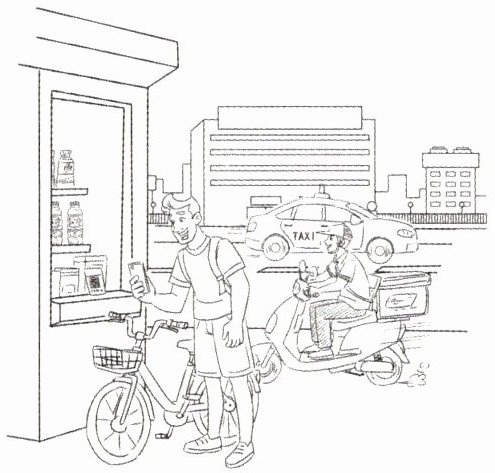
In China, cash is almost unnecessary. Alipay and WeChat Pay are used for everything—from buying snacks to paying rent. Once, I forgot my wallet at home but still managed to buy lunch by scanning a QR code with my phone. Living in a busy city, I rely on food delivery apps. The apps can show the driver's location in real time, so I know exactly when to expect my order. Didi Chuxing made getting around easy. I could request a taxi or shared car with just a few taps. For short distances, I used shared bikes that were parked everywhere and unlocking one cost only 1 yuan (about 15 cents) per hour.
In a word, China's digital ecosystem changed my life, making it faster, safer and more efficient. Now, I can't imagine living without my smartphone in this tech-savvy country!
(
A. The history of digital systems in China.
B. The experience of a foreigner in China.
C. The use of WeChat for socialising.
D. The differences between apps.
(
A. To show cash is important in China.
B. To stress the convenience of mobile payments.
C. To explain a problem with QR codes.
D. To suggest carrying a wallet.
(
A. Good at using technology.
B. Afraid of new technology.
C. Uninterested in digital tools.
D. New to using smartphones.
(
A. It's difficult and strange.
B. It's quick but unsafe.
C. It's convenient and easy.
D. It's expensive but easy.
When I first arrived in Beijing as an English teacher, I was amazed by how quickly I adapted to China's digital lifestyle. Here's how technology became an important part of my daily life.
In China, cash is almost unnecessary. Alipay and WeChat Pay are used for everything—from buying snacks to paying rent. Once, I forgot my wallet at home but still managed to buy lunch by scanning a QR code with my phone. Living in a busy city, I rely on food delivery apps. The apps can show the driver's location in real time, so I know exactly when to expect my order. Didi Chuxing made getting around easy. I could request a taxi or shared car with just a few taps. For short distances, I used shared bikes that were parked everywhere and unlocking one cost only 1 yuan (about 15 cents) per hour.
In a word, China's digital ecosystem changed my life, making it faster, safer and more efficient. Now, I can't imagine living without my smartphone in this tech-savvy country!
(
B
)1. What is the main topic of the article?A. The history of digital systems in China.
B. The experience of a foreigner in China.
C. The use of WeChat for socialising.
D. The differences between apps.
(
B
)2. Why does the author mention forgetting her wallet?A. To show cash is important in China.
B. To stress the convenience of mobile payments.
C. To explain a problem with QR codes.
D. To suggest carrying a wallet.
(
A
)3. What does the underlined "tech-savvy" mean in the last paragraph?A. Good at using technology.
B. Afraid of new technology.
C. Uninterested in digital tools.
D. New to using smartphones.
(
C
)4. How does the author feel about China's digital lifestyle?A. It's difficult and strange.
B. It's quick but unsafe.
C. It's convenient and easy.
D. It's expensive but easy.
答案
1. B
2. B
3. A
4. C
