

 登录
登录
二、根据要求完成下列各题,每空一词。
1. I learned to solve difficult problems by myself in the end.(改为同义句)
I learned to solve difficult problems in the end.
2. Wang Hua will pay the money back in three months.(对画线部分提问)
Wang Hua pay the money back?
3. His friends lent books to him, and he taught himself.(改为同义句)
He books his friends, and he taught himself.
4. The young man paid the bill by credit card.(对画线部分提问)
the young man the bill?
5. He wanted the goose to lay more eggs every day.(改为一般疑问句并作肯定回答)
— the goose to lay more eggs every day?
—Yes, .
1. I learned to solve difficult problems by myself in the end.(改为同义句)
I learned to solve difficult problems in the end.
2. Wang Hua will pay the money back in three months.(对画线部分提问)
Wang Hua pay the money back?
3. His friends lent books to him, and he taught himself.(改为同义句)
He books his friends, and he taught himself.
4. The young man paid the bill by credit card.(对画线部分提问)
the young man the bill?
5. He wanted the goose to lay more eggs every day.(改为一般疑问句并作肯定回答)
— the goose to lay more eggs every day?
—Yes, .
答案
1. on my own
2. How soon will
3. borrowed; from
4. How did; pay
5. Did he want; he did
2. How soon will
3. borrowed; from
4. How did; pay
5. Did he want; he did
解析
1. 原句中by myself意为“独自、靠自己”,同义的三空短语为on my own,符合题干每空一词的要求。
2. 画线部分in three months是表将来的时间状语,意为“三个月后”,对“多久之后”提问要用How soon,原句为一般将来时,疑问句需将助动词will提前,符合三空要求。
3. 原句“His friends lent books to him”意为他的朋友把书借给他,转换后表达“他从朋友那里借书”,使用固定搭配borrow sth. from sb.,原句为一般过去时,borrow要变为过去式borrowed。
4. 画线部分by credit card是付款的方式,对方式提问用特殊疑问词How,原句为一般过去时,需借助助动词did,后面的实义动词paid要变回原形pay。
5. 原句是一般过去时,谓语是实义动词wanted,变为一般疑问句需将助动词Did放在句首,主语he后接动词原形want;该一般疑问句的肯定回答结构为Yes, 主语+did,此处主语为he。
2. 画线部分in three months是表将来的时间状语,意为“三个月后”,对“多久之后”提问要用How soon,原句为一般将来时,疑问句需将助动词will提前,符合三空要求。
3. 原句“His friends lent books to him”意为他的朋友把书借给他,转换后表达“他从朋友那里借书”,使用固定搭配borrow sth. from sb.,原句为一般过去时,borrow要变为过去式borrowed。
4. 画线部分by credit card是付款的方式,对方式提问用特殊疑问词How,原句为一般过去时,需借助助动词did,后面的实义动词paid要变回原形pay。
5. 原句是一般过去时,谓语是实义动词wanted,变为一般疑问句需将助动词Did放在句首,主语he后接动词原形want;该一般疑问句的肯定回答结构为Yes, 主语+did,此处主语为he。
第一节
阅读短文,从方框中选择适当的词并用其正确形式填空,使短文通顺、意思完整。每空限填一词,每词限用一次。
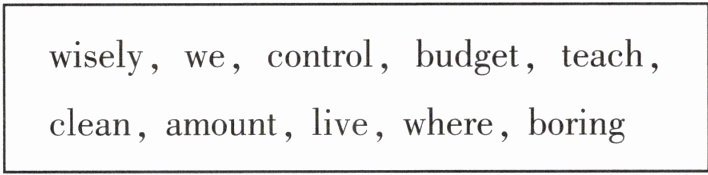
Saving money is a good habit that everyone should develop. It's not easy to save every coin, but it can bring many benefits to us. As students, we can also learn to save money and manage our pocket money 1. .
First, we should make a 2. every month. We can write down how much pocket money we get and what we spend it on. This helps us know 3. our money goes and avoid wasting it on unnecessary things. Second, we can keep our coins in a piggy bank. Over time, small 4. of money can add up to a lot.
We can also get extra pocket money by doing housework for our parents, such as 5. the room or washing the dishes. This not only helps us earn more money but also 6. us the value of hard work. Besides, we should think twice before buying something. Ask ourselves if we really need it.
Saving money is not 7. at all. It helps us develop a sense of responsibility and prepare for unexpected problems. When we save enough money, we can use it to buy useful books, help poor children or realize our small dreams. We can also learn to 8. our spending and avoid impulsive (易冲动的) buying.
It's never too late to start saving. Let's form a good habit of saving every coin. This habit will help us and make 9. life better in the future. Remember, every small coin counts and saving money is a key to 10. a wise and meaningful life.
阅读短文,从方框中选择适当的词并用其正确形式填空,使短文通顺、意思完整。每空限填一词,每词限用一次。
Saving money is a good habit that everyone should develop. It's not easy to save every coin, but it can bring many benefits to us. As students, we can also learn to save money and manage our pocket money 1. .
First, we should make a 2. every month. We can write down how much pocket money we get and what we spend it on. This helps us know 3. our money goes and avoid wasting it on unnecessary things. Second, we can keep our coins in a piggy bank. Over time, small 4. of money can add up to a lot.
We can also get extra pocket money by doing housework for our parents, such as 5. the room or washing the dishes. This not only helps us earn more money but also 6. us the value of hard work. Besides, we should think twice before buying something. Ask ourselves if we really need it.
Saving money is not 7. at all. It helps us develop a sense of responsibility and prepare for unexpected problems. When we save enough money, we can use it to buy useful books, help poor children or realize our small dreams. We can also learn to 8. our spending and avoid impulsive (易冲动的) buying.
It's never too late to start saving. Let's form a good habit of saving every coin. This habit will help us and make 9. life better in the future. Remember, every small coin counts and saving money is a key to 10. a wise and meaningful life.
答案
1. wisely
2. budget
3. where
4. amounts
5. cleaning
6. teaches
7. boring
8. control
9. our
10. living
2. budget
3. where
4. amounts
5. cleaning
6. teaches
7. boring
8. control
9. our
10. living
解析
我们结合句意、固定搭配和八年级所学语法规则逐一推导:
1. 此处修饰动词短语manage our pocket money,需要用副词,wisely本身是副词,意为“明智地”,符合“学生学习存钱、明智管理零花钱”的语境。
2. 固定搭配make a budget意为“做预算”,和后文记录收支的内容匹配,填budget。
3. 此处引导宾语从句,表达“我们的钱去向哪里”,用连接副词where。
4. 固定搭配small amounts of意为“少量的”,amount需要变为复数形式amounts。
5. 介词短语such as后接动名词,clean the room是“打扫房间”,clean变为动名词cleaning。
6. 句子主语This是单数,时态为一般现在时,谓语动词teach要变为第三人称单数形式teaches,表达“教会我们努力的价值”的含义。
7. 此处be动词后接形容词作表语,表达“省钱一点都不无聊”,填boring。
8. 固定结构learn to do sth. 后接动词原形,control our spending意为“控制我们的开销”,填control。
9. 此处修饰名词life,需要形容词性物主代词,we变为our,意为“我们的生活”。
10. 固定搭配a key to doing sth. 中to是介词,后接动名词,live变为living,表达“过上明智且有意义的生活”的含义。
1. 此处修饰动词短语manage our pocket money,需要用副词,wisely本身是副词,意为“明智地”,符合“学生学习存钱、明智管理零花钱”的语境。
2. 固定搭配make a budget意为“做预算”,和后文记录收支的内容匹配,填budget。
3. 此处引导宾语从句,表达“我们的钱去向哪里”,用连接副词where。
4. 固定搭配small amounts of意为“少量的”,amount需要变为复数形式amounts。
5. 介词短语such as后接动名词,clean the room是“打扫房间”,clean变为动名词cleaning。
6. 句子主语This是单数,时态为一般现在时,谓语动词teach要变为第三人称单数形式teaches,表达“教会我们努力的价值”的含义。
7. 此处be动词后接形容词作表语,表达“省钱一点都不无聊”,填boring。
8. 固定结构learn to do sth. 后接动词原形,control our spending意为“控制我们的开销”,填control。
9. 此处修饰名词life,需要形容词性物主代词,we变为our,意为“我们的生活”。
10. 固定搭配a key to doing sth. 中to是介词,后接动名词,live变为living,表达“过上明智且有意义的生活”的含义。
