

 登录
登录
Ⅷ. 阅读理解。
(A)
When mountains, rivers and something else block the view, you may wonder whether there is still a road ahead. Be positive. Chinese people will use two common sayings to tell you that there will always be a road ahead.
One of the sayings comes from Chinese folk culture. It says, “When a carriage(马车) arrives in front of a mountain, there’s always a road ahead; when a boat reaches a bridge, it will naturally go straight.”
The meaning here is that when you drive a carriage to a mountain, there must be a road you can take to go forward, and water currents(水流) will naturally carry a boat when it passes under a bridge. In more common language: don’t worry about what’s going to happen in the future; things will work themselves out.
The second saying is from two lines from a poem written by Lu You, a great Southern Song Dynasty historian and poet. The two lines are translated as “Mountains roll beyond mountains, and streams(小河) double back to streams. I doubt if there’s still a road and then, with shady willows and bright flowers, another village suddenly appears ahead.” In easier language: don’t lose hope, and there’s always a way.
These popular expressions are often used to encourage people to face the world calmly during difficult times. There is a Western saying that follows the same idea, “When God closes one door, he opens a window.”
根据短文内容,选择正确答案。
(
A. By describing mountains and rivers.
B. By telling some common sayings.
C. By introducing a book by Lu You.
D. By showing some famous Western sayings.
(
A. To explain the meaning of the first saying.
B. To show the importance of the first saying.
C. To encourage people to be confident.
D. To introduce the benefits of being positive.
(
A. 山高路远。 B. 山穷水尽。
C. 跋山涉水。 D. 峰回路转。
(
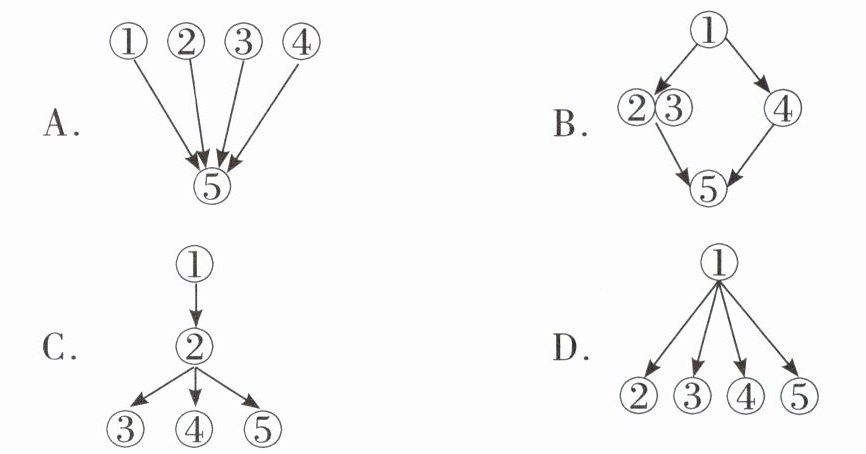
(①=Paragraph 1,②=Paragraph 2 ...)
(
A. To introduce some famous sayings.
B. To explain the cultural differences.
C. To show courage leads to success.
D. To encourage people to be positive in the face of trouble.
(A)
When mountains, rivers and something else block the view, you may wonder whether there is still a road ahead. Be positive. Chinese people will use two common sayings to tell you that there will always be a road ahead.
One of the sayings comes from Chinese folk culture. It says, “When a carriage(马车) arrives in front of a mountain, there’s always a road ahead; when a boat reaches a bridge, it will naturally go straight.”
The meaning here is that when you drive a carriage to a mountain, there must be a road you can take to go forward, and water currents(水流) will naturally carry a boat when it passes under a bridge. In more common language: don’t worry about what’s going to happen in the future; things will work themselves out.
The second saying is from two lines from a poem written by Lu You, a great Southern Song Dynasty historian and poet. The two lines are translated as “Mountains roll beyond mountains, and streams(小河) double back to streams. I doubt if there’s still a road and then, with shady willows and bright flowers, another village suddenly appears ahead.” In easier language: don’t lose hope, and there’s always a way.
These popular expressions are often used to encourage people to face the world calmly during difficult times. There is a Western saying that follows the same idea, “When God closes one door, he opens a window.”
根据短文内容,选择正确答案。
(
B
)1. How does the writer explain his idea of being positive?A. By describing mountains and rivers.
B. By telling some common sayings.
C. By introducing a book by Lu You.
D. By showing some famous Western sayings.
(
A
)2. What is the writer’s purpose of writing the third paragraph?A. To explain the meaning of the first saying.
B. To show the importance of the first saying.
C. To encourage people to be confident.
D. To introduce the benefits of being positive.
(
D
)3. Which of the following idioms has the similar meaning to the two lines by Lu You?A. 山高路远。 B. 山穷水尽。
C. 跋山涉水。 D. 峰回路转。
(
B
)4. What would be the best structure of the passage?(①=Paragraph 1,②=Paragraph 2 ...)
(
D
)5. What is the writing purpose of the passage?A. To introduce some famous sayings.
B. To explain the cultural differences.
C. To show courage leads to success.
D. To encourage people to be positive in the face of trouble.
答案
(A) 1—5 BADBD
