

 登录
登录
B
The freezing Antarctica, where temperatures can drop to $-60°\mathrm{C}$, is home to emperor penguins. These tall black-and-white birds weigh up to 45 kilograms. They have a special way to raise children: fathers warm eggs on their feet, while mothers walk 80 kilometres to find food. For hundreds of years, they lived well in this tough place. But now, their future is in danger. A study shows that their global number has dropped sharply in recent decades.
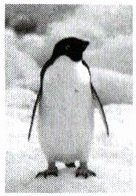
Global(全球的) warming is their biggest threat(威胁). Unlike other penguins that build homes on land, they need sea ice to have and raise babies. As the earth warms, sea ice melts earlier and freezes later. Baby penguins' feathers(羽毛) aren't waterproof yet, so their bodies can easily get wet—a problem that often leads them to freeze to death. Warmer oceans also make krill(磷虾), their main food, die out, leaving emperor penguins difficult to survive.
The crisis(危机) of emperor penguins is not just about losing one kind of animal—it's a warning for the whole Antarctic ecosystem. If they disappear(消失), other animals like seals that need the same sea ice and food will also be in danger. What's worse, losing sea ice will make Antarctica even hotter. The situation of emperor penguins is a key sign of the environmental health of Antarctica.
Luckily, there are things we can do to save emperor penguins. The governments should make laws to cut greenhouse gas emissions(排放)—the main cause of rising temperatures. For us common(普通的) people, we can take buses or the underground instead of driving cars, and tell others about the emperor penguin crisis. Raising awareness can push for faster and better action.
(
A. They depend on cold sea ice to survive.
B. They build homes on land to protect themselves.
C. Mothers usually keep and look after their eggs.
D. They are over 45 kilograms and look colourful.
(
A. Baby penguins' feathers can't keep water out of their bodies.
B. Baby penguins' feathers can't take in water to protect their bodies.
C. Baby penguins' feathers can't make any water stay on their bodies.
D. Baby penguins' feathers can't produce water to cool their bodies.
(
A. Melting sea ice is harmful to Antarctic animals like seals.
B. The danger faced by emperor penguins is a warning for the Antarctic ecosystem.
C. Global warming makes emperor penguins disappear fast.
D. Emperor penguins disappear faster than other sea animals.
(
A. Stop fishing in Antarctica.
B. Make laws to reduce gas emissions.
C. Drive cars more rather than take buses.
D. Share penguins' problems with more people.
(
A. Changing Climate in Antarctica
B. How to Protect Antarctic Animals
C. Krill: Tiny Food in Antarctica
D. Emperor Penguins: Fighting to Survive
The freezing Antarctica, where temperatures can drop to $-60°\mathrm{C}$, is home to emperor penguins. These tall black-and-white birds weigh up to 45 kilograms. They have a special way to raise children: fathers warm eggs on their feet, while mothers walk 80 kilometres to find food. For hundreds of years, they lived well in this tough place. But now, their future is in danger. A study shows that their global number has dropped sharply in recent decades.
Global(全球的) warming is their biggest threat(威胁). Unlike other penguins that build homes on land, they need sea ice to have and raise babies. As the earth warms, sea ice melts earlier and freezes later. Baby penguins' feathers(羽毛) aren't waterproof yet, so their bodies can easily get wet—a problem that often leads them to freeze to death. Warmer oceans also make krill(磷虾), their main food, die out, leaving emperor penguins difficult to survive.
The crisis(危机) of emperor penguins is not just about losing one kind of animal—it's a warning for the whole Antarctic ecosystem. If they disappear(消失), other animals like seals that need the same sea ice and food will also be in danger. What's worse, losing sea ice will make Antarctica even hotter. The situation of emperor penguins is a key sign of the environmental health of Antarctica.
Luckily, there are things we can do to save emperor penguins. The governments should make laws to cut greenhouse gas emissions(排放)—the main cause of rising temperatures. For us common(普通的) people, we can take buses or the underground instead of driving cars, and tell others about the emperor penguin crisis. Raising awareness can push for faster and better action.
(
A
)46. What can we know about emperor penguins according to the passage?A. They depend on cold sea ice to survive.
B. They build homes on land to protect themselves.
C. Mothers usually keep and look after their eggs.
D. They are over 45 kilograms and look colourful.
(
A
)47. What does the sentence "Baby penguins' feathers aren't waterproof yet" mean?A. Baby penguins' feathers can't keep water out of their bodies.
B. Baby penguins' feathers can't take in water to protect their bodies.
C. Baby penguins' feathers can't make any water stay on their bodies.
D. Baby penguins' feathers can't produce water to cool their bodies.
(
B
)48. What's the main idea of Paragraph 3?A. Melting sea ice is harmful to Antarctic animals like seals.
B. The danger faced by emperor penguins is a warning for the Antarctic ecosystem.
C. Global warming makes emperor penguins disappear fast.
D. Emperor penguins disappear faster than other sea animals.
(
D
)49. How can common people help save emperor penguins according to the article?A. Stop fishing in Antarctica.
B. Make laws to reduce gas emissions.
C. Drive cars more rather than take buses.
D. Share penguins' problems with more people.
(
D
)50. What is the best title for the passage?A. Changing Climate in Antarctica
B. How to Protect Antarctic Animals
C. Krill: Tiny Food in Antarctica
D. Emperor Penguins: Fighting to Survive
答案
B [文章大意]本文是一篇科普说明文。文章主要讲述了帝企鹅在南极的生存状况,它们因全球变暖导致的海冰融化而面临生存危机。作者呼吁通过减少温室气体排放和提高公众意识来拯救它们。
46. A [解析]细节理解题。根据"Unlike other penguins that build homes on land, they need sea ice to have and raise babies."可知,帝企鹅依赖寒冷的海冰生存。故选A。
47. A [解析]句意理解题。根据"Baby penguins' feathers(羽毛) aren't waterproof yet, so their bodies can easily get wet"可知,前后句为因果关系,后半句说明企鹅宝宝的身体极易变湿,由此可推断,前半句的含义是企鹅宝宝的羽毛无法阻挡水进入它们的身体。故选A。
48. B [解析]段落大意题。根据"The crisis(危机) of emperor penguins is not just about losing one kind of animal—it's a warning for the whole Antarctic ecosystem."可知,本段核心是帝企鹅面临的危机不只是单一物种的消亡,更是对整个南极生态系统的警示。选项B精准概括了本段主旨。故选B。
49. D [解析]细节理解题。根据"For us common(普通的) people, we can take buses or the underground instead of driving cars, and tell others about the emperor penguin crisis."可知,普通人可通过与更多人分享帝企鹅的困境来拯救它们。故选D。
50. D [解析]标题归纳题。文章整体围绕帝企鹅因全球变暖面临生存威胁,以及人们的拯救措施展开,强调它们为生存而战。选项D"帝企鹅:为生存而战"准确概括全文核心。故选D。
46. A [解析]细节理解题。根据"Unlike other penguins that build homes on land, they need sea ice to have and raise babies."可知,帝企鹅依赖寒冷的海冰生存。故选A。
47. A [解析]句意理解题。根据"Baby penguins' feathers(羽毛) aren't waterproof yet, so their bodies can easily get wet"可知,前后句为因果关系,后半句说明企鹅宝宝的身体极易变湿,由此可推断,前半句的含义是企鹅宝宝的羽毛无法阻挡水进入它们的身体。故选A。
48. B [解析]段落大意题。根据"The crisis(危机) of emperor penguins is not just about losing one kind of animal—it's a warning for the whole Antarctic ecosystem."可知,本段核心是帝企鹅面临的危机不只是单一物种的消亡,更是对整个南极生态系统的警示。选项B精准概括了本段主旨。故选B。
49. D [解析]细节理解题。根据"For us common(普通的) people, we can take buses or the underground instead of driving cars, and tell others about the emperor penguin crisis."可知,普通人可通过与更多人分享帝企鹅的困境来拯救它们。故选D。
50. D [解析]标题归纳题。文章整体围绕帝企鹅因全球变暖面临生存威胁,以及人们的拯救措施展开,强调它们为生存而战。选项D"帝企鹅:为生存而战"准确概括全文核心。故选D。
