

 登录
登录
3 Read a magazine article. 读一篇杂志文章。
Great influence of rivers on our lives
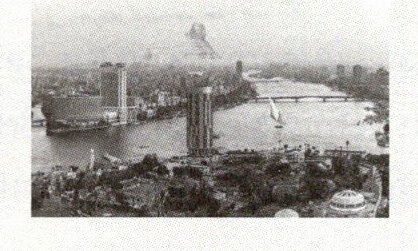
Many of the world’s great cities are located along rivers, and almost every big country has at least one river flowing through, which has great influence on the lives of its people.
Rivers are often used for transport and trade. The lifeline of Egypt is the Nile, which snakes through the deserts. It allows goods to be shipped from one part of Egypt to another. To Indians, the Ganges River is great and sacred (神圣的). It’s 2,580 kilometres long and ships can travel along it, too.
Besides, rivers provide water, different foods and chances for fun and leisure for people living along their banks. Engineers sometimes build dams across rivers in order to store water for crops and make electricity. However, large cities and industries that are located upon riversides often make the rivers polluted.
People are learning the importance of rivers. More and more people realise that if they want to enjoy the benefits of rivers, they should do more to keep them clean and improve the environment.
3-1 Choose the best answer. 选择最恰当的答案。
(1) What is the article mainly about?
A. Future of the important rivers.
B. Changes of some famous rivers.
C. Ways to protect rivers in the world.
D. Influence of rivers on people’s lives.
(2) Which of the following is TRUE according to the article?
A. People use rivers only for transport in Egypt.
B. The Nile flows through the deserts of Egypt like a snake.
C. Engineers provide water for crops and make electricity.
D. The Ganges is so sacred that no ships are allowed to travel along it.
(3) Which of the dictionary meanings is closest to the meaning of the word "dam" in paragraph 3?
A. ① B. ② C. ③ D. ④
dam /dæm/
① noun [countable] a wall that is built across a river in order to stop the water from flowing and to make a lake
② noun a lake, created by such a wall, used to store water
③ noun the mother of some animals, especially horses
④ verb to stop or restrict water by building a wall
(4) What should people do if they want to enjoy the benefits of rivers?
A. They should learn more about the importance of rivers.
B. They should store water for crops and make electricity.
C. They should keep rivers clean and improve the environment.
D. They should move away from rivers in order not to pollute them.
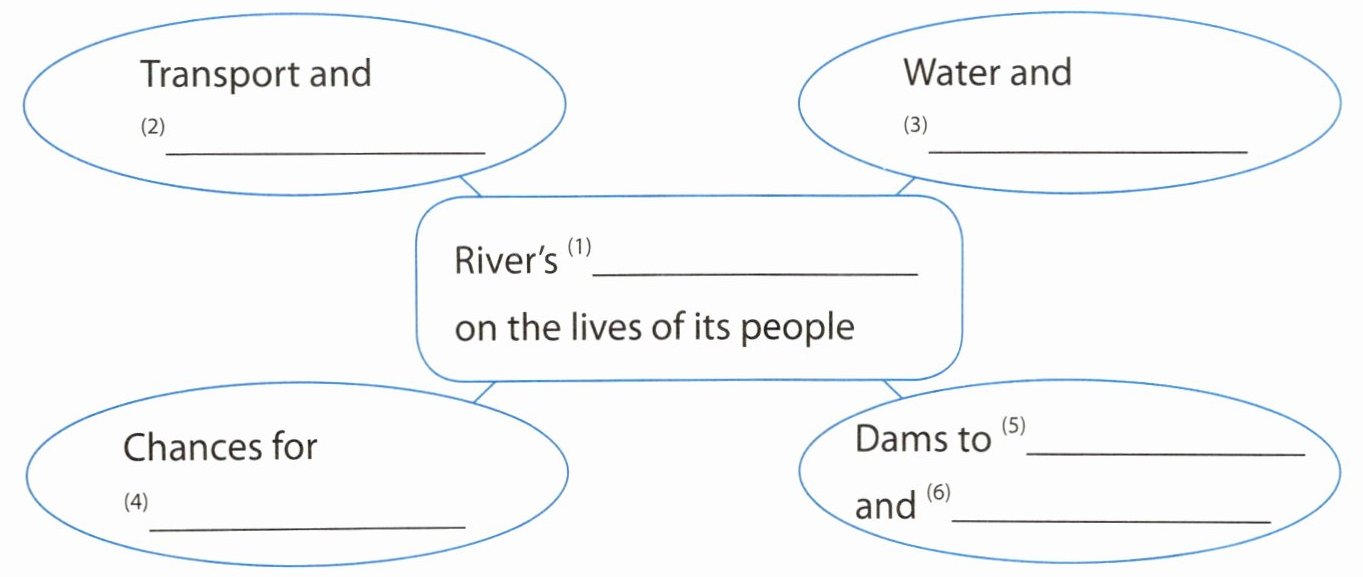
3-2 Fill in the information chart according to the article. 根据文章内容填写信息卡。
Great influence of rivers on our lives
Many of the world’s great cities are located along rivers, and almost every big country has at least one river flowing through, which has great influence on the lives of its people.
Rivers are often used for transport and trade. The lifeline of Egypt is the Nile, which snakes through the deserts. It allows goods to be shipped from one part of Egypt to another. To Indians, the Ganges River is great and sacred (神圣的). It’s 2,580 kilometres long and ships can travel along it, too.
Besides, rivers provide water, different foods and chances for fun and leisure for people living along their banks. Engineers sometimes build dams across rivers in order to store water for crops and make electricity. However, large cities and industries that are located upon riversides often make the rivers polluted.
People are learning the importance of rivers. More and more people realise that if they want to enjoy the benefits of rivers, they should do more to keep them clean and improve the environment.
3-1 Choose the best answer. 选择最恰当的答案。
(1) What is the article mainly about?
A. Future of the important rivers.
B. Changes of some famous rivers.
C. Ways to protect rivers in the world.
D. Influence of rivers on people’s lives.
(2) Which of the following is TRUE according to the article?
A. People use rivers only for transport in Egypt.
B. The Nile flows through the deserts of Egypt like a snake.
C. Engineers provide water for crops and make electricity.
D. The Ganges is so sacred that no ships are allowed to travel along it.
(3) Which of the dictionary meanings is closest to the meaning of the word "dam" in paragraph 3?
A. ① B. ② C. ③ D. ④
dam /dæm/
① noun [countable] a wall that is built across a river in order to stop the water from flowing and to make a lake
② noun a lake, created by such a wall, used to store water
③ noun the mother of some animals, especially horses
④ verb to stop or restrict water by building a wall
(4) What should people do if they want to enjoy the benefits of rivers?
A. They should learn more about the importance of rivers.
B. They should store water for crops and make electricity.
C. They should keep rivers clean and improve the environment.
D. They should move away from rivers in order not to pollute them.
3-2 Fill in the information chart according to the article. 根据文章内容填写信息卡。
答案
3-1 (1) D (2) B (3) A (4) C
3-2
(1) influence (2) trade (3) different foods (4) fun and leisure (5) store water (for crops)(6) make electricity
3-2
(1) influence (2) trade (3) different foods (4) fun and leisure (5) store water (for crops)(6) make electricity
解析
【分析】
本题为英语阅读理解题,包含选择题和信息填空两类题型。解题思路为:1. 先通读全文把握主旨,明确文章围绕河流对人类生活的影响展开;2. 针对选择题,通过题干关键词定位原文对应段落,逐一比对选项与原文内容,排除错误选项得出答案;3. 针对信息填空,定位原文中对应描述,提取关键信息完成填写。
【解析】
3-1 选择题解析:
(1) 主旨大意题:文章标题为“Great influence of rivers on our lives”,全文围绕河流对人类生活的影响展开,故选D。
(2) 细节理解题:定位第二段“The lifeline of Egypt is the Nile, which snakes through the deserts”,可知B选项正确;A选项“only for transport”与原文不符,C选项是工程师建水坝的目的而非直接提供水,D选项与“ships can travel along it”矛盾,排除A、C、D,选B。
(3) 词义猜测题:定位第三段“build dams across rivers in order to store water for crops and make electricity”,此处dam为名词,指建在河上挡水的墙,对应字典义①,故选A。
(4) 细节理解题:定位最后一段“they should do more to keep them clean and improve the environment”,可知C选项正确;A选项是意识到重要性而非做法,B选项是建水坝的目的,D选项与原文不符,排除A、B、D,选C。
3-2 信息填空解析:根据文章内容,依次提取对应信息:(1) 河流对生活的影响(influence);(2) 用于运输和贸易(trade);(3) 提供不同食物(different foods);(4) 提供休闲乐趣(fun and leisure);(5) 储水(store water);(6) 发电(make electricity)。
【答案】
3-1 (1) D (2) B (3) A (4) C
3-2 (1) influence (2) trade (3) different foods (4) fun and leisure (5) store water (for crops) (6) make electricity
【知识点】
英语阅读理解、主旨大意题、细节理解题
【点评】
本题考查学生对英语文章的理解与信息提取能力,题型涵盖主旨大意、细节查找、词义猜测,内容贴近生活,难度适中,有助于学生掌握河流对人类生活的影响相关知识。
【难度系数】
0.7
本题为英语阅读理解题,包含选择题和信息填空两类题型。解题思路为:1. 先通读全文把握主旨,明确文章围绕河流对人类生活的影响展开;2. 针对选择题,通过题干关键词定位原文对应段落,逐一比对选项与原文内容,排除错误选项得出答案;3. 针对信息填空,定位原文中对应描述,提取关键信息完成填写。
【解析】
3-1 选择题解析:
(1) 主旨大意题:文章标题为“Great influence of rivers on our lives”,全文围绕河流对人类生活的影响展开,故选D。
(2) 细节理解题:定位第二段“The lifeline of Egypt is the Nile, which snakes through the deserts”,可知B选项正确;A选项“only for transport”与原文不符,C选项是工程师建水坝的目的而非直接提供水,D选项与“ships can travel along it”矛盾,排除A、C、D,选B。
(3) 词义猜测题:定位第三段“build dams across rivers in order to store water for crops and make electricity”,此处dam为名词,指建在河上挡水的墙,对应字典义①,故选A。
(4) 细节理解题:定位最后一段“they should do more to keep them clean and improve the environment”,可知C选项正确;A选项是意识到重要性而非做法,B选项是建水坝的目的,D选项与原文不符,排除A、B、D,选C。
3-2 信息填空解析:根据文章内容,依次提取对应信息:(1) 河流对生活的影响(influence);(2) 用于运输和贸易(trade);(3) 提供不同食物(different foods);(4) 提供休闲乐趣(fun and leisure);(5) 储水(store water);(6) 发电(make electricity)。
【答案】
3-1 (1) D (2) B (3) A (4) C
3-2 (1) influence (2) trade (3) different foods (4) fun and leisure (5) store water (for crops) (6) make electricity
【知识点】
英语阅读理解、主旨大意题、细节理解题
【点评】
本题考查学生对英语文章的理解与信息提取能力,题型涵盖主旨大意、细节查找、词义猜测,内容贴近生活,难度适中,有助于学生掌握河流对人类生活的影响相关知识。
【难度系数】
0.7
