

 登录
登录
C
根据短文内容,从题中所给的A、B、C、D四个选项中选出一个最佳选项。
Music makes our lives better. We usually use music to lift our spirits and comfort us when we are in pain. How does music produce such a powerful influence on our minds?
Music seems to help us deal with stress. For example, music can make the listeners forget their terrible situations (breakups, deaths, etc.).
Music can make us happy. Listening to happy music can make us feel better. It's said that listening to soft and slow music is better for managing sad feelings than loud or heavy music. Some people even think listening to sad songs can make them happy. While they are listening to sad songs, it seems that someone (a friend) is sympathizing with them.
Music can remind us of some unforgettable memories. Listening to a piece of music that was played a lot during an important event (e.g., a family celebration) many years ago can bring back past memories. The feeling is not in the music, but in what it reminds us of. Many listeners use music to remind themselves of valued past events.
Music can change our relationship with time. While listening to music, we seem to forget about the time. For example, music used in waiting rooms in the hospital is very useful. It can make the patients forget their waiting time and stop them from getting upset and worried. We can also hear music in supermarkets. The music there can make the shoppers forget the time so that they will stay there for a longer time and buy more.
All in all, music seems to have magical power and it can make a big difference to our minds.
21. What do the underlined words "sympathizing with" mean in paragraph 3? (
A. Catching up with.
B. Keeping away from.
C. Showing thanks to.
D. Feeling pity for.
22. How does music connect to memories according to the text? (
A. By keeping the feeling inside the music.
B. By describing the situation with the lyrics.
C. By making people forget all of their sad memories.
D. By reminding people of past events through the music.
23. How does the writer support his ideas in the text? (
A. By telling stories.
B. By giving examples.
C. By raising questions.
D. By listing numbers.
24. What's the structure of the text? (
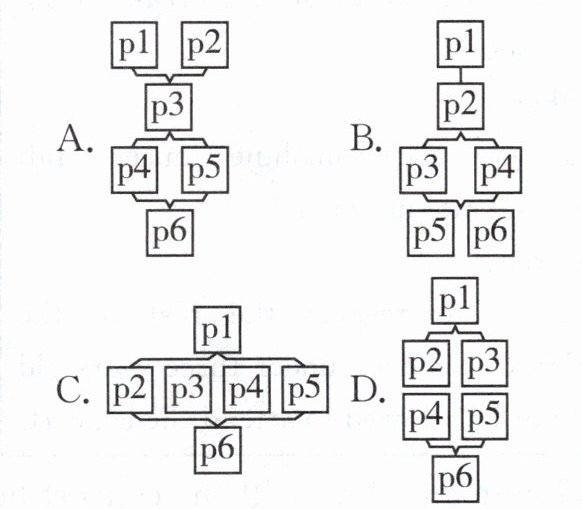
25. What's the best title for the text? (
A. How Music Makes Us Happy
B. The Magic of Music in Our Lives
C. The Best Songs for Happy Times
D. Why We Need to Learn Music
根据短文内容,从题中所给的A、B、C、D四个选项中选出一个最佳选项。
Music makes our lives better. We usually use music to lift our spirits and comfort us when we are in pain. How does music produce such a powerful influence on our minds?
Music seems to help us deal with stress. For example, music can make the listeners forget their terrible situations (breakups, deaths, etc.).
Music can make us happy. Listening to happy music can make us feel better. It's said that listening to soft and slow music is better for managing sad feelings than loud or heavy music. Some people even think listening to sad songs can make them happy. While they are listening to sad songs, it seems that someone (a friend) is sympathizing with them.
Music can remind us of some unforgettable memories. Listening to a piece of music that was played a lot during an important event (e.g., a family celebration) many years ago can bring back past memories. The feeling is not in the music, but in what it reminds us of. Many listeners use music to remind themselves of valued past events.
Music can change our relationship with time. While listening to music, we seem to forget about the time. For example, music used in waiting rooms in the hospital is very useful. It can make the patients forget their waiting time and stop them from getting upset and worried. We can also hear music in supermarkets. The music there can make the shoppers forget the time so that they will stay there for a longer time and buy more.
All in all, music seems to have magical power and it can make a big difference to our minds.
21. What do the underlined words "sympathizing with" mean in paragraph 3? (
D
)A. Catching up with.
B. Keeping away from.
C. Showing thanks to.
D. Feeling pity for.
22. How does music connect to memories according to the text? (
D
)A. By keeping the feeling inside the music.
B. By describing the situation with the lyrics.
C. By making people forget all of their sad memories.
D. By reminding people of past events through the music.
23. How does the writer support his ideas in the text? (
B
)A. By telling stories.
B. By giving examples.
C. By raising questions.
D. By listing numbers.
24. What's the structure of the text? (
C
)25. What's the best title for the text? (
B
)A. How Music Makes Us Happy
B. The Magic of Music in Our Lives
C. The Best Songs for Happy Times
D. Why We Need to Learn Music
答案
21-25 DDBCB
解析
【分析】
本题是关于音乐对心理影响的英语阅读理解题,共5道小题,分别考查词义猜测、细节理解、写作手法、文章结构和主旨大意。解题思路:1. 词义猜测题需定位原文划线词所在句,结合上下文语境分析选项;2. 细节理解题需回到原文对应段落找依据;3. 写作手法题需判断作者支撑观点的方式;4. 文章结构题需梳理段落间的逻辑关系;5. 主旨大意题需概括全文核心内容。
【解析】
21题:词义猜测题。定位到第三段划线词所在句,结合前文“听悲伤歌曲能让人感觉更好”的语境,可知听悲伤歌曲时仿佛有人在同情他们。选项A“赶上”、B“远离”、C“感谢”均不符合,D“同情”符合,故选D。
22题:细节理解题。根据第四段“Music can remind us of some unforgettable memories... Many listeners use music to remind themselves of valued past events”,可知音乐通过提醒人们过去的事件关联记忆,故选D。
23题:写作手法题。作者在各观点后均举例支撑,如第二段举音乐让人忘记糟糕情况、第五段举医院候诊室和超市的音乐例子,因此是通过举例支撑观点,故选B。
24题:文章结构题。第一段总起音乐对心理有强大影响,第二至第五段分述音乐的四个作用,最后一段总结,为总-分-总结构,对应选项D,故选D。
25题:主旨大意题。全文围绕音乐对心理的神奇作用展开,A片面(仅提快乐)、C无关、D偏离,B“音乐在我们生活中的魔力”符合,故选B。
【答案】
DDBCB
【知识点】
词义猜测题;细节理解题;主旨大意题
【点评】
本题涵盖英语阅读理解核心题型,需学生准确定位原文并分析逻辑,考查对语篇的综合理解能力,难度适中。
【难度系数】
0.6
本题是关于音乐对心理影响的英语阅读理解题,共5道小题,分别考查词义猜测、细节理解、写作手法、文章结构和主旨大意。解题思路:1. 词义猜测题需定位原文划线词所在句,结合上下文语境分析选项;2. 细节理解题需回到原文对应段落找依据;3. 写作手法题需判断作者支撑观点的方式;4. 文章结构题需梳理段落间的逻辑关系;5. 主旨大意题需概括全文核心内容。
【解析】
21题:词义猜测题。定位到第三段划线词所在句,结合前文“听悲伤歌曲能让人感觉更好”的语境,可知听悲伤歌曲时仿佛有人在同情他们。选项A“赶上”、B“远离”、C“感谢”均不符合,D“同情”符合,故选D。
22题:细节理解题。根据第四段“Music can remind us of some unforgettable memories... Many listeners use music to remind themselves of valued past events”,可知音乐通过提醒人们过去的事件关联记忆,故选D。
23题:写作手法题。作者在各观点后均举例支撑,如第二段举音乐让人忘记糟糕情况、第五段举医院候诊室和超市的音乐例子,因此是通过举例支撑观点,故选B。
24题:文章结构题。第一段总起音乐对心理有强大影响,第二至第五段分述音乐的四个作用,最后一段总结,为总-分-总结构,对应选项D,故选D。
25题:主旨大意题。全文围绕音乐对心理的神奇作用展开,A片面(仅提快乐)、C无关、D偏离,B“音乐在我们生活中的魔力”符合,故选B。
【答案】
DDBCB
【知识点】
词义猜测题;细节理解题;主旨大意题
【点评】
本题涵盖英语阅读理解核心题型,需学生准确定位原文并分析逻辑,考查对语篇的综合理解能力,难度适中。
【难度系数】
0.6
