

 登录
一、Listen and connect. 帮助小男孩收集漂亮的树叶吧!听一听,根据听力顺序,将树叶连起来。
an elephant
fell off
there is
put on
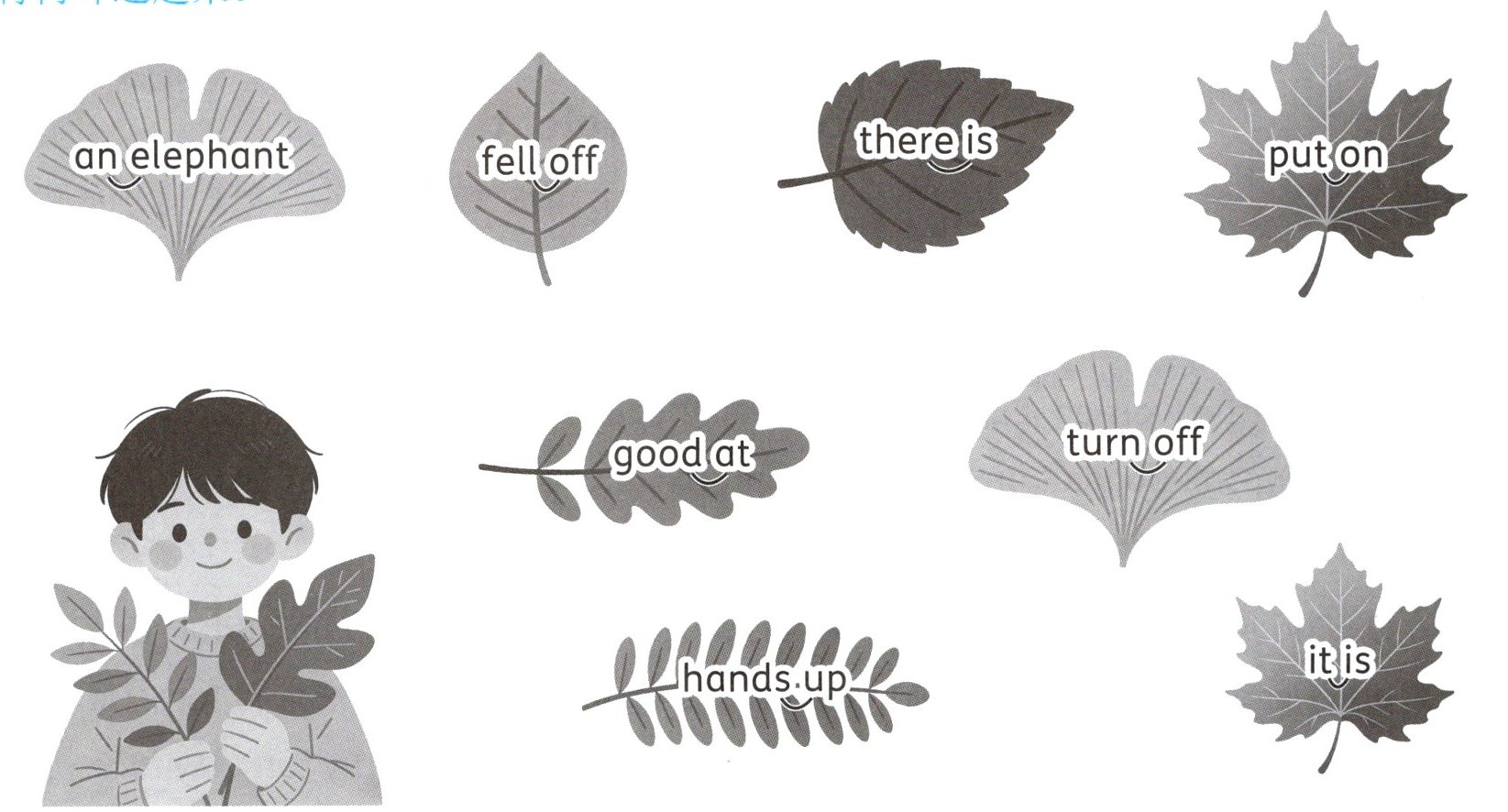
turn off
hands up
it is
an elephant
fell off
there is
put on
turn off
hands up
it is
答案
参考听力常考顺序及对应短语释义:
hands up:固定搭配,意为“举起手”
turn off:短语动词,意为“关闭(电器、开关等)”
put on:短语动词,意为“穿上;上演;增重”
there is:there be句型单数形式,表“存在有(单数事物)”
an elephant:名词短语,意为“一头大象”
fell off:动词短语,意为“从……跌落”
good at:固定搭配,意为“擅长”
it is:常用表达,可缩写为it’s,意为“它是”
hands up:固定搭配,意为“举起手”
turn off:短语动词,意为“关闭(电器、开关等)”
put on:短语动词,意为“穿上;上演;增重”
there is:there be句型单数形式,表“存在有(单数事物)”
an elephant:名词短语,意为“一头大象”
fell off:动词短语,意为“从……跌落”
good at:固定搭配,意为“擅长”
it is:常用表达,可缩写为it’s,意为“它是”
二、Read and write ︶. Miss Li正在教同学们英文中的连读规则。读一读,在合适位置标注连读符号(︶)。
1. What’s up?
2. Please turn off the light.
3. There is a ball//under the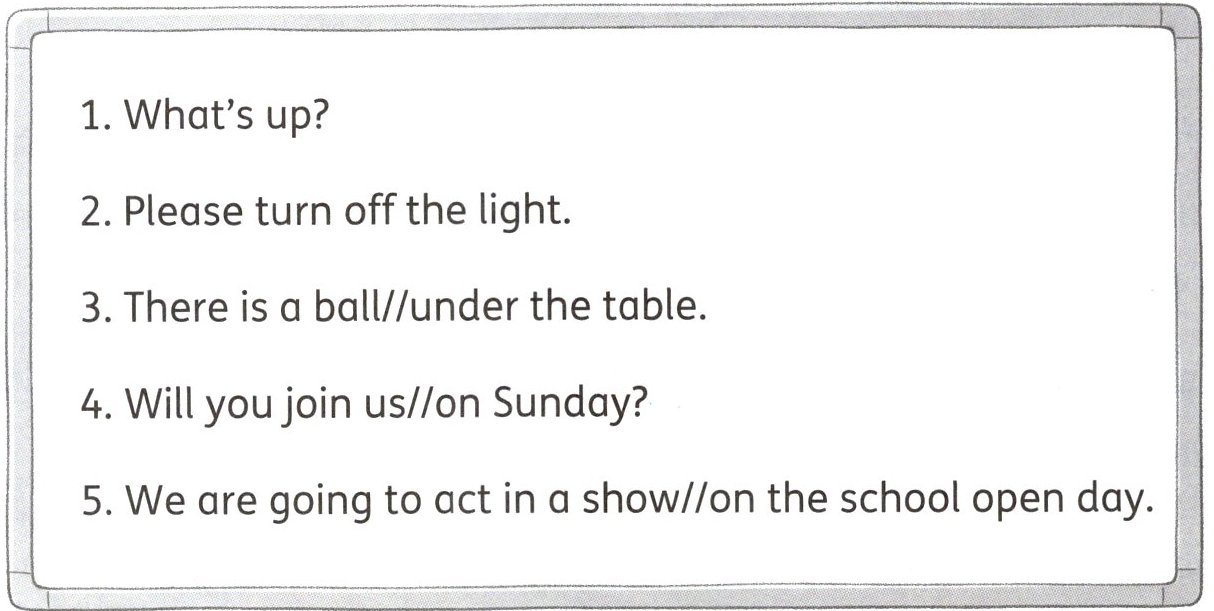 .
4. Will you join us//on Sunday?
5. We are going to act in a show//on the school open day.
1. What’s up?
2. Please turn off the light.
3. There is a ball//under the
.4. Will you join us//on Sunday?
5. We are going to act in a show//on the school open day.
答案
1. What’s ︵ up?
释义:常用非正式口语问候,意为“怎么了/近况如何?”,用于日常搭话或询问对方近况。
连读规则说明:前词辅音结尾、后词元音开头,符合连读条件,在两词间标注连读符号。
2. Please turn ︵ off the light.
释义:祈使句,意为“请把灯关掉”,用于向对方提出关灯的请求。
连读规则说明:turn以辅音/n/结尾,off以元音/ɒ/开头,两词间标注连读符号。
3. There ︵ is ︵ a ball//under the table.
释义:整句意为“桌子底下有一个球”,//为意群停顿标记,//前为存在句核心信息“有一个球”,//后补充地点状语说明球的位置。
连读规则说明:There和is、is和a均满足“前辅后元”连读条件,在对应位置标注连读符号。
4. Will you join ︵ us//on Sunday?
释义:整句意为“你周日要不要加入我们?”,//为核心询问内容,//后补充时间状语说明邀约的时间。
连读规则说明:join以辅音/n/结尾,us以元音/ʌ/开头,两词间标注连读符号。
5. We ︵ are going to act ︵ in a show//on the school open day.
释义:整句意为“我们要在学校开放日表演节目”,//为意群停顿标记,//前为核心动作信息,//后补充场景状语说明表演的场合。
连读规则说明:We和are(元元连读)、act和in(前辅后元)均满足连读条件,在对应位置标注连读符号。
三、Read and write ︶. 趣配音大挑战。读一读,在正确位置标注连读符号(︶)。
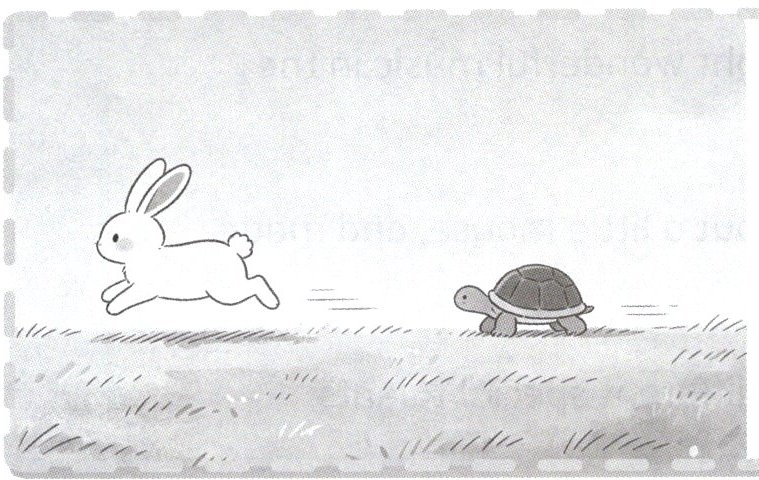
1. Let’s have a running race!
2. I must win,//because you are too slow.
3. Come on,//tortoise!
4. Don’t give up,//and always try your best!
1. Let’s have a running race!
2. I must win,//because you are too slow.
3. Come on,//tortoise!
4. Don’t give up,//and always try your best!
答案
1. Let’s ︵ have ︵ a running race!
连读说明:Let’s和have、have和a均满足连读条件,标注连读符号,整句意为:让我们来一场跑步比赛吧!
2. I must win, // because you︵are too slow.
停顿说明://为意群停顿标记,拆分结果符合口语朗读节奏,整句意为:我必须赢,因为你太慢了。
3. Come ︵ on, // tortoise!
连读说明:come和on满足“前辅后元”连读条件标注连读符号,//为意群停顿,整句意为:快点啊,乌龟!
4. Don’t give ︵ up, // and always try your best!
连读说明:give和up满足连读条件标注连读符号,//为意群停顿,整句意为:不要放弃,一直尽全力就好!
