

 登录
登录
Ⅱ.阅读理解。
Being able to play a musical instrument is, without doubt, useful. You can please your guests with a piano piece at a dinner, or make friends by joining a band. Besides, people who play musical instruments are often found to perform better on cognitive(认知的) tests.
Some studies compared the cognitive ability of musicians and non-musicians. Their findings showed that musical training could bring small but important cognitive advantages. However, these studies had short monitoring(监测) periods. This made it impossible to find out if these cognitive changes remained throughout a person's lifetime.
Judith Okely at the University of Edinburgh found a way to solve the problem. In 1947, the Scottish government tested the cognitive ability of almost every 11-year-old child in the country. In 1997, Dr Okely's team contacted 1,091 of those children and tested them once more between 2004 and 2007. The study continues and the participants(参加者) need to take a cognitive test every three years.
In 2017, Katie Overy, also at the University of Edinburgh, asked these participants about their musical experiences over the years. The participants were asked how many instruments they had played and what their training was like. They were also asked to record how many years of practice they had and what performance level they had reached. A total of 366 participants provided useful information and 117 mentioned that they had some level of experience with musical instruments.
All in all, the researchers found that there is a close relationship between playing an instrument and changes in a person's cognitive ability. Moreover, the longer people practise playing an instrument, the more likely they are to show positive cognitive changes in their lives. The influence is small, but it remains important.
(
A. What did those studies find?
B. Whose cognitive ability was compared?
C. What are the benefits of mastering a musical instrument?
D. How will people's cognitive ability change over time?
(
A. The studies were made in only one country.
B. The studies were done over a short period of time.
C. The studies didn't have enough adult participants.
D. The studies only included professional musicians.
(
A. Music can sometimes change the way people see the world.
B. People's cognitive ability is connected with their ages.
C. People's cognitive ability is difficult to change in a short time.
D. More practice in playing an instrument can help improve one's cognition.
(
A. It took Dr Okely's team five years to test 1,091 participants.
B. Kids are asked to take an intelligence test every year in Scotland.
C. In 2017, less than one third of the 366 participants had musical experiences.
D. Over 300 participants thought that learning to play an instrument was helpful.
(
Being able to play a musical instrument is, without doubt, useful. You can please your guests with a piano piece at a dinner, or make friends by joining a band. Besides, people who play musical instruments are often found to perform better on cognitive(认知的) tests.
Some studies compared the cognitive ability of musicians and non-musicians. Their findings showed that musical training could bring small but important cognitive advantages. However, these studies had short monitoring(监测) periods. This made it impossible to find out if these cognitive changes remained throughout a person's lifetime.
Judith Okely at the University of Edinburgh found a way to solve the problem. In 1947, the Scottish government tested the cognitive ability of almost every 11-year-old child in the country. In 1997, Dr Okely's team contacted 1,091 of those children and tested them once more between 2004 and 2007. The study continues and the participants(参加者) need to take a cognitive test every three years.
In 2017, Katie Overy, also at the University of Edinburgh, asked these participants about their musical experiences over the years. The participants were asked how many instruments they had played and what their training was like. They were also asked to record how many years of practice they had and what performance level they had reached. A total of 366 participants provided useful information and 117 mentioned that they had some level of experience with musical instruments.
All in all, the researchers found that there is a close relationship between playing an instrument and changes in a person's cognitive ability. Moreover, the longer people practise playing an instrument, the more likely they are to show positive cognitive changes in their lives. The influence is small, but it remains important.
(
D
)1. Which question is NOT answered in the first two paragraphs?A. What did those studies find?
B. Whose cognitive ability was compared?
C. What are the benefits of mastering a musical instrument?
D. How will people's cognitive ability change over time?
(
B
)2. What does the underlined word "problem" refer to?A. The studies were made in only one country.
B. The studies were done over a short period of time.
C. The studies didn't have enough adult participants.
D. The studies only included professional musicians.
(
D
)3. What does the last paragraph mainly tell us?A. Music can sometimes change the way people see the world.
B. People's cognitive ability is connected with their ages.
C. People's cognitive ability is difficult to change in a short time.
D. More practice in playing an instrument can help improve one's cognition.
(
C
)4. What can we learn from the passage?A. It took Dr Okely's team five years to test 1,091 participants.
B. Kids are asked to take an intelligence test every year in Scotland.
C. In 2017, less than one third of the 366 participants had musical experiences.
D. Over 300 participants thought that learning to play an instrument was helpful.
(
A
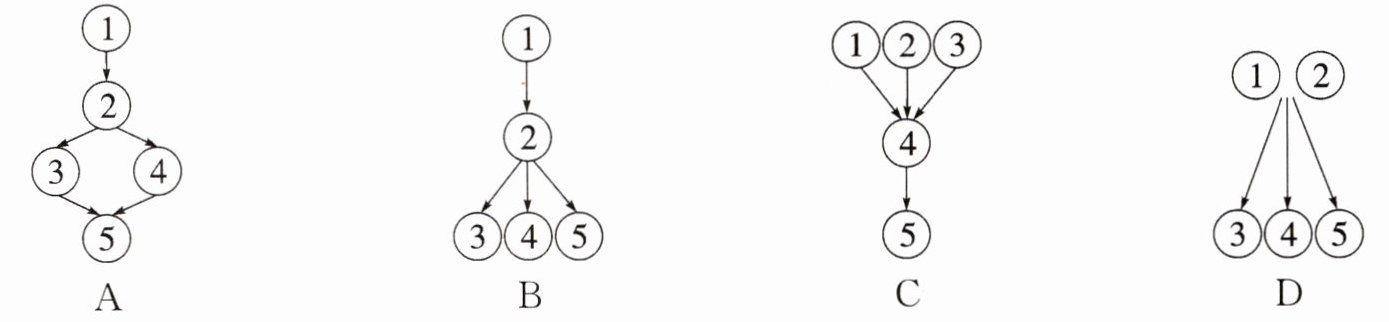
)5. Which is the right structure of the passage?答案
Ⅱ.1.D 2.B 3.D 4.C 5.A
解析
【分析】
本题为英语阅读理解题,需结合原文内容逐一分析各题:
1. 第1题:定位前两段,确认各选项是否被提及,未提及的即为答案;
2. 第2题:根据代词指代的就近原则,结合前文内容确定“problem”的含义;
3. 第3题:梳理最后一段核心内容,匹配选项主旨;
4. 第4题:逐一核对选项与原文细节,排除错误选项;
5. 第5题:梳理文章各段落的逻辑关系,匹配对应结构。
【解析】
1. 第1题:前两段中,A项(研究发现)对应第二段“musical training could bring small but important cognitive advantages”;B项(比较对象)对应第二段“compared the cognitive ability of musicians and non-musicians”;C项(乐器的好处)对应第一段内容;D项“认知能力随时间的变化”前两段未涉及,故选D。
2. 第2题:“problem”指代前文“these studies had short monitoring periods. This made it impossible to find out if these cognitive changes remained throughout a person's lifetime”,即研究监测期短,故选B。
3. 第3题:最后一段核心为演奏乐器与认知能力的关系,指出练习越久越易出现积极认知变化,匹配D选项,故选D。
4. 第4题:A项时间不符,B项测试频率不符;C项366名参与者中117人有乐器经验,117÷366≈31.9%,不到三分之一,正确;D项人数不符,故选C。
5. 第5题:文章结构为:①引入乐器的好处→②旧研究的不足→③新研究的设计→④调查细节→⑤研究结果,对应选项A的结构,故选A。
【答案】
1.D 2.B 3.D 4.C 5.A
【知识点】
英语阅读理解、细节理解、文章结构
【点评】
本题考查英语阅读理解的细节定位、指代理解、主旨归纳及结构分析能力,需精准抓取原文信息,难度适中。
【难度系数】
0.5
本题为英语阅读理解题,需结合原文内容逐一分析各题:
1. 第1题:定位前两段,确认各选项是否被提及,未提及的即为答案;
2. 第2题:根据代词指代的就近原则,结合前文内容确定“problem”的含义;
3. 第3题:梳理最后一段核心内容,匹配选项主旨;
4. 第4题:逐一核对选项与原文细节,排除错误选项;
5. 第5题:梳理文章各段落的逻辑关系,匹配对应结构。
【解析】
1. 第1题:前两段中,A项(研究发现)对应第二段“musical training could bring small but important cognitive advantages”;B项(比较对象)对应第二段“compared the cognitive ability of musicians and non-musicians”;C项(乐器的好处)对应第一段内容;D项“认知能力随时间的变化”前两段未涉及,故选D。
2. 第2题:“problem”指代前文“these studies had short monitoring periods. This made it impossible to find out if these cognitive changes remained throughout a person's lifetime”,即研究监测期短,故选B。
3. 第3题:最后一段核心为演奏乐器与认知能力的关系,指出练习越久越易出现积极认知变化,匹配D选项,故选D。
4. 第4题:A项时间不符,B项测试频率不符;C项366名参与者中117人有乐器经验,117÷366≈31.9%,不到三分之一,正确;D项人数不符,故选C。
5. 第5题:文章结构为:①引入乐器的好处→②旧研究的不足→③新研究的设计→④调查细节→⑤研究结果,对应选项A的结构,故选A。
【答案】
1.D 2.B 3.D 4.C 5.A
【知识点】
英语阅读理解、细节理解、文章结构
【点评】
本题考查英语阅读理解的细节定位、指代理解、主旨归纳及结构分析能力,需精准抓取原文信息,难度适中。
【难度系数】
0.5
