

 登录
Ⅰ. 听教材 1b/1c 的录音,完成对话
Conversation 1:
1. —Hi, Yaming.
—Hi, Emma. It was great. I went to Mount Huangshan.
2. —
—Yeah, I went with my family.
Conversation 2:
1. —
—I went back to the US with my mum and sister.
2. —So,
—Yes, I went to a strawberry festival.
Conversation 1:
1. —Hi, Yaming.
How was your vacation
?—Hi, Emma. It was great. I went to Mount Huangshan.
2. —
Did you go with anyone
?—Yeah, I went with my family.
Conversation 2:
1. —
Where did you go on holiday
?—I went back to the US with my mum and sister.
2. —So,
did you do anything interesting there
?—Yes, I went to a strawberry festival.
答案
Conversation 1:
1. How was your vacation
2. Did you go with anyone
Conversation 2:
1. Where did you go on holiday
2. did you do anything interesting there
Ⅱ. 听教材1b/1c的录音,选择正确答案
1. What did Yaming see on Mount Huangshan?
A. Many modern buildings.
B. Many strawberry farmers.
C. The Guest-Greeting Pine.
2. Did Yaming take photos there?
A. Yes, he did.
B. No, he didn't.
C. We don't know.
3. How long did Emma stay with her grandparents?
A. For two days.
B. For five days.
C. For ten days.
答案
1. C 2. A 3. C
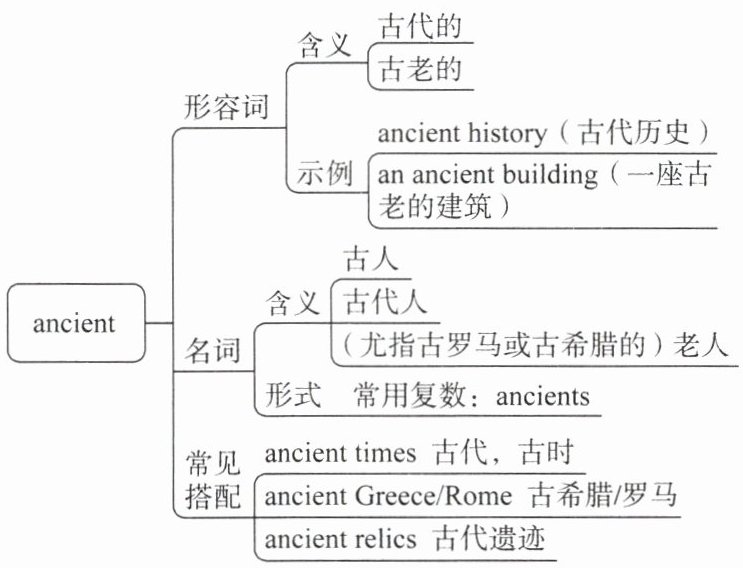
要点 1:ancient adj.古代的;古老的
【语境感悟】
Yaming saw the Guest-Greeting Pine, the
Sea of Clouds, lots of strange rocks, and many ancient buildings. 亚明看了迎客松、云海、许多奇形怪状的岩石和许多古代的建筑。(教材·P2)
Ancient people used stones to build walls. 古代人用石头建造墙壁。
She read a story about ancient Rome. 她读了一个关于古罗马的故事。
【知识归纳】
【迁移运用】
(1)We learned about a
(2)我爷爷收藏了一枚古币。
My grandpa
【语境感悟】
Yaming saw the Guest-Greeting Pine, the
Sea of Clouds, lots of strange rocks, and many ancient buildings. 亚明看了迎客松、云海、许多奇形怪状的岩石和许多古代的建筑。(教材·P2)
Ancient people used stones to build walls. 古代人用石头建造墙壁。
She read a story about ancient Rome. 她读了一个关于古罗马的故事。
【知识归纳】
【迁移运用】
(1)We learned about a
ancient
Egypt in history class.(2)我爷爷收藏了一枚古币。
My grandpa
has
an
ancient
coin collection.答案
(1)ancient (2)has an ancient
解析
【分析】本题考查形容词ancient的用法,需结合语境和语法规则完成填空。第(1)题空格修饰名词Egypt,需用形容词,根据ancient的形容词含义可确定答案;第(2)题需结合第三人称单数的主谓一致规则,以及ancient修饰名词的用法来推导。
【解析】(1) 空格处修饰名词Egypt,需用形容词,ancient作为形容词意为“古代的”,符合语境要求,故填ancient;
(2) 主语My grandpa是第三人称单数,一般现在时中谓语动词用has;“古币”对应ancient coin,此处表示“一枚”需加不定冠词an,因此填has an ancient。
【答案】(1)ancient (2)has an ancient
【知识点】形容词ancient的用法;主谓一致
【点评】本题围绕核心词汇ancient的基础用法展开,结合语境和基础语法,考查学生对词汇的掌握,属于基础题型,难度较低。
【难度系数】0.2
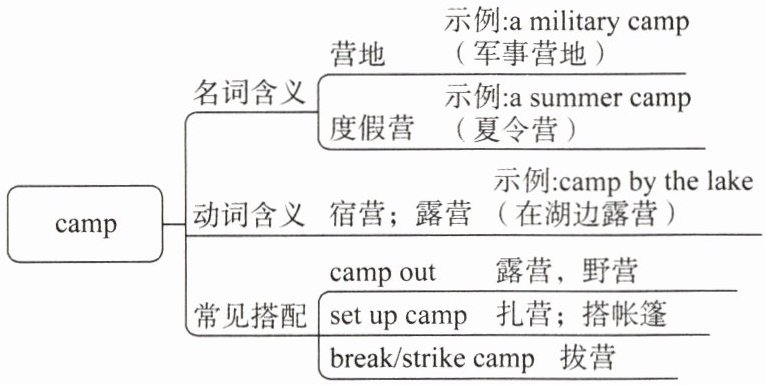
要点2:camp n.度假营;营地 v.露营;宿营
【语境感悟】
went to a summer camp 参加了夏令营(教材·P2)
She signed up for an art camp during the winter holiday. 她在寒假报名参加了一个艺术营。
She loves to camp with her friends at weekends. 她喜欢在周末和朋友们一起去露营。
【知识归纳】
【迁移运用】
(1) We c
(2)上个月我们去参加了夏令营,玩得很开心。
We went to
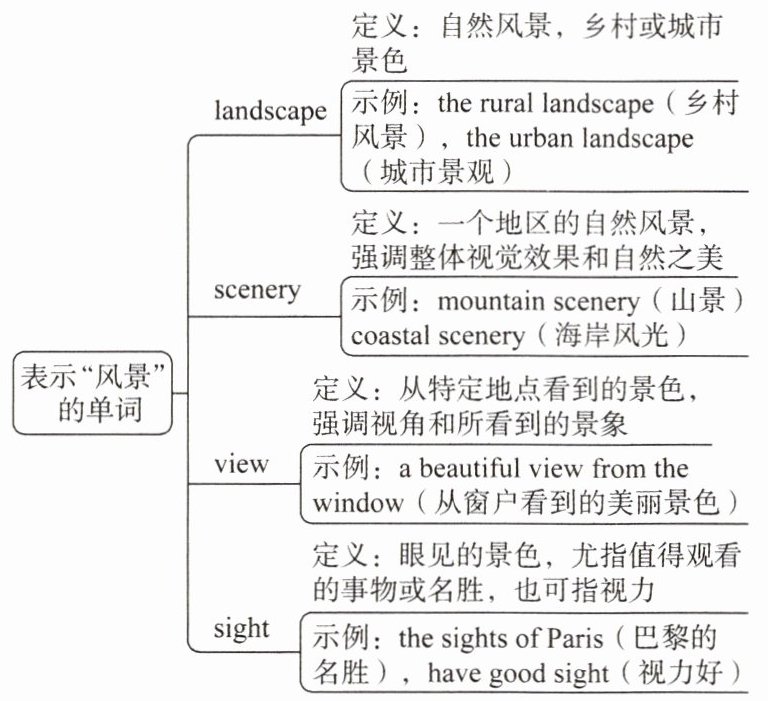
要点3:landscape n.风景;景色
【语境感悟】
The landscape there was amazing. 那里的风景令人惊叹。(教材·P2)
The landscape in this park is very peaceful. 这个公园的风景非常宁静。
【知识归纳】
【迁移运用】
(1)The farmer planted flowers to improve the l
(2)这位艺术家画了一幅美丽的山脉风景画。
The artist painted a beautiful
【语境感悟】
went to a summer camp 参加了夏令营(教材·P2)
She signed up for an art camp during the winter holiday. 她在寒假报名参加了一个艺术营。
She loves to camp with her friends at weekends. 她喜欢在周末和朋友们一起去露营。
【知识归纳】
【迁移运用】
(1) We c
amped
by the lake last weekend.(2)上个月我们去参加了夏令营,玩得很开心。
We went to
a
summer
camp
last month and had so much fun.要点3:landscape n.风景;景色
【语境感悟】
The landscape there was amazing. 那里的风景令人惊叹。(教材·P2)
The landscape in this park is very peaceful. 这个公园的风景非常宁静。
【知识归纳】
【迁移运用】
(1)The farmer planted flowers to improve the l
andscape
(风景) around his house.(2)这位艺术家画了一幅美丽的山脉风景画。
The artist painted a beautiful
landscape
of the mountains.答案
要点2迁移运用:
(1)camped (2)a summer camp
要点3迁移运用:
(1)landscape (2)landscape
解析
【分析】本题为英语词汇运用题,需结合时态、固定搭配及词义完成填空。首先根据句中时间状语判断动词时态,再依据固定短语和汉语提示确定对应词汇。
【解析】要点2迁移运用:
(1) 句中时间状语“last weekend”是一般过去时的标志,动词“camp”的过去式为“camped”,故填camped。
(2) “夏令营”的固定英语表达为“a summer camp”,符合语境,故填a summer camp。
要点3迁移运用:
(1) 空格前有定冠词“the”,需填名词,汉语提示“风景”对应的英语是“landscape”,故填landscape。
(2) “风景画”的固定表达为“a landscape of...”,故填landscape。
【答案】要点2迁移运用:(1)camped (2)a summer camp;要点3迁移运用:(1)landscape (2)landscape
【知识点】动词过去式、固定短语搭配、名词词义运用
【点评】本题考查基础英语词汇的时态变化、固定搭配及词义运用,侧重检验学生对课本核心词汇的掌握,难度适中。
【难度系数】0.6
