

 登录
4. —The actress acted so well that she the role in our hearts.
—Yes. She made us love the character deeply.
A.got; alive
B.brought; to life
C.took; to life
D.gave; alive
—Yes. She made us love the character deeply.
A.got; alive
B.brought; to life
C.took; to life
D.gave; alive
答案
4.B
解析
【分析】
这道题考查英语固定动词短语的辨析,解题思路是先回忆表示“使某物生动”的常用固定短语,再逐一验证选项的搭配是否符合语义和语法,从而选出正确答案。
【解析】
表示“使某物生动”的固定短语是bring sth to life,为固定搭配。逐一分析选项:A选项got alive搭配错误;B选项brought to life符合固定搭配及“使角色在心中生动”的语义;C选项took to life搭配错误;D选项gave alive搭配错误。因此正确答案为B。
【答案】
B
【知识点】
动词短语辨析,固定搭配
【点评】
本题考查常用英语动词短语的固定搭配,需要学生平时积累常见短语,区分不同动词与介词的搭配用法,难度适中。
【难度系数】
0.5
5. — in France, the film has very beautiful pictures.
—Yes. The team did a wonderful job during the .
A.Shot; shot
B.Shooting; shooting
C.Shot; shooting
D.Shooting; shot
—Yes. The team did a wonderful job during the .
A.Shot; shot
B.Shooting; shooting
C.Shot; shooting
D.Shooting; shot
答案
5.C
解析
【分析】首先分析第一空:句子主语the film与动词shoot(拍摄)是被动关系,需用过去分词作状语;再分析第二空:during是介词,后接名词,shooting可作名词表示“拍摄过程”,结合选项即可得出答案。
【解析】第一空,逻辑主语the film和shoot是被动关系,故用过去分词Shot作原因状语,相当于Because the film was shot in France;第二空,介词during后需接名词,shooting作名词意为“拍摄(活动/过程)”,符合语境,因此选C。
【答案】C
【知识点】非谓语动词、名词辨析
【点评】本题考查非谓语动词的用法和名词的辨析,需掌握过去分词作状语的逻辑主语关系,以及shoot的不同词性用法,属于基础考点题。
【难度系数】0.5
【解析】第一空,逻辑主语the film和shoot是被动关系,故用过去分词Shot作原因状语,相当于Because the film was shot in France;第二空,介词during后需接名词,shooting作名词意为“拍摄(活动/过程)”,符合语境,因此选C。
【答案】C
【知识点】非谓语动词、名词辨析
【点评】本题考查非谓语动词的用法和名词的辨析,需掌握过去分词作状语的逻辑主语关系,以及shoot的不同词性用法,属于基础考点题。
【难度系数】0.5
6. —The of this camera is too high for me to buy.
—Don't worry. You can get one as a if you win the competition.
A.prize; price
B.price; pride
C.price; prize
D.pride; price
—Don't worry. You can get one as a if you win the competition.
A.prize; price
B.price; pride
C.price; prize
D.pride; price
答案
6.C
解析
【分析】本题考查名词词义辨析,需结合语境判断两个空格应填的名词。第一空,由“too high for me to buy(太高了我买不起)”可知,描述相机的属性应是“价格”;第二空,由“win the competition(赢得比赛)”可知,赢比赛能获得的是“奖品”,据此排除错误选项。
【解析】第一空:“price”意为“价格”,“prize”意为“奖品”,“pride”意为“骄傲”,能被“high(高)”修饰且和“买得起”相关的是“price”,故第一空填price,排除A、D选项;第二空:赢比赛获得的是“prize(奖品)”,“pride”不符合语境,故第二空填prize,因此选C。
【答案】C
【知识点】名词词义辨析
【点评】本题为基础词汇辨析题,需准确掌握price、prize、pride的词义及用法,结合语境即可选出正确答案,难度较低。
【难度系数】0.3
【解析】第一空:“price”意为“价格”,“prize”意为“奖品”,“pride”意为“骄傲”,能被“high(高)”修饰且和“买得起”相关的是“price”,故第一空填price,排除A、D选项;第二空:赢比赛获得的是“prize(奖品)”,“pride”不符合语境,故第二空填prize,因此选C。
【答案】C
【知识点】名词词义辨析
【点评】本题为基础词汇辨析题,需准确掌握price、prize、pride的词义及用法,结合语境即可选出正确答案,难度较低。
【难度系数】0.3
Ⅲ. 翻译句子
1. 我认为这位著名导演执导的这部电影不值得看。
2. 这位著名的编剧获得高额奖金,他作品的价格也在不断上涨。
3. 作为一名制作人,他希望他的电影能使艺术更有序。
4. 在拍摄完电影后,剪辑员在后期制作中努力工作。
5. 这个聪明的导演让电影里的人物栩栩如生。
1. 我认为这位著名导演执导的这部电影不值得看。
I don't think the film directed by this famous director is worth seeing.
2. 这位著名的编剧获得高额奖金,他作品的价格也在不断上涨。
The famous scriptwriter won a high prize, and the price of his works keeps rising.
3. 作为一名制作人,他希望他的电影能使艺术更有序。
As a film-maker, he hopes his films can keep art in better order.
4. 在拍摄完电影后,剪辑员在后期制作中努力工作。
After shooting the film, the editor worked hard in post-production.
5. 这个聪明的导演让电影里的人物栩栩如生。
The clever director brought the characters in the film to life.
答案
1. I don't think the film directed by this famous director is worth seeing.
2. The famous scriptwriter won a high prize, and the price of his works keeps rising.
3. As a film-maker, he hopes his films can keep art in better order.
4. After shooting the film, the editor worked hard in post-production.
5. The clever director brought the characters in the film to life.
2. The famous scriptwriter won a high prize, and the price of his works keeps rising.
3. As a film-maker, he hopes his films can keep art in better order.
4. After shooting the film, the editor worked hard in post-production.
5. The clever director brought the characters in the film to life.
解析
【分析】
翻译此类句子时,需先梳理中文句子的核心结构,确定英语的对应句式,再处理修饰成分(如定语、状语),同时注意英语的固定搭配、时态及特殊规则(如否定前移)。具体步骤为:1. 提炼句子主干;2. 翻译修饰成分(如过去分词作定语、介词短语);3. 匹配英语固定表达;4. 调整语序符合英语表达习惯。
【解析】
1. 中文核心是“我认为…不…”,需用英语否定前移句式(I don't think);“这位著名导演执导的”作定语,用过去分词短语directed by this famous director修饰film;“值得看”对应固定搭配be worth seeing,故译为I don't think the film directed by this famous director is worth seeing.
2. 前半句描述过去动作,用一般过去时,“获得高额奖金”译为won a high prize;后半句表持续状态,用一般现在时,“他作品的价格也在不断上涨”译为the price of his works keeps rising,用and连接并列句,故译为The famous scriptwriter won a high prize, and the price of his works keeps rising.
3. “作为一名制作人”译为As a film-maker;“使艺术更有序”对应固定表达keep art in better order,故译为As a film-maker, he hopes his films can keep art in better order.
4. “在拍摄完电影后”用介词+动名词结构After shooting the film;“剪辑员”译为editor;“在后期制作中”译为in post-production,时态用一般过去时,故译为After shooting the film, the editor worked hard in post-production.
5. “让电影里的人物栩栩如生”对应固定短语bring...to life,故译为The clever director brought the characters in the film to life.
【答案】
1. I don't think the film directed by this famous director is worth seeing.
2. The famous scriptwriter won a high prize, and the price of his works keeps rising.
3. As a film-maker, he hopes his films can keep art in better order.
4. After shooting the film, the editor worked hard in post-production.
5. The clever director brought the characters in the film to life.
【知识点】
汉译英、固定搭配、特殊句式
【点评】
本题为基础汉译英练习题,考察常用词汇、固定表达及基本句式的运用,难度适中,适合巩固英语基础翻译能力。
【难度系数】
0.7
Ⅳ. (2026·浙江期中改编)阅读理解
In the famous Chinese book Romance of the Three Kingdoms, most readers have their favourite characters. Some like kind Liu Bei, who cares about his people; others admire loyal Guan Yu, who never betrays(背叛) his friends; and many look up to smart Zhuge Liang, who plans great strategies. But when it comes to Cao Cao, lots of people say he is a ruthless man who only thinks about power.
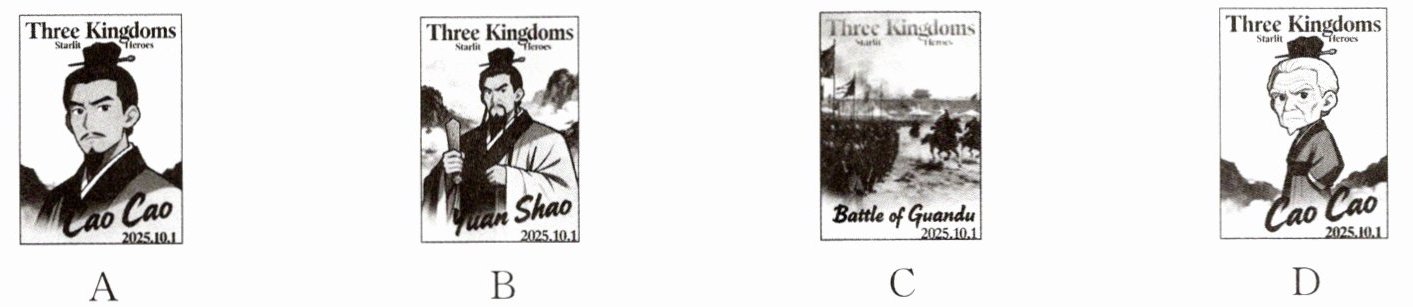
However, this might not be the real Cao Cao. A movie called Three Kingdoms: Starlit Heroes will help us see him in a different way. It hit cinemas on 1 October, and it focused on Cao Cao when he was around 35 years old—an important time in his life.
Long ago, Cao Cao and Yuan Shao were good friends who once talked about their dreams for the country. But as time passed, they had big different ideas about ruling: Yuan Shao wanted to set up a new emperor to control power himself, while Cao Cao chose to support the current(目前的) emperor, hoping to keep some order in the chaotic(混乱的) country. This huge difference slowly turned them from friends into bitter enemies. Later, they finally fought in the famous Battle of Guandu. Yuan Shao brought over 100,000 soldiers, while Cao Cao only had about 20,000—everyone around thought Cao Cao had no chance to win. But Cao Cao didn't give up. He studied Yuan Shao's army carefully, found out where they stored food, and sent his best soldiers to burn those supplies(补给). Without food, Yuan Shao's army became messy and scared, and Cao Cao took the chance to attack, finally winning the battle against all odds.
The movie shows a Cao Cao who is brave and smart, but sometimes a little cunning. Is he a good guy or a bad guy? It's hard to answer. As historian Yi Zhongtian said, during wartime, people's choices are never simple—they just do what they think is right to survive and protect what they care about.
1. What does the underlined word "ruthless" probably mean in Paragraph 1?
A. Nice and helpful.
B. Unkind and unfeeling.
C. Smart and clever.
D. Shy and quiet.
2. According to the text, which is probably the poster of the movie?
3. Why did the writer tell the story of Cao Cao and Yuan Shao in Paragraph 3?
A. To introduce the historical background of the Battle of Guandu.
B. To show the friendship between Cao Cao and Yuan Shao in their early years.
C. To break the old idea that Cao Cao is a bad man and show his different sides.
D. To show that Yuan Shao wanted too much power and was not a good leader.
4. What does Yi Zhongtian want to tell us?
A. Cao Cao is more good than bad.
B. Cao Cao chose power over survival(生存).
C. Cao Cao's cleverness made his wartime choices simple.
D. It's hard to judge Cao Cao—his wartime choices were for survival.
In the famous Chinese book Romance of the Three Kingdoms, most readers have their favourite characters. Some like kind Liu Bei, who cares about his people; others admire loyal Guan Yu, who never betrays(背叛) his friends; and many look up to smart Zhuge Liang, who plans great strategies. But when it comes to Cao Cao, lots of people say he is a ruthless man who only thinks about power.
However, this might not be the real Cao Cao. A movie called Three Kingdoms: Starlit Heroes will help us see him in a different way. It hit cinemas on 1 October, and it focused on Cao Cao when he was around 35 years old—an important time in his life.
Long ago, Cao Cao and Yuan Shao were good friends who once talked about their dreams for the country. But as time passed, they had big different ideas about ruling: Yuan Shao wanted to set up a new emperor to control power himself, while Cao Cao chose to support the current(目前的) emperor, hoping to keep some order in the chaotic(混乱的) country. This huge difference slowly turned them from friends into bitter enemies. Later, they finally fought in the famous Battle of Guandu. Yuan Shao brought over 100,000 soldiers, while Cao Cao only had about 20,000—everyone around thought Cao Cao had no chance to win. But Cao Cao didn't give up. He studied Yuan Shao's army carefully, found out where they stored food, and sent his best soldiers to burn those supplies(补给). Without food, Yuan Shao's army became messy and scared, and Cao Cao took the chance to attack, finally winning the battle against all odds.
The movie shows a Cao Cao who is brave and smart, but sometimes a little cunning. Is he a good guy or a bad guy? It's hard to answer. As historian Yi Zhongtian said, during wartime, people's choices are never simple—they just do what they think is right to survive and protect what they care about.
1. What does the underlined word "ruthless" probably mean in Paragraph 1?
A. Nice and helpful.
B. Unkind and unfeeling.
C. Smart and clever.
D. Shy and quiet.
2. According to the text, which is probably the poster of the movie?
3. Why did the writer tell the story of Cao Cao and Yuan Shao in Paragraph 3?
A. To introduce the historical background of the Battle of Guandu.
B. To show the friendship between Cao Cao and Yuan Shao in their early years.
C. To break the old idea that Cao Cao is a bad man and show his different sides.
D. To show that Yuan Shao wanted too much power and was not a good leader.
4. What does Yi Zhongtian want to tell us?
A. Cao Cao is more good than bad.
B. Cao Cao chose power over survival(生存).
C. Cao Cao's cleverness made his wartime choices simple.
D. It's hard to judge Cao Cao—his wartime choices were for survival.
答案
1.B 2.A 3.C 4.D
解析
【分析】
1. 第1题是词义猜测题,需结合上下文语境判断词义:第一段将曹操与刘备、关羽等正面人物对比,指出大众对曹操的负面印象,“ruthless”修饰只看重权力的人,应是负面含义,据此匹配选项。
2. 第2题是细节理解题,需定位电影相关信息:文章提到电影聚焦35岁左右的曹操,据此匹配海报内容,选出对应选项。
3. 第3题是推理判断题,需结合段落逻辑:第一段提出大众对曹操的旧印象,第二段转折说明要展示不同的曹操,第三段讲述曹袁的故事是为了支撑这一转折,打破旧印象,据此分析选项。
4. 第4题是细节理解题,需定位易中天的观点:找到最后一段易中天的话,理解其含义后匹配选项。
【解析】
1. 第1题:词义猜测题。根据第一段“lots of people say he is a ruthless man who only thinks about power”,结合前文刘备、关羽等的正面形象,可知“ruthless”意为“无情的,冷酷的”,对应选项B(Unkind and unfeeling),故答案为B。
2. 第2题:细节理解题。根据第二段“A movie called Three Kingdoms: Starlit Heroes... focused on Cao Cao when he was around 35 years old”,可知电影聚焦年轻曹操,选项A是年轻曹操的海报,B是袁绍、C是官渡之战、D是年老曹操,故答案为A。
3. 第3题:推理判断题。第一段提出大众对曹操的旧印象是负面的,第二段转折说明要展示不同的曹操,第三段讲述曹袁的故事是为了打破旧印象,体现曹操的不同侧面,对应选项C,故答案为C。
4. 第4题:细节理解题。根据最后一段易中天的话“during wartime, people's choices are never simple—they just do what they think is right to survive and protect what they care about”,可知他认为很难评判曹操,战时选择是为了生存,对应选项D,故答案为D。
【答案】1.B 2.A 3.C 4.D
【知识点】词义猜测题、细节理解题、推理判断题
【点评】本题围绕《三国演义》中曹操的形象及相关电影展开,考查学生对阅读理解常见题型的掌握,需结合上下文、原文细节及段落逻辑分析,整体难度适中。
【难度系数】0.5
