

 登录
A
(
A. Good morning. B. Nice to see you.
C. How are you doing? D. How do you do?
(
A. English teachers. B. Best friends.
C. New friends. D. Family members.
(
A. Good ways of learning English. B. Why we need to know greeting words.
C. Some greeting words in English. D. How to greet people around the world.
(
B
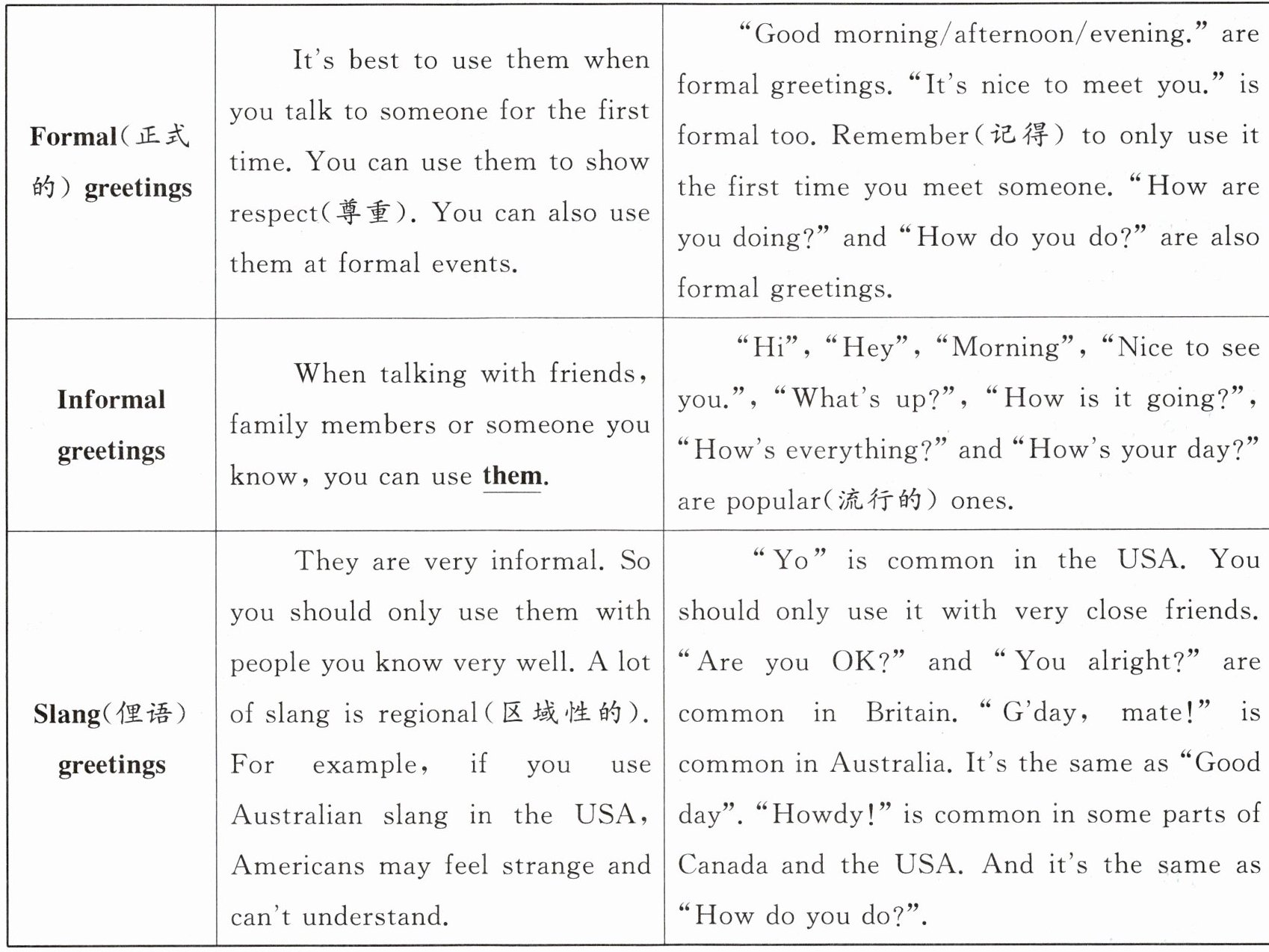
)26. Which one of the following is an example of the underlined word “them”?A. Good morning. B. Nice to see you.
C. How are you doing? D. How do you do?
(
B
)27. Who do people in the USA use “Yo” with?A. English teachers. B. Best friends.
C. New friends. D. Family members.
(
C
)28. What's the passage mainly(主要地) about?A. Good ways of learning English. B. Why we need to know greeting words.
C. Some greeting words in English. D. How to greet people around the world.
答案
26.B 27.B 28.C
解析
翻译:
(答案:B)26. 下列哪一项是划线单词“them”的示例?
A. 早上好。
B. 很高兴见到你。
C. 你最近怎么样?
D. 你好!
(答案:B)27. 美国人会和谁使用“Yo”?
A. 英语老师。
B. 最好的朋友。
C. 新朋友。
D. 家庭成员。
(答案:C)28. 这篇文章主要讲的是什么?
A. 学习英语的好方法。
B. 我们为什么需要知道问候语。
C. 一些英语问候语。
D. 如何问候世界各地的人。
