

 登录
登录
Ⅰ. Complete the passage with the proper form of the words and expressions in the box.
wild logo endangered
make great efforts protection thanks to
WWF stands for the World Wildlife Fund. It is one of the largest nature protection organisations in the world. The organisation uses a panda as its 1.
WWF works hard to protect animals and their habitats. Many species are in danger of dying out in the 3.
Besides saving animals, WWF also cares about environmental 5.
wild logo endangered
make great efforts protection thanks to
WWF stands for the World Wildlife Fund. It is one of the largest nature protection organisations in the world. The organisation uses a panda as its 1.
logo
. Why a panda? Because the panda was a (n) 2. endangered
animal when WWF was founded in 1961.WWF works hard to protect animals and their habitats. Many species are in danger of dying out in the 3.
wild
. Without help, some of them may not have a chance of survival. For this reason, WWF 4. has made great efforts
over the years to save animals like tigers, elephants, and pandas.Besides saving animals, WWF also cares about environmental 5.
protection
. The organisation tries to stop pollution, protect forests and oceans, and fight climate change. 6. Thanks to
WWF’s work, some animals have been saved from disappearing forever!答案
1. logo
2. endangered
3. wild
4. has made great efforts
5. protection
6. Thanks to
2. endangered
3. wild
4. has made great efforts
5. protection
6. Thanks to
解析
【分析】
本题为英语选词填空题,解题思路为:先通读全文把握语境,再结合方框内的词汇,依据句子的语义逻辑、固定搭配及语法规则(如时态),选择合适的词并调整正确形式填入对应空格。
【解析】
1. 句意:该组织用熊猫作为它的标志,故填名词logo。
2. 句意:1961年WWF成立时,熊猫是濒危动物,此处需形容词修饰名词animal,故填endangered。
3. 固定搭配in the wild意为“在野外”,符合“很多物种在野外濒临灭绝”的语境,故填wild。
4. 时间状语over the years(多年来)提示用现在完成时,主语WWF为单数,故将短语make great efforts变为has made great efforts。
5. 句意:WWF也关心环境保护,形容词environmental后接名词,故填protection。
6. 句意:多亏了WWF的工作,一些动物被拯救,句首单词需大写,故填Thanks to。
【答案】
1. logo
2. endangered
3. wild
4. has made great efforts
5. protection
6. Thanks to
【知识点】
英语选词填空、固定搭配、现在完成时
【点评】
本题考查英语词汇的语境运用,需结合语义、固定搭配和语法规则解题,难度适中,适合初中阶段学生巩固词汇与语法知识。
【难度系数】
0.6
本题为英语选词填空题,解题思路为:先通读全文把握语境,再结合方框内的词汇,依据句子的语义逻辑、固定搭配及语法规则(如时态),选择合适的词并调整正确形式填入对应空格。
【解析】
1. 句意:该组织用熊猫作为它的标志,故填名词logo。
2. 句意:1961年WWF成立时,熊猫是濒危动物,此处需形容词修饰名词animal,故填endangered。
3. 固定搭配in the wild意为“在野外”,符合“很多物种在野外濒临灭绝”的语境,故填wild。
4. 时间状语over the years(多年来)提示用现在完成时,主语WWF为单数,故将短语make great efforts变为has made great efforts。
5. 句意:WWF也关心环境保护,形容词environmental后接名词,故填protection。
6. 句意:多亏了WWF的工作,一些动物被拯救,句首单词需大写,故填Thanks to。
【答案】
1. logo
2. endangered
3. wild
4. has made great efforts
5. protection
6. Thanks to
【知识点】
英语选词填空、固定搭配、现在完成时
【点评】
本题考查英语词汇的语境运用,需结合语义、固定搭配和语法规则解题,难度适中,适合初中阶段学生巩固词汇与语法知识。
【难度系数】
0.6
Ⅱ. Read and complete the tasks.
A. Complete the passage with proper words or the proper form of the words given.
Saving tigers—a success story
Tigers are one of the most endangered animals in the world. They once lived across much of Asia, but their numbers have dropped 1.
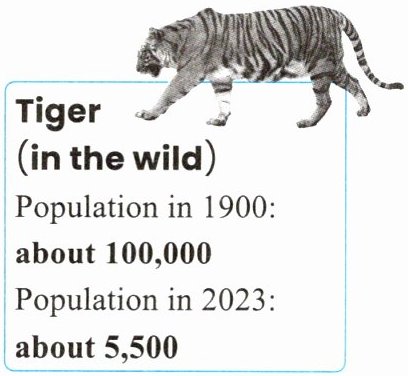
In the early 1900s, there were about 100,000 tigers living in the wild. However, by 2010, the number had dropped to only about 3,200.
What caused this big drop? Human 2.
result, the tiger was put on the endangered species list.
Luckily, things have begun to change. Thanks to conservation efforts, the population of tigers has started to recover. In 2023, there were about 5,500 tigers in the wild. Countries like India, China, and Russia have set up nature reserves 4.
Behind these successes are many devoted people. In China, engineer Liu Dan has worked on tiger breeding and rescue 6.
What can we learn from this? 8.
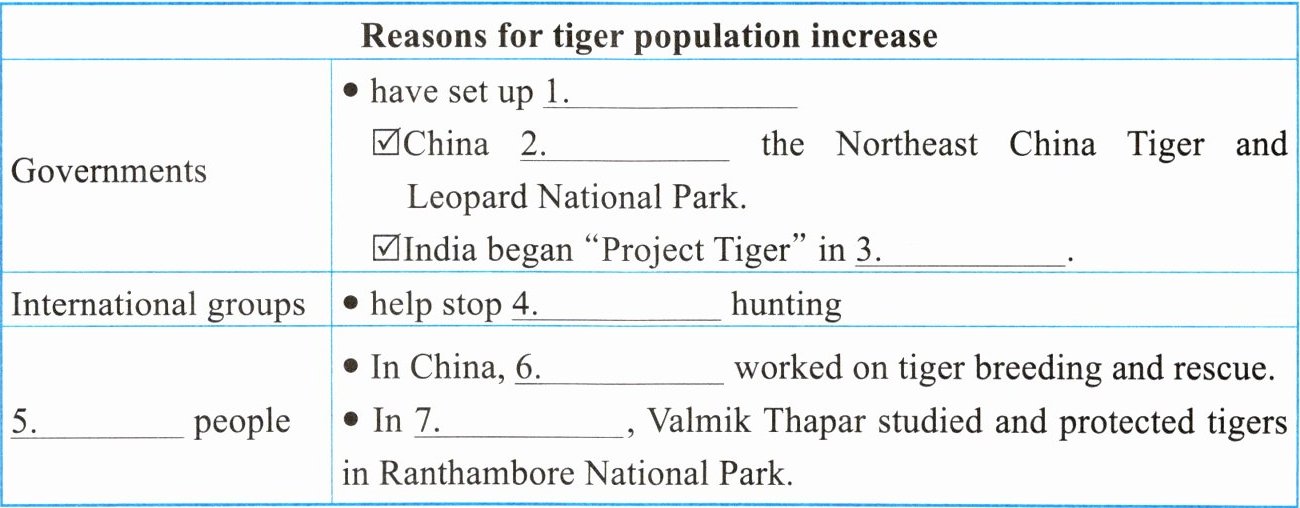
B. Complete the table.
C. Answer the questions.
(
A. Why did people hunt tigers?
B. Where did tigers live long ago?
C. How did the number of tigers change?
D. What effects did human activities have?
2. Why was Valmik Thapar called the “Tiger Man”?
3. Who else do you know that helps protect endangered animals? What did he / she do?
A. Complete the passage with proper words or the proper form of the words given.
Saving tigers—a success story
Tigers are one of the most endangered animals in the world. They once lived across much of Asia, but their numbers have dropped 1.
greatly
(great) over the past century.In the early 1900s, there were about 100,000 tigers living in the wild. However, by 2010, the number had dropped to only about 3,200.
What caused this big drop? Human 2.
activities
(activity) were the main problem. People cut down forests for farming, which destroyed the tigers’ habitat. At the same time, hunters killed tigers for 3. their
(they) fur and bones. As aresult, the tiger was put on the endangered species list.
Luckily, things have begun to change. Thanks to conservation efforts, the population of tigers has started to recover. In 2023, there were about 5,500 tigers in the wild. Countries like India, China, and Russia have set up nature reserves 4.
to protect
(protect) tigers. For example, China built the Northeast China Tiger and Leopard National Park. The Indian government 5. started
(start) “Project Tiger” in 1973. International groups like WWF also help stop illegal hunting.Behind these successes are many devoted people. In China, engineer Liu Dan has worked on tiger breeding and rescue 6.
for
over 30 years. He led the team and rescued and released “Wandashan No. 1”, the first wild tiger successfully returned to the wild in China. In India, Valmik Thapar, known as the “Tiger Man”, spent nearly 50 years 7. studying
(study) and protecting tigers in Ranthambore National Park.What can we learn from this? 8.
Firstly
(one), protecting one animal means protecting many others. Tigers live in forests. 9. When
we save tigers, we also save the trees, the rivers, and all the other animals in that forest. Secondly, it is 10. harder
(hard) to bring tigers back than we thought. It took decades, but it was worth it.B. Complete the table.
C. Answer the questions.
(
C
)1. Which question does Paragraph 2 mainly answer?A. Why did people hunt tigers?
B. Where did tigers live long ago?
C. How did the number of tigers change?
D. What effects did human activities have?
2. Why was Valmik Thapar called the “Tiger Man”?
Because he spent nearly 50 years studying and protecting tigers.
3. Who else do you know that helps protect endangered animals? What did he / she do?
I know Jane Goodall. She studied chimpanzees in Africa and started Roots and Shoots to help young people protect animals.
答案
A. 1. greatly
2. activities
3. their
4. to protect
5. started
6. for
7. studying
8. Firstly
9. When
10. harder
B. 1. nature reserves 2. built 3. 1973 4. illegal 5. Devoted
6. Liu Dan 7. India
C. 1. C
2. Because he spent nearly 50 years studying and protecting tigers.
3. One possible version: I know Jane Goodall. She studied chimpanzees in Africa and started Roots and Shoots to help young people protect animals.
2. activities
3. their
4. to protect
5. started
6. for
7. studying
8. Firstly
9. When
10. harder
B. 1. nature reserves 2. built 3. 1973 4. illegal 5. Devoted
6. Liu Dan 7. India
C. 1. C
2. Because he spent nearly 50 years studying and protecting tigers.
3. One possible version: I know Jane Goodall. She studied chimpanzees in Africa and started Roots and Shoots to help young people protect animals.
解析
【分析】
本题是关于保护老虎的英语综合练习题,分为三部分:A部分为用所给词的适当形式填空,需结合词性、时态、固定搭配等语法知识;B部分为根据文章内容完成表格,需定位原文关键信息;C部分为阅读理解题,考查段落主旨与细节理解。解题时需先通读文章把握主旨,再逐题结合语法规则和原文内容分析作答。
【解析】
A部分:
1. 修饰动词dropped需用副词,故将形容词great变为副词greatly;
2. human后接可数名词,此处指多种人类活动,用复数activities;
3. 修饰名词fur需用形容词性物主代词,故填their;
4. 不定式表目的,建立自然保护区是为了保护老虎,故填to protect;
5. 时间状语in 1973提示用一般过去时,故将start变为started;
6. for后接时间段,表持续时间,故填for;
7. 固定搭配spend time doing sth,故填studying;
8. 对应后文的secondly,此处用序数词Firstly;
9. 引导时间状语从句,表“当……时”,故填When;
10. 由than可知需用形容词比较级,故填harder。
B部分:根据原文关键信息定位,依次对应填写:1. nature reserves;2. built;3. 1973;4. illegal;5. Devoted;6. Liu Dan;7. India。
C部分:
1. 第二段主要讲述老虎数量从约10万降至约3200的变化,对应选项C;
2. 原文明确提到Valmik Thapar花了近50年研究和保护老虎,据此作答;
3. 举Jane Goodall的例子符合要求,为合理答案。
【答案】
A. 1. greatly 2. activities 3. their 4. to protect 5. started 6. for 7. studying 8. Firstly 9. When 10. harder
B. 1. nature reserves 2. built 3. 1973 4. illegal 5. Devoted 6. Liu Dan 7. India
C. 1. C 2. Because he spent nearly 50 years studying and protecting tigers. 3. One possible version: I know Jane Goodall. She studied chimpanzees in Africa and started Roots and Shoots to help young people protect animals.
【知识点】
英语词性转换、一般过去时、阅读理解细节理解
【点评】
本题为英语综合练习题,涵盖词汇形式运用、时态、语篇理解等考点,侧重考查学生的基础语言知识和语篇信息提取能力,题目设置贴合教材,难度适中。
【难度系数】
0.5
本题是关于保护老虎的英语综合练习题,分为三部分:A部分为用所给词的适当形式填空,需结合词性、时态、固定搭配等语法知识;B部分为根据文章内容完成表格,需定位原文关键信息;C部分为阅读理解题,考查段落主旨与细节理解。解题时需先通读文章把握主旨,再逐题结合语法规则和原文内容分析作答。
【解析】
A部分:
1. 修饰动词dropped需用副词,故将形容词great变为副词greatly;
2. human后接可数名词,此处指多种人类活动,用复数activities;
3. 修饰名词fur需用形容词性物主代词,故填their;
4. 不定式表目的,建立自然保护区是为了保护老虎,故填to protect;
5. 时间状语in 1973提示用一般过去时,故将start变为started;
6. for后接时间段,表持续时间,故填for;
7. 固定搭配spend time doing sth,故填studying;
8. 对应后文的secondly,此处用序数词Firstly;
9. 引导时间状语从句,表“当……时”,故填When;
10. 由than可知需用形容词比较级,故填harder。
B部分:根据原文关键信息定位,依次对应填写:1. nature reserves;2. built;3. 1973;4. illegal;5. Devoted;6. Liu Dan;7. India。
C部分:
1. 第二段主要讲述老虎数量从约10万降至约3200的变化,对应选项C;
2. 原文明确提到Valmik Thapar花了近50年研究和保护老虎,据此作答;
3. 举Jane Goodall的例子符合要求,为合理答案。
【答案】
A. 1. greatly 2. activities 3. their 4. to protect 5. started 6. for 7. studying 8. Firstly 9. When 10. harder
B. 1. nature reserves 2. built 3. 1973 4. illegal 5. Devoted 6. Liu Dan 7. India
C. 1. C 2. Because he spent nearly 50 years studying and protecting tigers. 3. One possible version: I know Jane Goodall. She studied chimpanzees in Africa and started Roots and Shoots to help young people protect animals.
【知识点】
英语词性转换、一般过去时、阅读理解细节理解
【点评】
本题为英语综合练习题,涵盖词汇形式运用、时态、语篇理解等考点,侧重考查学生的基础语言知识和语篇信息提取能力,题目设置贴合教材,难度适中。
【难度系数】
0.5
