

 登录
登录
Ⅲ. Think, write and draw.
Toby 在火车上和同座的小伙伴玩起了卡牌游戏。仿照例子,选择一组本课学习的字母组合,写一写,画一画,完成卡牌配对吧!(不需要字母可以在卡牌上画“\”哟!)
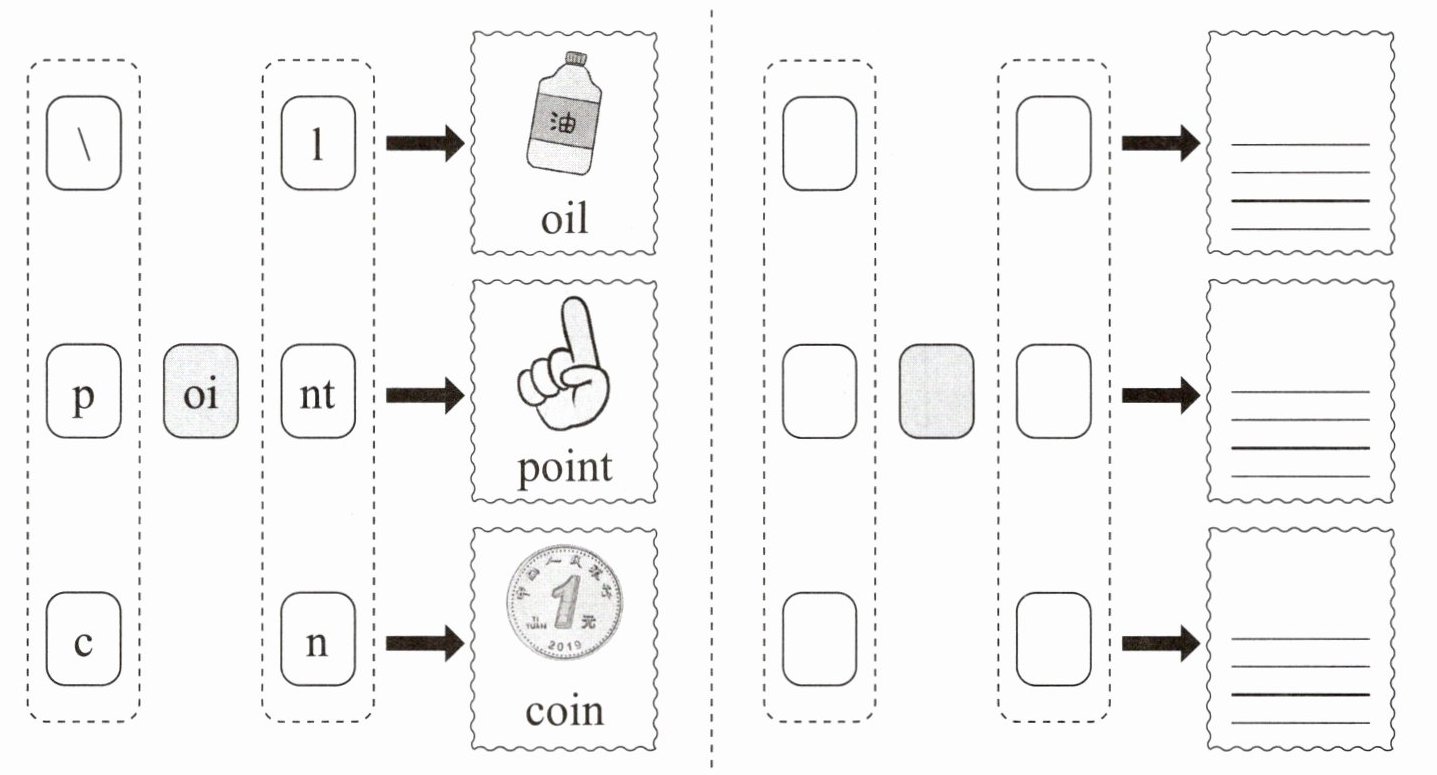
Toby 在火车上和同座的小伙伴玩起了卡牌游戏。仿照例子,选择一组本课学习的字母组合,写一写,画一画,完成卡牌配对吧!(不需要字母可以在卡牌上画“\”哟!)
答案
参考内容(答案不唯一):
第一组:左卡n,右卡se,四线格写noise;
第二组:左卡v,右卡ce,四线格写voice;
第三组:左卡j,右卡n,四线格写join。
第一组:左卡n,右卡se,四线格写noise;
第二组:左卡v,右卡ce,四线格写voice;
第三组:左卡j,右卡n,四线格写join。
解析
【分析】首先观察例子的规律:中间固定字母组合为oi,左侧方框可填单个字母(或用“\”表示无字母),右侧方框填字母组合,三者组合成对应单词,再根据单词含义画图。解题时需先明确核心字母组合是oi,再搭配合适的左侧字母和右侧字母组合,组成正确的含oi的单词即可。
【解析】根据例子的结构,中间字母组合为oi,依次搭配左侧字母和右侧字母组合:第一组左侧填n,右侧填se,组成单词noise;第二组左侧填v,右侧填ce,组成单词voice;第三组左侧填j,右侧填n,组成单词join,再对应单词完成画图即可。
【答案】第一组:左卡n,右卡se,写noise;第二组:左卡v,右卡ce,写voice;第三组:左卡j,右卡n,写join。
【知识点】字母组合oi的单词拼写
【点评】本题考查含字母组合oi的单词运用,需学生掌握常见的含oi的单词,仿照例子完成配对,难度适中。
【难度系数】0.5
【解析】根据例子的结构,中间字母组合为oi,依次搭配左侧字母和右侧字母组合:第一组左侧填n,右侧填se,组成单词noise;第二组左侧填v,右侧填ce,组成单词voice;第三组左侧填j,右侧填n,组成单词join,再对应单词完成画图即可。
【答案】第一组:左卡n,右卡se,写noise;第二组:左卡v,右卡ce,写voice;第三组:左卡j,右卡n,写join。
【知识点】字母组合oi的单词拼写
【点评】本题考查含字母组合oi的单词运用,需学生掌握常见的含oi的单词,仿照例子完成配对,难度适中。
【难度系数】0.5
Self-check
通过本单元的学习,你有哪些收获和感想呢?写一写,和大家分享一下吧!
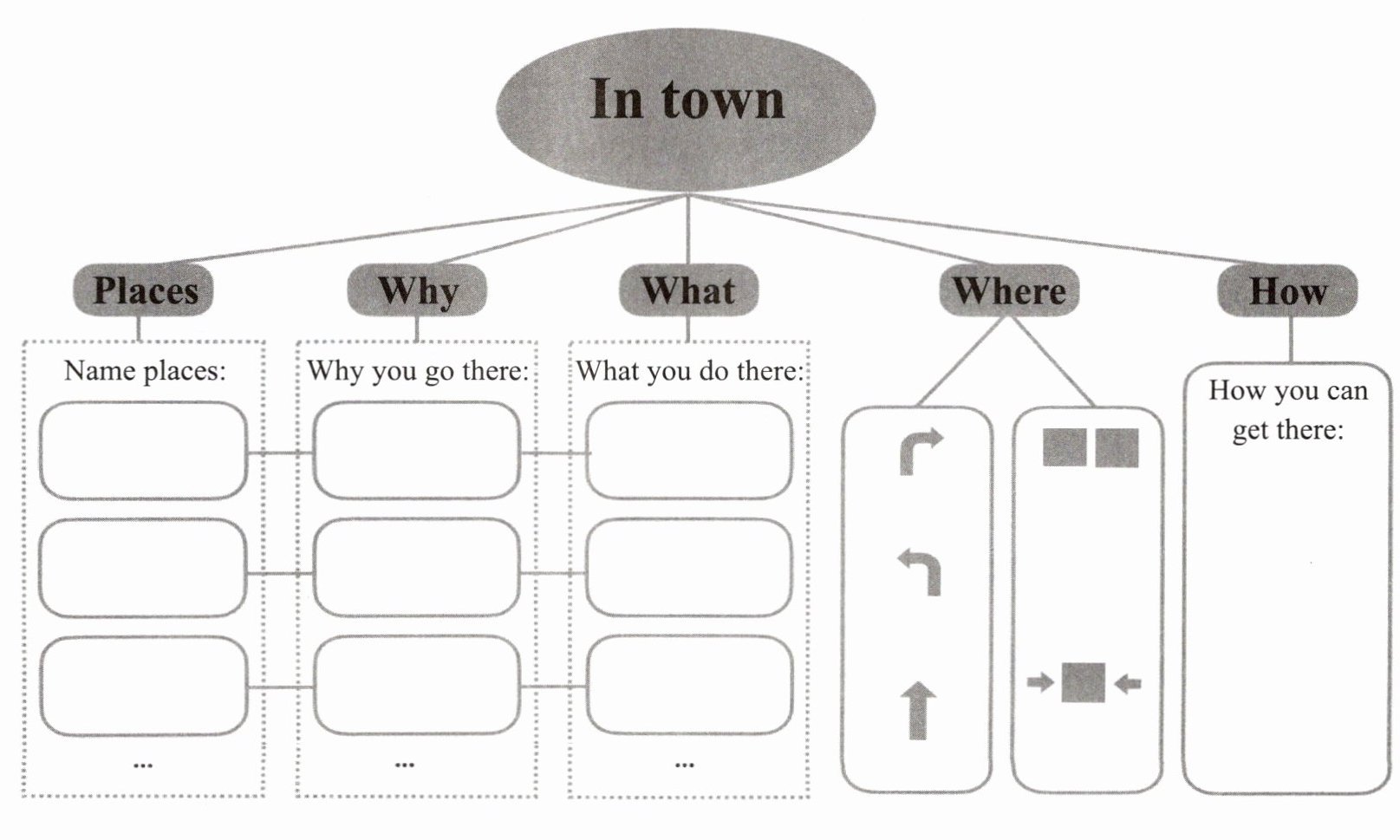
通过本单元的学习,你有哪些收获和感想呢?写一写,和大家分享一下吧!
答案
参考填写内容(符合本单元"城镇地点与出行"主题的学生作答示例)
1. Places (Name places)
- 第一空:bookshop
- 第二空:restaurant
- 第三空:park
2. Why (Why you go there)
- 第一空:I want to buy my favourite storybook
- 第二空:I feel hungry and want to have a nice meal
- 第三空:I want to do exercise and relax myself
3. What (What you do there)
- 第一空:Look for books and pick my favourite one to pay for it
- 第二空:Order tasty food and enjoy the lunch with my friends
- 第三空:Walk around, play badminton and have a picnic
4. Where 指路标识含义
- 左侧竖排标识:turn right → turn left → go straight on
- 右侧标识:traffic lights → cross the road
5. How (How you can get there)
We can walk, take the bus, ride a bike or take the subway to different places in town, and we need to follow the traffic rules when we go across the road.
学习收获感想
After learning this unit, I master more English words about places in the town, and I can use simple sentences to tell others the reasons for going to different places, the activities we can do there, and the clear ways to get to a place. I also learn to use correct expressions to ask for directions and give others direction guides politely, which is really useful for my daily trips in the town.
1. Places (Name places)
- 第一空:bookshop
- 第二空:restaurant
- 第三空:park
2. Why (Why you go there)
- 第一空:I want to buy my favourite storybook
- 第二空:I feel hungry and want to have a nice meal
- 第三空:I want to do exercise and relax myself
3. What (What you do there)
- 第一空:Look for books and pick my favourite one to pay for it
- 第二空:Order tasty food and enjoy the lunch with my friends
- 第三空:Walk around, play badminton and have a picnic
4. Where 指路标识含义
- 左侧竖排标识:turn right → turn left → go straight on
- 右侧标识:traffic lights → cross the road
5. How (How you can get there)
We can walk, take the bus, ride a bike or take the subway to different places in town, and we need to follow the traffic rules when we go across the road.
学习收获感想
After learning this unit, I master more English words about places in the town, and I can use simple sentences to tell others the reasons for going to different places, the activities we can do there, and the clear ways to get to a place. I also learn to use correct expressions to ask for directions and give others direction guides politely, which is really useful for my daily trips in the town.
解析
【分析】
本题是英语单元自我检测题,围绕“城镇地点与出行”主题展开,需结合本单元所学的地点词汇、出行原因、活动内容、指路标识含义及出行方式等知识作答,填写内容要符合主题逻辑,最后还要总结单元学习收获。解题时需先明确各模块的填写要求,再结合日常城镇生活场景和本单元知识点完成内容,最后梳理学习感想。
【解析】
1. Places模块填写常见城镇地点:bookshop、restaurant、park;
2. Why模块对应填写去各地点的合理原因:去书店是想买喜欢的故事书,去餐厅是饿了想吃美食,去公园是想锻炼放松;
3. What模块填写在各地点的具体活动:在书店找书选书付款,在餐厅点餐和朋友享午餐,在公园散步、打羽毛球、野餐;
4. Where模块识别指路标识含义:左侧竖排标识依次是右转、左转、直行,右侧标识是交通灯、过马路;
5. How模块填写出行方式及注意事项:可步行、乘公交、骑车、乘地铁,过马路要遵守交通规则;
6. 学习收获感想:掌握了城镇地点的英语词汇,会用简单句子表达出行原因、活动和路线,学会礼貌问路和指路,对日常出行很有用。
【答案】
参考填写内容(符合本单元"城镇地点与出行"主题的学生作答示例)
1. Places (Name places)
第一空:bookshop
第二空:restaurant
第三空:park
2. Why (Why you go there)
第一空:I want to buy my favourite storybook
第二空:I feel hungry and want to have a nice meal
第三空:I want to do exercise and relax myself
3. What (What you do there)
第一空:Look for books and pick my favourite one to pay for it
第二空:Order tasty food and enjoy the lunch with my friends
第三空:Walk around, play badminton and have a picnic
4. Where 指路标识含义
左侧竖排标识:turn right → turn left → go straight on
右侧标识:traffic lights → cross the road
5. How (How you can get there)
We can walk, take the bus, ride a bike or take the subway to different places in town, and we need to follow the traffic rules when we go across the road.
学习收获感想
After learning this unit, I master more English words about places in the town, and I can use simple sentences to tell others the reasons for going to different places, the activities we can do there, and the clear ways to get to a place. I also learn to use correct expressions to ask for directions and give others direction guides politely, which is really useful for my daily trips in the town.
【知识点】
城镇地点词汇、出行表达、指路用语
【点评】
本题是单元自我检测题,紧密结合单元主题,考查学生对城镇相关英语词汇、句型的掌握,以及运用英语描述出行内容的能力,同时引导学生总结学习收获,实用性较强。
【难度系数】
0.3
本题是英语单元自我检测题,围绕“城镇地点与出行”主题展开,需结合本单元所学的地点词汇、出行原因、活动内容、指路标识含义及出行方式等知识作答,填写内容要符合主题逻辑,最后还要总结单元学习收获。解题时需先明确各模块的填写要求,再结合日常城镇生活场景和本单元知识点完成内容,最后梳理学习感想。
【解析】
1. Places模块填写常见城镇地点:bookshop、restaurant、park;
2. Why模块对应填写去各地点的合理原因:去书店是想买喜欢的故事书,去餐厅是饿了想吃美食,去公园是想锻炼放松;
3. What模块填写在各地点的具体活动:在书店找书选书付款,在餐厅点餐和朋友享午餐,在公园散步、打羽毛球、野餐;
4. Where模块识别指路标识含义:左侧竖排标识依次是右转、左转、直行,右侧标识是交通灯、过马路;
5. How模块填写出行方式及注意事项:可步行、乘公交、骑车、乘地铁,过马路要遵守交通规则;
6. 学习收获感想:掌握了城镇地点的英语词汇,会用简单句子表达出行原因、活动和路线,学会礼貌问路和指路,对日常出行很有用。
【答案】
参考填写内容(符合本单元"城镇地点与出行"主题的学生作答示例)
1. Places (Name places)
第一空:bookshop
第二空:restaurant
第三空:park
2. Why (Why you go there)
第一空:I want to buy my favourite storybook
第二空:I feel hungry and want to have a nice meal
第三空:I want to do exercise and relax myself
3. What (What you do there)
第一空:Look for books and pick my favourite one to pay for it
第二空:Order tasty food and enjoy the lunch with my friends
第三空:Walk around, play badminton and have a picnic
4. Where 指路标识含义
左侧竖排标识:turn right → turn left → go straight on
右侧标识:traffic lights → cross the road
5. How (How you can get there)
We can walk, take the bus, ride a bike or take the subway to different places in town, and we need to follow the traffic rules when we go across the road.
学习收获感想
After learning this unit, I master more English words about places in the town, and I can use simple sentences to tell others the reasons for going to different places, the activities we can do there, and the clear ways to get to a place. I also learn to use correct expressions to ask for directions and give others direction guides politely, which is really useful for my daily trips in the town.
【知识点】
城镇地点词汇、出行表达、指路用语
【点评】
本题是单元自我检测题,紧密结合单元主题,考查学生对城镇相关英语词汇、句型的掌握,以及运用英语描述出行内容的能力,同时引导学生总结学习收获,实用性较强。
【难度系数】
0.3
