

 登录
登录
训练5
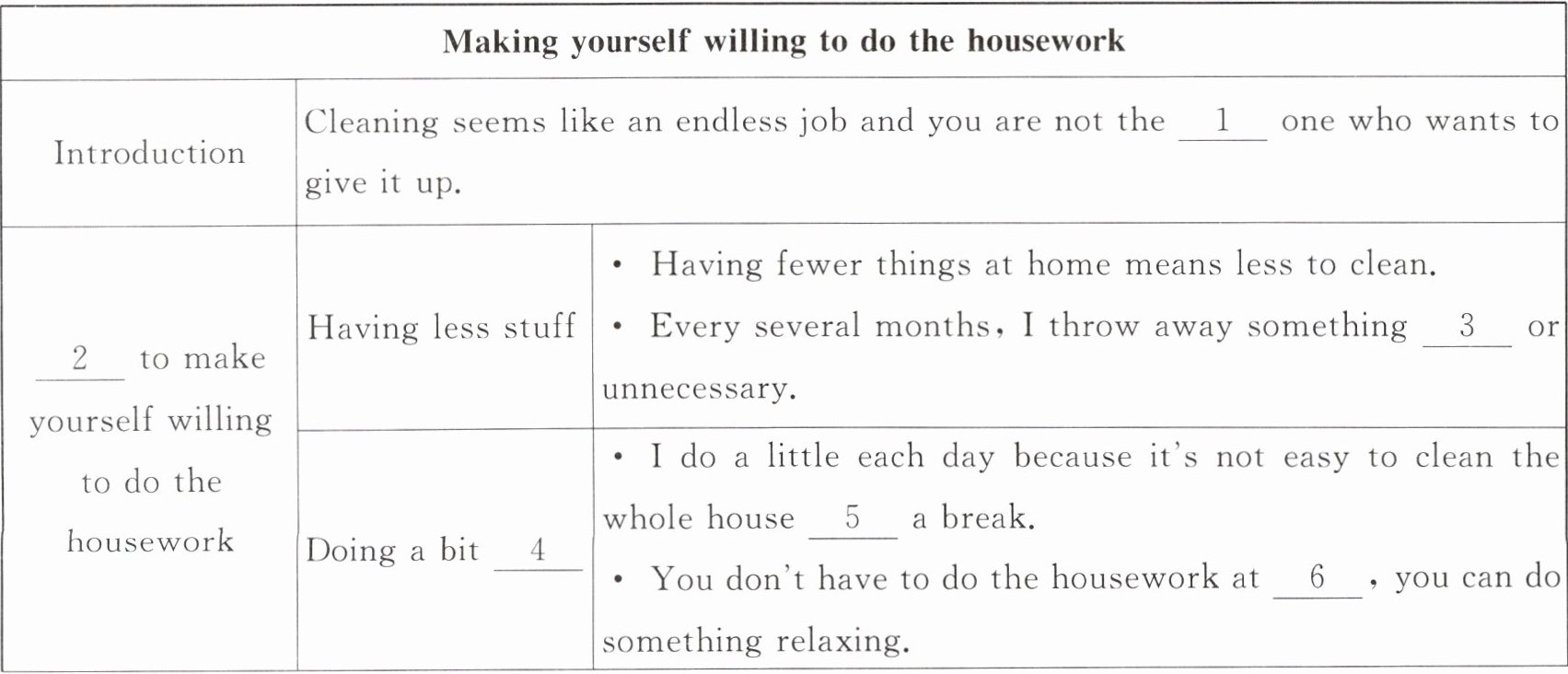
Cleaning a house seems like a job that never ends. Have you ever stood in the middle of an untidy house, looking at the books and magazines around? You have the thought of tidying them up, but you give up before you start. Well, you are not alone. But luckily, I have found some nice ways to make myself willing to do the housework.
Have less stuff
Reducing (减少) the number of things is a good way to make house cleaning easier. Every few months, I throw away some things we don’t need or use. It could be old clothes that no longer fit or books that I have already read and won’t pick up again. Fewer things make the house tidier and easier to clean.
Do a bit each day
Cleaning the whole house at one go can be really difficult, so I do a little each day. Monday could be the day to sweep the floors, Tuesday to make the bed, Wednesday to clean the bathroom, and so on. When the weekend comes, I can enjoy my free time watching a film or reading a good book instead of spending hours cleaning.
Start with the easiest task
When there’s a long list of housework, it can be hard to know where to begin. If so, I will start with the easiest task. When I complete the easiest task successfully, it will give me a sense of achievement and make it more possible for me to continue (继续) with the rest of the housework.
Make housework interesting
Who says housework has to be boring? I’ve found that adding a little fun can make a huge difference. I always listen to music while cleaning. As the music plays, I find myself dancing around. Time flies by and before I know it, the house is clean. I feel excited at the same time. It’s a win - win situation.
In short, housework doesn’t have to be something you hate. By using these ways, you can make it easier, or more enjoyable. You might even surprisingly find that you don’t mind cleaning at all.

1. 2. 3. 4. 5.
6. 7. 8. 9. 10.
Cleaning a house seems like a job that never ends. Have you ever stood in the middle of an untidy house, looking at the books and magazines around? You have the thought of tidying them up, but you give up before you start. Well, you are not alone. But luckily, I have found some nice ways to make myself willing to do the housework.
Have less stuff
Reducing (减少) the number of things is a good way to make house cleaning easier. Every few months, I throw away some things we don’t need or use. It could be old clothes that no longer fit or books that I have already read and won’t pick up again. Fewer things make the house tidier and easier to clean.
Do a bit each day
Cleaning the whole house at one go can be really difficult, so I do a little each day. Monday could be the day to sweep the floors, Tuesday to make the bed, Wednesday to clean the bathroom, and so on. When the weekend comes, I can enjoy my free time watching a film or reading a good book instead of spending hours cleaning.
Start with the easiest task
When there’s a long list of housework, it can be hard to know where to begin. If so, I will start with the easiest task. When I complete the easiest task successfully, it will give me a sense of achievement and make it more possible for me to continue (继续) with the rest of the housework.
Make housework interesting
Who says housework has to be boring? I’ve found that adding a little fun can make a huge difference. I always listen to music while cleaning. As the music plays, I find myself dancing around. Time flies by and before I know it, the house is clean. I feel excited at the same time. It’s a win - win situation.
In short, housework doesn’t have to be something you hate. By using these ways, you can make it easier, or more enjoyable. You might even surprisingly find that you don’t mind cleaning at all.
1. 2. 3. 4. 5.
6. 7. 8. 9. 10.
答案
1. only 根据第一段“Well, you are not alone.”可知你不是唯一想放弃做家务的人。故填only。
2. Ways/How 根据第一段“But luckily, I have found some nice ways to make myself willing to do the housework.”和表格右侧的内容可知,此处介绍愿意做家务的方法。故填Ways/How。
3. useless 根据第二段“Every few months, I throw away some things we don't need or use.”可知定期扔掉不需要或无用的物品。故填useless。
4. daily 根据小标题“Do a bit each day”可知每天做一点。故填daily。
5. without 根据第三段“Cleaning the whole house at one go can be really difficult”可知一次性打扫整个房子很困难,即不休息打扫整个房子很困难。故填without。
6. weekends 根据第三段“When the weekend comes, I can enjoy my free time watching a film or reading a good book instead of spending hours cleaning.”可知周末可以做放松的事,不用做家务。故填weekends。
7. much 根据第四段“When there's a long list of housework, it can be hard to know where to begin.”可知当有一长串家务,即很多家务时,很难知道从哪里开始。故填much。
8. go 根据第四段“When I complete the easiest task successfully ... make it more possible for me to continue with the rest of the housework.”可知当成功完成最简单的任务时,更有可能继续做剩下的家务;continue=go on“继续”。故填go。
9. listening 根据第五段“I always listen to music while cleaning.”可知清洁时听音乐能带来乐趣;介词like后用动词-ing形式。故填listening。
10. surprised 根据最后一段“You might even surprisingly find that you don't mind cleaning at all.”可知可能会惊喜地发现不再讨厌清洁。故填surprised。
2. Ways/How 根据第一段“But luckily, I have found some nice ways to make myself willing to do the housework.”和表格右侧的内容可知,此处介绍愿意做家务的方法。故填Ways/How。
3. useless 根据第二段“Every few months, I throw away some things we don't need or use.”可知定期扔掉不需要或无用的物品。故填useless。
4. daily 根据小标题“Do a bit each day”可知每天做一点。故填daily。
5. without 根据第三段“Cleaning the whole house at one go can be really difficult”可知一次性打扫整个房子很困难,即不休息打扫整个房子很困难。故填without。
6. weekends 根据第三段“When the weekend comes, I can enjoy my free time watching a film or reading a good book instead of spending hours cleaning.”可知周末可以做放松的事,不用做家务。故填weekends。
7. much 根据第四段“When there's a long list of housework, it can be hard to know where to begin.”可知当有一长串家务,即很多家务时,很难知道从哪里开始。故填much。
8. go 根据第四段“When I complete the easiest task successfully ... make it more possible for me to continue with the rest of the housework.”可知当成功完成最简单的任务时,更有可能继续做剩下的家务;continue=go on“继续”。故填go。
9. listening 根据第五段“I always listen to music while cleaning.”可知清洁时听音乐能带来乐趣;介词like后用动词-ing形式。故填listening。
10. surprised 根据最后一段“You might even surprisingly find that you don't mind cleaning at all.”可知可能会惊喜地发现不再讨厌清洁。故填surprised。
解析
【分析】
这是一篇表格型任务型阅读题,解题时首先要通读全文,明确文章核心是介绍几个让人们更愿意做家务的实用方法。接下来先梳理表格的整体框架,明确每一个空对应的主题板块,再带着空的语境提示回到原文精准定位对应的原句,最后结合空格处的语法要求(比如词性、固定搭配、词形变化),匹配得出符合语义和语法的正确单词,注意首字母大小写、名词单复数、非谓语形式等细节,避免出错。
【解析】
1. 定位原文第一段“Well, you are not alone.”,说明想放弃整理家务的人不止你一个,即你不是唯一有这种想法的人,对应空格语义填only。
2. 表格右侧全部内容都是介绍让自己愿意主动做家务的相关方法,对应第一段“But luckily, I have found some nice ways to make myself willing to do the housework.”的核心表述,此处标题首字母大写,填Ways/How。
3. 定位原文第二段“Every few months, I throw away some things we don’t need or use.”,也就是定期丢弃不需要、没有用处的物品,useless表示“无用的”,修饰名词things,符合语义填useless。
4. 对应原文小标题“Do a bit each day”,即每天分摊一点家务,daily表示“日常的、每日的”,契合语义填daily。
5. 定位原文第三段“Cleaning the whole house at one go can be really difficult”,短语at one go意为一口气、不停歇,也就是不间歇打扫完整间房子难度很高,without表示“没有”,符合语境填without。
6. 定位原文第三段“When the weekend comes, I can enjoy my free time watching a film or reading a good book instead of spending hours cleaning.”,说明拆分每日家务后,周末就可以享受休闲活动不用花时间打扫,此处表泛指各类周末,用复数weekends填weekends。
7. 定位原文第四段“When there’s a long list of housework, it can be hard to know where to begin.”,一长串家务意味着有很多家务要做,housework是不可数名词,用much修饰表示“许多”,填much。
8. 定位原文第四段“make it more possible for me to continue (继续) with the rest of the housework.”,continue的同义固定搭配是go on,空前有不定式to,后跟动词原形,填go。
9. 定位原文第五段“I always listen to music while cleaning.”,空格前是介词like,介词后要跟动词的动名词形式,listen的动名词为listening,填listening。
10. 定位原文最后一段“You might even surprisingly find that you don't mind cleaning at all.”,空格处放在be动词后作表语,修饰人,要使用形容词surprised表示“感到惊讶的”,填surprised。
【答案】
1. only
2. Ways/How
3. useless
4. daily
5. without
6. weekends
7. much
8. go
9. listening
10. surprised
【知识点】
任务型阅读信息定位、词性转换、固定短语搭配
【点评】
本题属于初中英语常见的任务型阅读题型,没有设置过于偏门的考点,既考查学生快速从长文中定位关键信息的阅读能力,也要求学生结合空格的语法规则对原文信息做合理转换,不是直接照搬原文词汇,能有效锻炼学生的信息提取能力和语法综合运用能力,区分度较好。
【难度系数】
0.6
这是一篇表格型任务型阅读题,解题时首先要通读全文,明确文章核心是介绍几个让人们更愿意做家务的实用方法。接下来先梳理表格的整体框架,明确每一个空对应的主题板块,再带着空的语境提示回到原文精准定位对应的原句,最后结合空格处的语法要求(比如词性、固定搭配、词形变化),匹配得出符合语义和语法的正确单词,注意首字母大小写、名词单复数、非谓语形式等细节,避免出错。
【解析】
1. 定位原文第一段“Well, you are not alone.”,说明想放弃整理家务的人不止你一个,即你不是唯一有这种想法的人,对应空格语义填only。
2. 表格右侧全部内容都是介绍让自己愿意主动做家务的相关方法,对应第一段“But luckily, I have found some nice ways to make myself willing to do the housework.”的核心表述,此处标题首字母大写,填Ways/How。
3. 定位原文第二段“Every few months, I throw away some things we don’t need or use.”,也就是定期丢弃不需要、没有用处的物品,useless表示“无用的”,修饰名词things,符合语义填useless。
4. 对应原文小标题“Do a bit each day”,即每天分摊一点家务,daily表示“日常的、每日的”,契合语义填daily。
5. 定位原文第三段“Cleaning the whole house at one go can be really difficult”,短语at one go意为一口气、不停歇,也就是不间歇打扫完整间房子难度很高,without表示“没有”,符合语境填without。
6. 定位原文第三段“When the weekend comes, I can enjoy my free time watching a film or reading a good book instead of spending hours cleaning.”,说明拆分每日家务后,周末就可以享受休闲活动不用花时间打扫,此处表泛指各类周末,用复数weekends填weekends。
7. 定位原文第四段“When there’s a long list of housework, it can be hard to know where to begin.”,一长串家务意味着有很多家务要做,housework是不可数名词,用much修饰表示“许多”,填much。
8. 定位原文第四段“make it more possible for me to continue (继续) with the rest of the housework.”,continue的同义固定搭配是go on,空前有不定式to,后跟动词原形,填go。
9. 定位原文第五段“I always listen to music while cleaning.”,空格前是介词like,介词后要跟动词的动名词形式,listen的动名词为listening,填listening。
10. 定位原文最后一段“You might even surprisingly find that you don't mind cleaning at all.”,空格处放在be动词后作表语,修饰人,要使用形容词surprised表示“感到惊讶的”,填surprised。
【答案】
1. only
2. Ways/How
3. useless
4. daily
5. without
6. weekends
7. much
8. go
9. listening
10. surprised
【知识点】
任务型阅读信息定位、词性转换、固定短语搭配
【点评】
本题属于初中英语常见的任务型阅读题型,没有设置过于偏门的考点,既考查学生快速从长文中定位关键信息的阅读能力,也要求学生结合空格的语法规则对原文信息做合理转换,不是直接照搬原文词汇,能有效锻炼学生的信息提取能力和语法综合运用能力,区分度较好。
【难度系数】
0.6
