

 登录
登录
Ⅳ.用所给单词的适当形式填空。
1. Mike (have) a cold today.
2. How can we all (stay) healthy?
3. We should (eat) breakfast on time.
4. Please (drink) enough water. It's a good habit.
5. Jim and Peter are (talk) on the phone.
1. Mike (have) a cold today.
2. How can we all (stay) healthy?
3. We should (eat) breakfast on time.
4. Please (drink) enough water. It's a good habit.
5. Jim and Peter are (talk) on the phone.
答案
1. has
2. stay
3. eat
4. drink
5. talking
2. stay
3. eat
4. drink
5. talking
解析
1. 主语Mike是第三人称单数,句子为一般现在时,谓语动词have要变为第三人称单数形式has。
2. 情态动词can后面需要接动词原形,所以填stay。
3. 情态动词should后面要接动词原形,所以填eat。
4. 该句是祈使句,please后面接动词原形,所以填drink。
5. 句子是现在进行时,结构为“be动词+动词的现在分词”,talk的现在分词形式是talking。
2. 情态动词can后面需要接动词原形,所以填stay。
3. 情态动词should后面要接动词原形,所以填eat。
4. 该句是祈使句,please后面接动词原形,所以填drink。
5. 句子是现在进行时,结构为“be动词+动词的现在分词”,talk的现在分词形式是talking。
Ⅴ.下面是一份健康生活指南,读一读,判断句子正(√)误(×)。
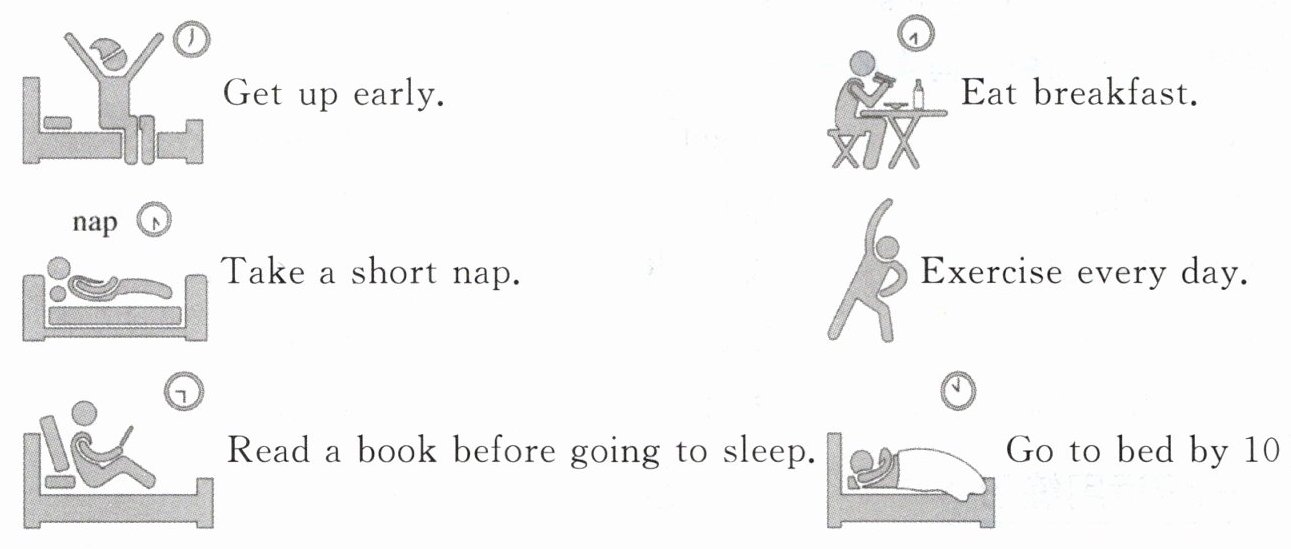
()1. We should get up early in the morning.
()2. The meaning of the word “nap” is “小睡,打盹儿”.
()3. Before you go to sleep, it is good to play with your phone.
()4. You should go to bed by 10:30 at night.
()1. We should get up early in the morning.
()2. The meaning of the word “nap” is “小睡,打盹儿”.
()3. Before you go to sleep, it is good to play with your phone.
()4. You should go to bed by 10:30 at night.
答案
1. √ 2. √ 3. × 4. ×
解析
1. 健康指南第一条明确标注"Get up early.",和该句表述含义一致,所以正确。
2. 指南里"Take a short nap."的意思是短暂小睡,对应单词nap的中文释义“小睡,打盹儿”,所以正确。
3. 健康指南说明睡前应该读书,并没有提到睡前玩手机是有益的,该句表述和指南内容不符,所以错误。
4. 健康指南要求晚上10点前上床睡觉,不是10点半前,该句表述和指南内容不符,所以错误。
2. 指南里"Take a short nap."的意思是短暂小睡,对应单词nap的中文释义“小睡,打盹儿”,所以正确。
3. 健康指南说明睡前应该读书,并没有提到睡前玩手机是有益的,该句表述和指南内容不符,所以错误。
4. 健康指南要求晚上10点前上床睡觉,不是10点半前,该句表述和指南内容不符,所以错误。
Ⅵ.从方框中选择合适的选项,补全对话。(有一项多余)
Doctor: What's the matter, Mr Smith?
Mr Smith: 1.
Doctor: Do you have a fever(发烧)?
Mr Smith: Yes.
Doctor: 2.
Mr Smith: 3.
Doctor: 4.
Mr Smith: Anything else?
Doctor: You should drink more water and have a rest. You'd better give up smoking(放弃吸烟). 5.
Mr Smith: Thank you very much, Doctor.
A. What should I do?
B. I have a bad cough.
C. You should take some medicine(药).
D. It is bad for your health.
E. I see. You have the flu.
F. Let me check your arm.
Doctor: What's the matter, Mr Smith?
Mr Smith: 1.
Doctor: Do you have a fever(发烧)?
Mr Smith: Yes.
Doctor: 2.
Mr Smith: 3.
Doctor: 4.
Mr Smith: Anything else?
Doctor: You should drink more water and have a rest. You'd better give up smoking(放弃吸烟). 5.
Mr Smith: Thank you very much, Doctor.
A. What should I do?
B. I have a bad cough.
C. You should take some medicine(药).
D. It is bad for your health.
E. I see. You have the flu.
F. Let me check your arm.
答案
1.B 2.E 3.A 4.C 5.D
解析
我们结合就医场景的日常对话逻辑逐一匹配选项:
1. 医生询问Mr Smith哪里不舒服,需要回答自身的不适症状,选B:我咳嗽得很厉害。
2. 确认病人发烧后,医生做出诊断,选E:我知道了,你得了流感。
3. 得知诊断结果后,病人向医生询问应对方法,选A:我该做什么?
4. 医生回应病人的提问,给出第一条治疗建议,选C:你应该吃点药。
5. 医生建议病人戒烟后,补充说明吸烟的危害,选D:它(吸烟)对你的健康有害。
选项F为多余项,符合题目有一项多余的设定。
1. 医生询问Mr Smith哪里不舒服,需要回答自身的不适症状,选B:我咳嗽得很厉害。
2. 确认病人发烧后,医生做出诊断,选E:我知道了,你得了流感。
3. 得知诊断结果后,病人向医生询问应对方法,选A:我该做什么?
4. 医生回应病人的提问,给出第一条治疗建议,选C:你应该吃点药。
5. 医生建议病人戒烟后,补充说明吸烟的危害,选D:它(吸烟)对你的健康有害。
选项F为多余项,符合题目有一项多余的设定。
