

 登录
登录
文化链接
A Miser
There was a miser. He always saved money but didn’t want to spend a penny. He sold all of his things and bought a piece of gold. He buried the gold in a hole under an old wall. Every day, he went there to have a look.
One of his workers noticed his strange behaviour. The worker followed the miser and found the secret. He reached into the hole and stole the piece of gold.
On his next visit, the miser found the gold lost. He was so angry and began to cry. A neighbour asked and got to know the reason. The neighbour said, “Go and get a stone. Put it in the hole. Just imagine your gold is still there. You will feel better. Because when the gold was really there, you did not make any use of it.”
【词汇与表达】
behaviour n. 举止
bury v. 埋;掩藏
follow v. 跟随
hole n. 洞
imagine v. 想象
make use of… 利用……
miser n. 吝啬鬼
neighbour n. 邻居
notice v. 注意到
reach v. 伸手
steal v. 偷(过去式 stole)
【知识链接】
这是一篇关于守财奴的小故事。英国作家莎士比亚的戏剧《威尼斯商人》中的夏洛克、法国作家巴尔扎克的小说《欧也妮·葛朗台》中的葛朗台、法国作家莫里哀的戏剧《吝啬鬼》中的阿巴贡、俄国作家果戈理的小说《死魂灵》中的泼留希金,都是世界文学名著中的守财奴形象。在中国的文学作品中,吴敬梓的《儒林外史》中的严监生、徐复祚的《一文钱》中的卢至,以及《庄子》的寓言故事《外物》篇中的监河侯也都是典型的吝啬鬼形象。
【语言知识】
英语中有 penny pincher 这一习惯用语。penny(便士)是英国最小的货币单位。你几乎想不出一便士能买到什么东西,所以有人甚至提议不必再铸造便士币了。pincher 是指把一样东西捏在食指和拇指之间的人。如果一个人连一便士这样的小钱也捏得紧紧的,那他可真是个守财奴了。

【活动】
Read the story again and finish the story board.
STORY BOARD
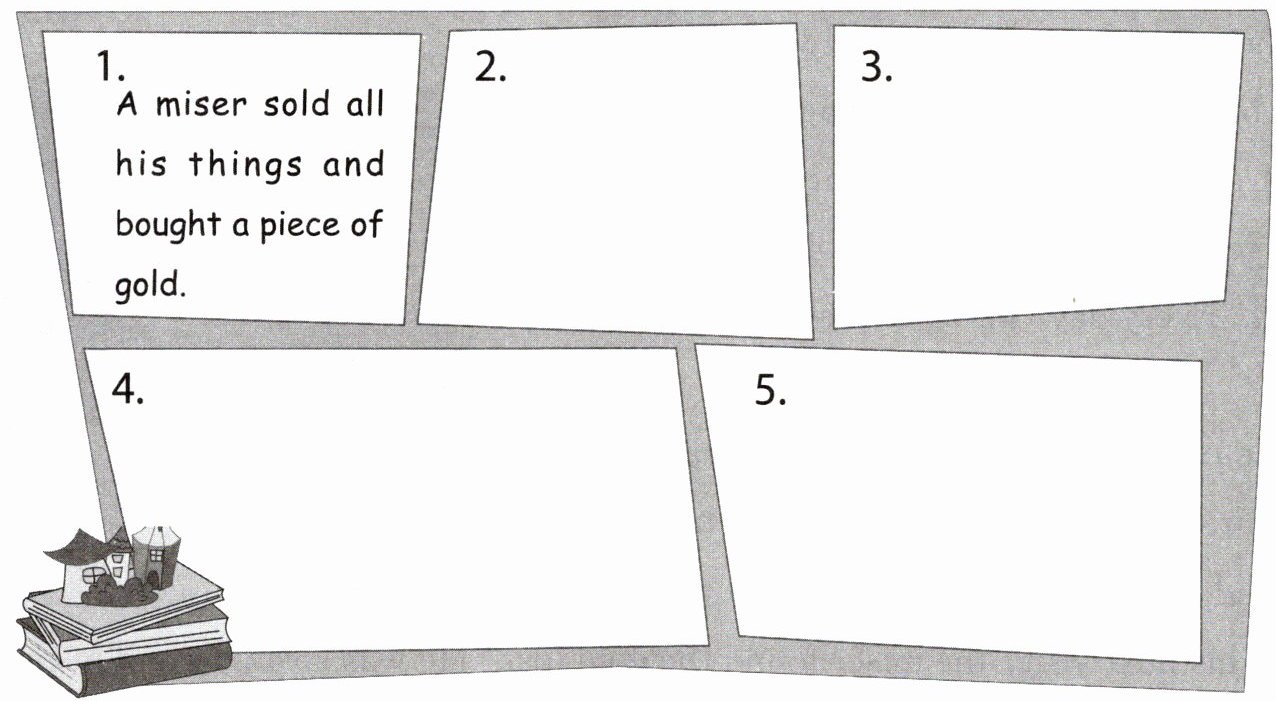
1. A miser sold all his things and bought a piece of gold.
2.
3.
4.
5.
A Miser
There was a miser. He always saved money but didn’t want to spend a penny. He sold all of his things and bought a piece of gold. He buried the gold in a hole under an old wall. Every day, he went there to have a look.
One of his workers noticed his strange behaviour. The worker followed the miser and found the secret. He reached into the hole and stole the piece of gold.
On his next visit, the miser found the gold lost. He was so angry and began to cry. A neighbour asked and got to know the reason. The neighbour said, “Go and get a stone. Put it in the hole. Just imagine your gold is still there. You will feel better. Because when the gold was really there, you did not make any use of it.”
【词汇与表达】
behaviour n. 举止
bury v. 埋;掩藏
follow v. 跟随
hole n. 洞
imagine v. 想象
make use of… 利用……
miser n. 吝啬鬼
neighbour n. 邻居
notice v. 注意到
reach v. 伸手
steal v. 偷(过去式 stole)
【知识链接】
这是一篇关于守财奴的小故事。英国作家莎士比亚的戏剧《威尼斯商人》中的夏洛克、法国作家巴尔扎克的小说《欧也妮·葛朗台》中的葛朗台、法国作家莫里哀的戏剧《吝啬鬼》中的阿巴贡、俄国作家果戈理的小说《死魂灵》中的泼留希金,都是世界文学名著中的守财奴形象。在中国的文学作品中,吴敬梓的《儒林外史》中的严监生、徐复祚的《一文钱》中的卢至,以及《庄子》的寓言故事《外物》篇中的监河侯也都是典型的吝啬鬼形象。
【语言知识】
英语中有 penny pincher 这一习惯用语。penny(便士)是英国最小的货币单位。你几乎想不出一便士能买到什么东西,所以有人甚至提议不必再铸造便士币了。pincher 是指把一样东西捏在食指和拇指之间的人。如果一个人连一便士这样的小钱也捏得紧紧的,那他可真是个守财奴了。
【活动】
Read the story again and finish the story board.
STORY BOARD
1. A miser sold all his things and bought a piece of gold.
2.
3.
4.
5.
答案
2. He buried it in a hole and went to look at it every day.
3. His worker found the secret and stole the gold.
4. The miser was so angry and cried for the lost gold.
5. The neighbour gave him a suggestion.
3. His worker found the secret and stole the gold.
4. The miser was so angry and cried for the lost gold.
5. The neighbour gave him a suggestion.
