

 登录
登录
七、按要求改写句子。
1. My parents and I are going to have a picnic this weekend.(同义句转换)
going to have a picnic my parents this weekend.
2. My parents are going to give me red packets.(改为一般疑问句)
parents going to give you red packets?
3. Kitty is going to fly a kite tomorrow.(对画线部分提问)
is Kitty going to tomorrow?
4. My family are going to see a film this weekend.(用last weekend 替换 this weekend)
My family film last weekend.
1. My parents and I are going to have a picnic this weekend.(同义句转换)
going to have a picnic my parents this weekend.
2. My parents are going to give me red packets.(改为一般疑问句)
parents going to give you red packets?
3. Kitty is going to fly a kite tomorrow.(对画线部分提问)
is Kitty going to tomorrow?
4. My family are going to see a film this weekend.(用last weekend 替换 this weekend)
My family film last weekend.
答案
1. I'm; with
2. Are; your
3. What; do
4. saw a
2. Are; your
3. What; do
4. saw a
解析
1. 原句表达“我和父母”,可转换为“I'm...with my parents”,“with”表示“和……一起”,I和am缩写为I'm。
2. 含有be going to结构的句子变一般疑问句,需将be动词are提前,第一人称物主代词my改为第二人称your。
3. 画线部分是要做的具体事情,用疑问词What提问,be going to后接动词原形do。
4. last weekend是过去时间,句子要改为一般过去时,see的过去式是saw,“看电影”为see a film,所以填saw a。
2. 含有be going to结构的句子变一般疑问句,需将be动词are提前,第一人称物主代词my改为第二人称your。
3. 画线部分是要做的具体事情,用疑问词What提问,be going to后接动词原形do。
4. last weekend是过去时间,句子要改为一般过去时,see的过去式是saw,“看电影”为see a film,所以填saw a。
八、交际运用。
A)从方框中选择合适的句子补全对话。(其中有一项是多余的)
A:Hello,Mike. Your shoes look so nice!
B:1.
A:2.
B:I bought them yesterday at the shopping centre. What about you? 3.
A:I played football in the playground. It was great fun! 4. Would you like to come?
B:5. See you tomorrow.
A:See you.
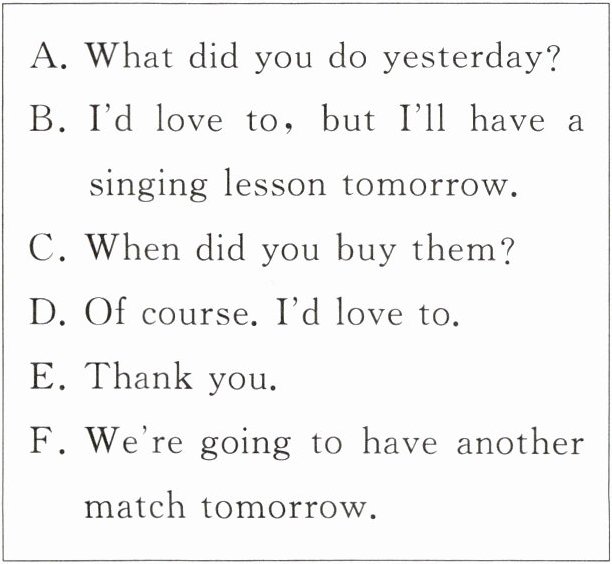
A. What did you do yesterday?
B. I'd love to,but I'll have a singing lesson tomorrow.
C. When did you buy them?
D. Of course. I'd love to.
E. Thank you.
F. We're going to have another match tomorrow.
B)根据上下文及图片提示,完成对话。
A:It's to Chinese New Year next week. I'm very !
B: are you going to do at Chinese New Year?
A:I'm going to dinner with my family. What about you?
B:I'm going to a .
A)从方框中选择合适的句子补全对话。(其中有一项是多余的)
A:Hello,Mike. Your shoes look so nice!
B:1.
A:2.
B:I bought them yesterday at the shopping centre. What about you? 3.
A:I played football in the playground. It was great fun! 4. Would you like to come?
B:5. See you tomorrow.
A:See you.
A. What did you do yesterday?
B. I'd love to,but I'll have a singing lesson tomorrow.
C. When did you buy them?
D. Of course. I'd love to.
E. Thank you.
F. We're going to have another match tomorrow.
B)根据上下文及图片提示,完成对话。
A:It's to Chinese New Year next week. I'm very !
B: are you going to do at Chinese New Year?
A:I'm going to dinner with my family. What about you?
B:I'm going to a .
答案
A)
1. E
2. C
3. A
4. F
5. B
B)
going; be; excited
What
have
watch; lion; dance
1. E
2. C
3. A
4. F
5. B
B)
going; be; excited
What
have
watch; lion; dance
解析
A)补全对话:
1. 当他人夸赞自己的物品时,应礼貌致谢,因此选E。
2. 根据答语“I bought them yesterday...”,可知此处是询问鞋子的购买时间,因此选C。
3. 根据答语“I played football in the playground.”,可知此处是询问对方昨天的活动,因此选A。
4. 根据后文邀请的语句“Would you like to come?”,此处需要说明邀请的事由:明天还有一场足球比赛,因此选F。
5. 根据后文“but I'll have a singing lesson tomorrow”,可知对方无法接受邀请,需先表达意愿再说明原因,因此选B。
B)完成对话:
1. 根据“next week”可知用一般将来时,表达“下周就要到春节了”用“It's going to be Chinese New Year next week”,春节临近会感到兴奋,所以填excited;
2. 询问对方春节的计划,用疑问词What;
3. “和家人吃晚餐”用固定搭配have dinner;
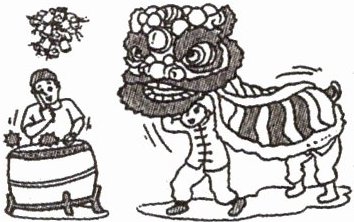
4. 根据图片的舞狮场景,小学阶段常用表达“watch a lion dance”(观看舞狮表演),因此填对应的内容。
1. 当他人夸赞自己的物品时,应礼貌致谢,因此选E。
2. 根据答语“I bought them yesterday...”,可知此处是询问鞋子的购买时间,因此选C。
3. 根据答语“I played football in the playground.”,可知此处是询问对方昨天的活动,因此选A。
4. 根据后文邀请的语句“Would you like to come?”,此处需要说明邀请的事由:明天还有一场足球比赛,因此选F。
5. 根据后文“but I'll have a singing lesson tomorrow”,可知对方无法接受邀请,需先表达意愿再说明原因,因此选B。
B)完成对话:
1. 根据“next week”可知用一般将来时,表达“下周就要到春节了”用“It's going to be Chinese New Year next week”,春节临近会感到兴奋,所以填excited;
2. 询问对方春节的计划,用疑问词What;
3. “和家人吃晚餐”用固定搭配have dinner;
4. 根据图片的舞狮场景,小学阶段常用表达“watch a lion dance”(观看舞狮表演),因此填对应的内容。
