

 登录
登录
七、按要求改写句子。
1. The signs over there mean "Danger!"(改为单数句)
The over there "Danger!"
2. The sign near the tree means "No climbing".(对画线部分提问)
means "No climbing"?
3. I did my homework yesterday.(改为否定句)
I my homework yesterday.
4. It means the floor is wet.(改为一般疑问句)
it the floor is wet?
5. We can't eat bananas here because there are a lot of monkeys around us.(对画线部分提问)
you eat bananas here?
1. The signs over there mean "Danger!"(改为单数句)
The over there "Danger!"
2. The sign near the tree means "No climbing".(对画线部分提问)
means "No climbing"?
3. I did my homework yesterday.(改为否定句)
I my homework yesterday.
4. It means the floor is wet.(改为一般疑问句)
it the floor is wet?
5. We can't eat bananas here because there are a lot of monkeys around us.(对画线部分提问)
you eat bananas here?
答案
1. sign; means
2. Which sign
3. didn't do
4. Does; mean
5. Why can't
2. Which sign
3. didn't do
4. Does; mean
5. Why can't
解析
1. 原句为复数句,改为单数句时,复数名词signs要变为单数sign,主语变为单数第三人称,谓语动词mean需变为第三人称单数形式means。
2. 画线部分是修饰sign的地点限定语,提问“哪个标志”要用Which sign。
3. 原句是一般过去时的肯定句,改为否定句需在实义动词前加助动词didn't,同时实义动词did还原为原形do。
4. 原句是一般现在时,主语it是第三人称单数,改为一般疑问句要借助助动词Does放句首,实义动词means还原为原形mean。
5. 画线部分是原因状语从句,对原因提问用疑问词Why,原句含情态动词can't,直接将can't跟在Why后即可。
2. 画线部分是修饰sign的地点限定语,提问“哪个标志”要用Which sign。
3. 原句是一般过去时的肯定句,改为否定句需在实义动词前加助动词didn't,同时实义动词did还原为原形do。
4. 原句是一般现在时,主语it是第三人称单数,改为一般疑问句要借助助动词Does放句首,实义动词means还原为原形mean。
5. 画线部分是原因状语从句,对原因提问用疑问词Why,原句含情态动词can't,直接将can't跟在Why后即可。
八、根据上下文及图片提示,完成对话。
A:Let's go to the bookshop.
B:Look! There is a sign on the . Does it mean it doesn't sell books about dogs here?
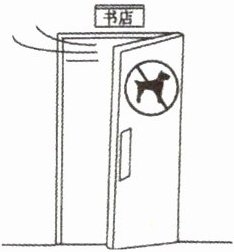
A:No,it .
B:What does it mean then?
A:It means you can't your pets the .
A:Let's go to the bookshop.
B:Look! There is a sign on the . Does it mean it doesn't sell books about dogs here?
A:No,it .
B:What does it mean then?
A:It means you can't your pets the .
答案
door; doesn't; take; into; bookshop
解析
根据图片可知标志在书店的门上,所以第一空填door;上句是does引导的一般疑问句,否定回答用doesn't;结合标志含义,该标志表示禁止将宠物带入书店,所以后三空分别填take, into, bookshop。
九、根据首字母提示填空。
Can you see these signs in my hand? They are public s. Today,I'd like to talk a them. Now look at the f one. Maybe you often see it in the street. This is the first letter(字母)of a w. The word is "Park". It m you shouldn't p your car or bike here. So if you see it,you should t your car or bike away,or(否则)s will punish(惩罚)you. Do you like swimming? I'm g at it. But we can't swim in rivers or lakes. Look at the sign. It means you s swim here.
Can you see these signs in my hand? They are public s. Today,I'd like to talk a them. Now look at the f one. Maybe you often see it in the street. This is the first letter(字母)of a w. The word is "Park". It m you shouldn't p your car or bike here. So if you see it,you should t your car or bike away,or(否则)s will punish(惩罚)you. Do you like swimming? I'm g at it. But we can't swim in rivers or lakes. Look at the sign. It means you s swim here.
答案
signs; about; first; word; means; park; take; someone; good; shouldn't
解析
1. 根据前文提到的"signs"及首字母s,结合短语"public signs(公共标识)",填signs;2. 固定搭配"talk about(谈论)",首字母为a,填about;3. 语境指第一个标识,首字母f,填first;4. 后文提到"The word is 'Park'",首字母w,填word;5. 主语it是第三人称单数,表达"意思是"用means,首字母m,填means;6. 结合"Park"标识的禁止停车含义,首字母p,填park;7. 固定搭配"take away(移走)",首字母t,填take;8. 语境指"有人会惩罚你",首字母s,填someone;9. 固定搭配"be good at(擅长)",首字母g,填good;10. 前文提到不能在河湖游泳,标识意思是不应该在此游泳,首字母s,填shouldn't。
